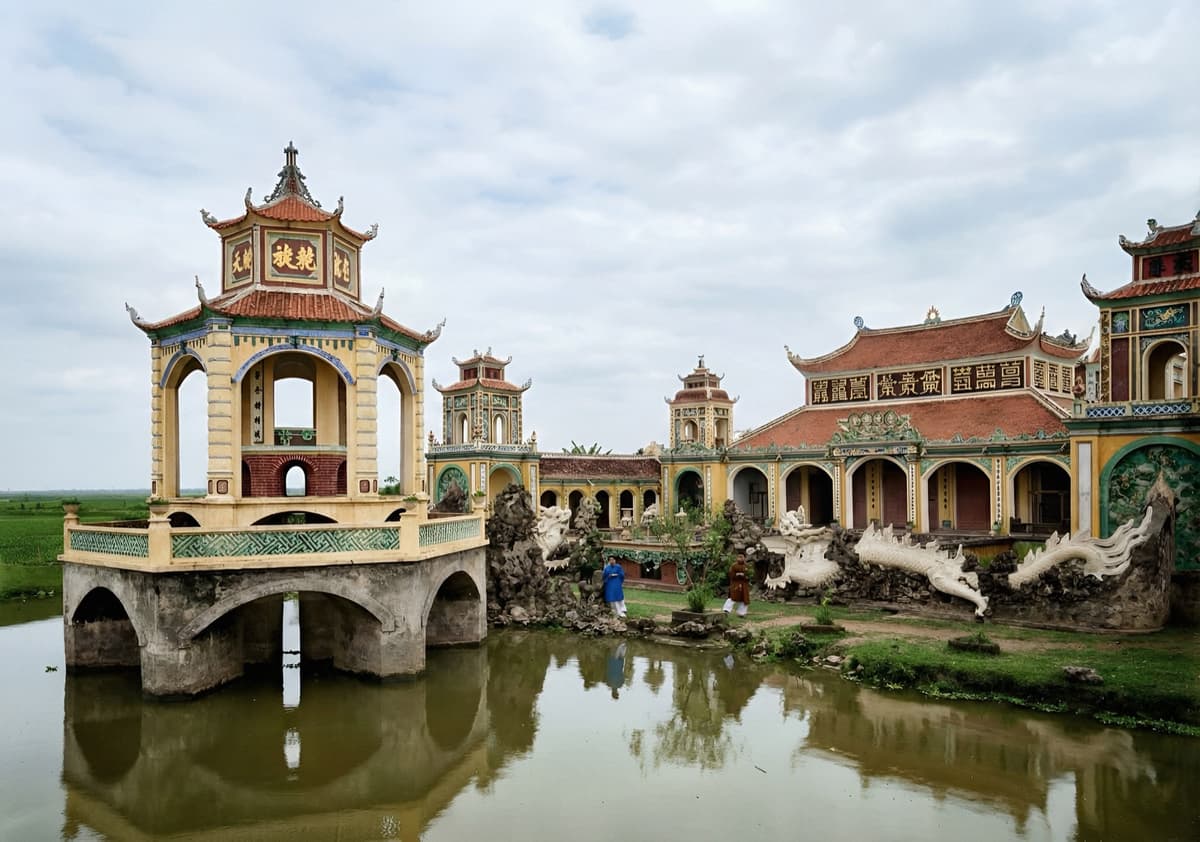
Vietnamese folk belief is a long-standing system of sacred beliefs comprising many branches such as ancestor worship, nature deity worship, village guardian worship, the Mother Goddess religion, agricultural beliefs, and rituals of many ethnic groups. This is traditional reference knowledge, not scientifically verified, and should not be seen as a promise of fortune, health, or marriage.
What is folk belief and how does it differ from religion?
Folk belief is a belief in supernatural forces, deities, and souls, formed naturally in community life over generations. It often lacks a founder, dogma, or tight organization like a complete religion. Unlike religions with scriptures and churches, folk belief is tied to customs, rituals, and village or family life. Many folk beliefs coexist and blend with Buddhism, Taoism, and Confucianism, creating the diverse spiritual life of Vietnamese people.
What role does ancestor worship play in life?
Ancestor worship is the most popular and long-standing belief of Vietnamese people. Each family usually has an ancestor altar, performs death anniversaries, Tet, and other important occasions. This belief reflects the moral principle of remembering one's origins, connecting generations in the family and clan. Additionally, many ethnic minorities have their own ways of ancestor worship, or worship mountain and forest deities instead, reflecting a worldview tied to their living environment.
What branches exist in deity and village guardian worship?
Deity worship in folk belief is quite diverse. The village guardian is a deity protecting a village, often worshiped at the communal house, and may be a historical figure with merits to the country or a legendary figure. There is also worship of Tho Cong, Tho Dia (land deities), Tao Quan (kitchen deity), Than Tai and Ong Dia (wealth deities, often worshiped together). Other branches include Quan Cong worship by the Chinese community, Ong Ta worship in the South, and Whale worship by coastal fishermen. Each branch has its own origins and rituals, reflecting cultural exchange among communities.
What are the characteristics of the Mother Goddess religion?
The Mother Goddess religion is an indigenous belief of the Vietnamese, worshiping female deities and Holy Mothers who govern cosmic realms such as Heaven, Earth, and Water (Three Palaces) or adding Mountains (Four Palaces). The central ritual is mediumship, in which mediums perform incarnations to connect with deities. This belief directs people to real life, wishing for luck and peace. It reflects the role of women in spiritual life and has been recognized as intangible cultural heritage.
What is the meaning of agricultural beliefs and rain-praying festivals?
Agricultural beliefs are tied to wet rice civilization, including rituals to pray for rain, harvest, and bumper crops. Many ethnic groups such as Thai, Kho Mu, Ede, Co Ho, Cham, San Chay, and Lo Lo have their own rain-praying festivals, often held at the beginning of the dry season or before planting. These rituals show respect for deities and a desire for harmony with nature. Fertility beliefs are also an important branch, wishing for the proliferation of humans and plants, expressed through festivals like Nang Hai of the Tay people.
What are the unique features of ethnic minority beliefs?
Ethnic minorities in Vietnam have rich spiritual lives, often tied to nature and community. The Ruc and Bru-Van Kieu follow animism, believing all things have souls. The Pu Peo worship sacred forests, considering them dwelling places of deities. The Red Dao have fire-jumping in maturity rituals. The Muong have Mo Muong and the epic Birth of Earth and Water. Rituals such as rain-praying, village cleansing, maturity, and fate-repelling express the cultural identity and worldview of each ethnic group.
What do life-cycle and peace-praying rituals include?
Besides the above branches, folk belief also includes life-cycle rituals such as housewarming, wandering soul offerings on the 15th of the seventh lunar month, star-repelling at the beginning of the year, and Than Tai worship on the 10th of the first lunar month. These rituals are often tied to wishes for peace, asking permission from deities and ancestors. Each ritual has its own preparation and sequence, reflecting concepts of yin-yang, cosmology, and filial piety in Vietnamese culture.
How to properly learn about folk belief?
Folk belief is part of cultural heritage, so it should be studied with respect and objectivity. Readers can learn through detailed articles on each branch, from ancestor worship, village guardian worship, Mother Goddess religion to ethnic minority festivals. It is necessary to distinguish between spiritual cultural values and unfounded rumors. This is traditional reference knowledge, not a substitute for medical, legal advice, or personal decisions. Practicing beliefs should be based on understanding and should not expect specific outcomes regarding fortune, health, or marriage.