Introduction: A village keeping the fire alive for a thousand years
Amid the hustle and bustle of modern life, there remains a small village in Thieu Trung commune, Thieu Hoa district, Thanh Hoa province, where the furnace fire has burned continuously for over a millennium. That is Tra Dong bronze casting village, a name not only renowned nationwide but also known as a living museum of the history, culture, and art of Vietnamese bronze casting.
More than just a village producing household items, Tra Dong has long defined itself through majestic Buddha statues, resonant bronze bells, and finely carved ceremonial objects. The village's endurance through historical upheavals is the clearest testament to the vitality of a precious cultural heritage of the nation.
Historical origins: A millennium of formation and development
Legend of the founding ancestor
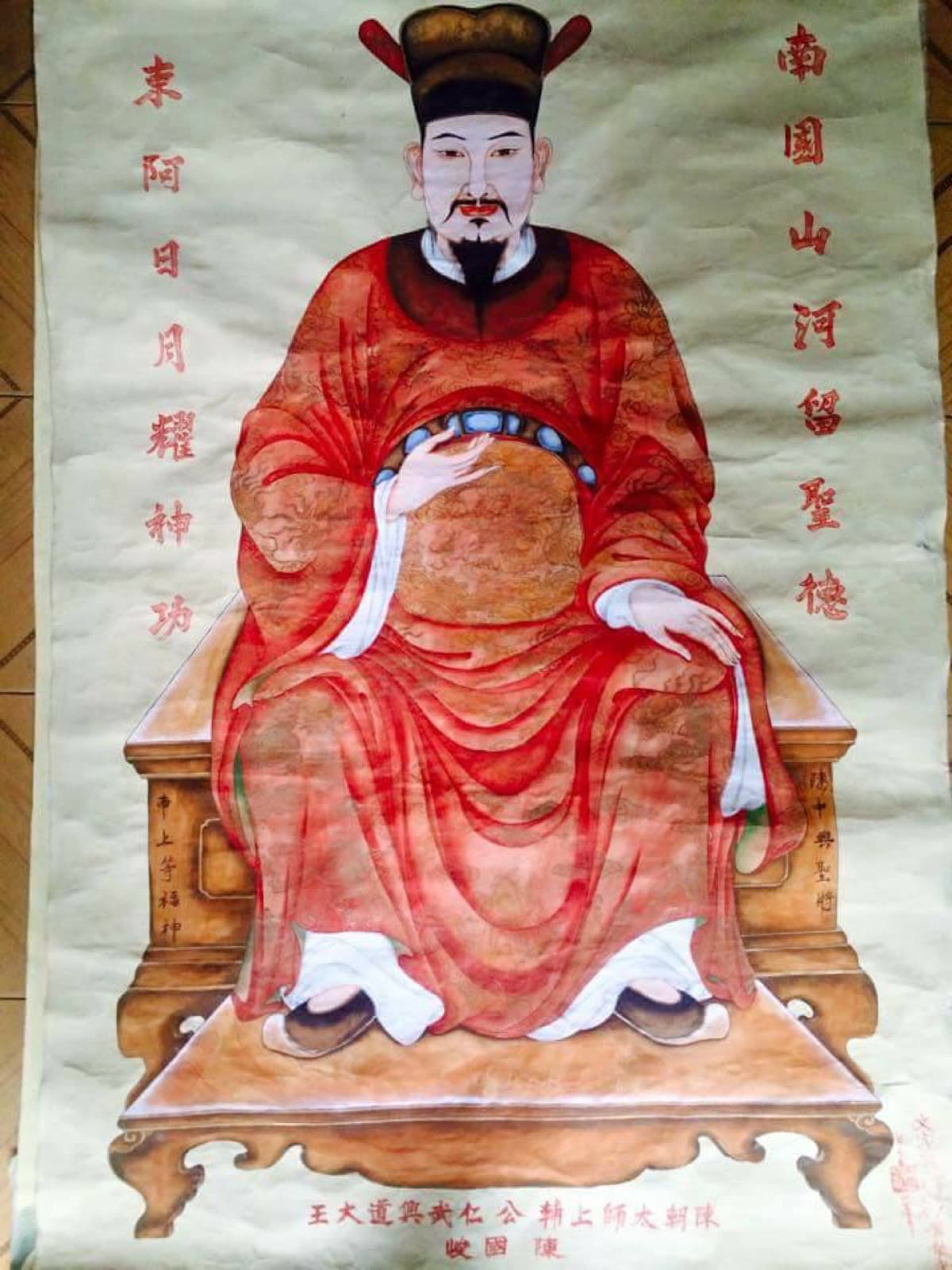
The history of Tra Dong bronze casting village is tied to legends and anecdotes passed down through generations. According to folk tales, bronze casting here originated during the Dinh or Early Le dynasty and flourished under the Ly and Tran dynasties. The person revered by villagers as the founding ancestor, who initiated and transmitted the craft, is often mentioned as Nguyen Minh Khong (also known as Ly Quoc Su, a famous Zen master of the Ly dynasty) or another figure, Khong Minh Khong. Although the exact identity varies across versions, the stories all emphasize the great contributions of these ancestors in spreading sophisticated bronze casting techniques to the local people.
Golden age and historical marks
Over more than 1,000 years of existence and development, Tra Dong has risen to become one of the oldest and most famous bronze casting villages in the country. During the feudal period, the village did not stop at producing ordinary household goods. Tra Dong artisans were also trusted by the royal court to craft precious items, from Buddhist ritual implements to luxurious palace utensils. This shows that the quality and aesthetics of their products reached a high level, recognized by contemporary society.
The name of Tra Dong is also linked to cultural and spiritual works of national stature. This not only confirms the artisans' skillful hands but also shows the village's important role in preserving and promoting traditional cultural values of the nation.
Secrets behind the soul of Tra Dong products
What makes Tra Dong bronze products distinct and enduring is not only skillful technique but also the harmonious combination of hereditary secrets and special raw materials. The crafting process is a series of rigorous steps, requiring patience, meticulousness, and near-absolute experience of the craftsman.
Detailed crafting process
- Model making: The first step and the foundation for the whole product. The artisan creates a model using wax or other soft materials. The shape, proportions, and especially the "spirit" of the product are all determined from this stage.
- Mold making: Considered the most secretive step of the village. The mold is made from a mixture of clay, rice husk ash, and some undisclosed additives. This mixture is then fired in a charcoal kiln. The quality of the mold, including its fineness, durability, and heat resistance, directly determines the sharpness and smoothness of the product's surface after casting.
- Melting copper: The raw copper is melted at very high temperatures, up to thousands of degrees Celsius. The key point of this step lies in the secret of alloy blending. Tra Dong artisans have hereditary formulas for mixing copper with other metals such as tin, zinc, and lead. This blending not only creates the characteristic color but also gives the molten copper good fluidity, allowing it to penetrate and fill every smallest detail of the mold, while also determining the product's durability.
- Pouring and cooling: This is the most critical moment, requiring absolute precision in timing and temperature control. A single small error can ruin both the mold and the final product.
- Finishing: After the copper has cooled and set, the product is removed from the mold and undergoes cleaning and rough filing. The final step, and the one that creates the highest artistic value, is engraving and polishing. The intricate, soulful hand-engraved lines of Tra Dong craftsmen are an unmistakable brand mark.
Alloy and characteristic color
One of the most recognizable features of Tra Dong bronze products is their color. Unlike shiny industrial products, Tra Dong bronze after finishing usually has a deep brown, antique hue. This color not only brings a refined, elegant beauty but is also the result of a special alloy blending process. Furthermore, Tra Dong products are known for their superior durability over time, with less rusting and preservation of their dignified appearance. This combination of fine technique and alloy-making secrets creates a unique character, an unmatched "soul" for the village's products.
Tra Dong's mark through iconic works
The reputation of Tra Dong bronze casting village is not empty praise but is proven through a series of works and artifacts of great historical and cultural value across the country.
- Amitabha Buddha statue at Thay Pagoda: One of the most representative works, showcasing the outstanding talent of Tra Dong artisans in casting Buddha statues. The statue is not only large in size but also vivid in every detail, radiating compassion and peace.
- Bronze bells at major pagodas: The sound of Tra Dong bronze bells is described as resonant, deep, and carrying unusually far. Therefore, many major pagodas nationwide have trusted bells crafted by this village.
- Bronze tripods and worship cranes: Tra Dong ceremonial sets are always in demand for their intricate decorative motifs such as the Four Holy Beasts (Dragon, Unicorn, Tortoise, Phoenix) and the Eight Immortals. The products reflect solemnity and preserve the traditional worship culture of the Vietnamese.
- Restoration works: In the restoration of historical sites nationwide, Tra Dong artisans are always the top choice. They can accurately reproduce ancient bronze artifacts, ensuring originality and historical value.
Bronze drums: The pinnacle of creativity and inheritance
Not stopping at preserving traditional products, Tra Dong artisans continuously research and create works of new stature, most notably bronze drums. Successfully casting bronze drums using traditional manual methods was a major step forward, highly praised by domestic and international scientists. Some memorable milestones include:
- 2000: Successfully cast a bronze drum with the Ngoc Lu version and patterns.
- 2007: Created the largest bronze drum in Vietnam with a face diameter of 1.51m and a height of 1.21m.
- 2013: Broke the record again by casting a Ngoc Lu version bronze drum considered the largest in the world, weighing about 8 tons, 2m high, and 2.7m in face diameter.
- 2010: Had the honor of casting 100 bronze drums to offer for the 1000th anniversary of Thang Long-Hanoi.
These successes not only affirm the high technical level of Tra Dong artisans but also contribute significantly to recreating and promoting a cultural symbol of the Vietnamese people.
Challenges and directions in the modern context
Entering the era of industrialization and integration, Tra Dong village faces numerous difficulties and challenges. Intense competition from industrial bronze products with lower prices and more diverse designs is a considerable pressure. Additionally, preserving and passing down hereditary secrets to the younger generation is a difficult problem when many young workers tend to leave the countryside for opportunities in big cities.
However, the village still stands firm and makes new strides. Instead of limiting themselves to ceremonial products, Tra Dong households have proactively expanded into fine arts, souvenirs, and especially custom bronze portrait casting services. This flexibility helps the village better adapt to the diverse demands of the modern market.
Preserving and promoting heritage values
With such great historical and cultural values, on September 4, 2018, the Ministry of Culture, Sports and Tourism issued Decision No. 3325, officially recognizing the "Traditional bronze casting craft of Che (Tra Dong) village" as a national intangible cultural heritage. This recognition is an important milestone, not only a pride for local people but also a legal basis for authorities and related organizations to strengthen conservation and promotion efforts for the village.
One highly regarded direction is the craft village tourism model. Visitors to Tra Dong not only have the opportunity to admire and purchase exquisite bronze products but also witness the entire traditional bronze casting process, from preparing the clay and making models to the impressive moment of pouring molten copper. This experiential activity not only provides additional income for locals but also helps educate and raise awareness among the community and tourists about the value of traditional crafts.
Conclusion
Over a thousand years, many historical ups and downs have passed, but the furnace fire in Tra Dong village continues to burn bright. The craftsmen here are not merely artisans creating bronze objects; they are quietly "casting" the cultural, spiritual, and identity heritage of the nation. The endurance of Tra Dong village is a vivid testament to the strong vitality of Vietnamese culture, a bridge between the past and the present, ensuring that the traditional fire from ancient times will continue to be lit and passed on to future generations.