



TL;DR: Tý (Rat) is the 1st of the 12 zodiac branches, and the branch element is Water; folk tradition links the Rat with wit and adaptability. In the folk compatibility tables, Tý matches Monkey (Thân) and Dragon (Thìn) as a three-harmony trio and Ox (Sửu) as a six-harmony pair; it is unfavourable with Horse (Ngọ, clash), Goat (Mùi, harm) and Cat (Mão, punishment); the four-clash group also lists Rooster (Dậu). Recent lunar birth years: 1984, 1996, 2008, 2020, next 2032.
What does the Rat's place in the 12-year cycle mean?
Tý (Rat) is the first sign in the 12-year lunar zodiac cycle, symbolizing new beginnings, wisdom, and remarkable adaptability. According to folk legend, the Rat won the mythical race among the animals to claim first place through cleverness rather than brute strength, a detail that mirrors the personality traits traditionally attributed to those born in Rat years. The "Tý" hour (11 p.m.-1 a.m.) is also the first hour of the traditional day-counting system, reinforcing the sign's association with beginnings.
What is the personality of the Rat?
In folk tradition, people born in the Year of the Rat are often described as intelligent, quick-witted, and highly adaptable to changing circumstances. They are keen observers, skilled at seizing opportunities, and often possess a gift for communication and persuasion. Career-wise, Rats are believed to think strategically and plan for the long term, making them well-suited to fields that reward flexibility, such as business, media and diplomacy.
On the flip side, Rat personalities are sometimes described as somewhat suspicious, impatient, or prone to changing their minds. In relationships, they tend to be affectionate and attentive to loved ones, yet cautious about placing complete trust in others. These traits are cultural and traditional generalizations, not fixed rules that apply to every individual.
What is the Five Element (Ngũ Hành) of the Rat?
Based on the fixed elemental association of the Earthly Branches, Tý belongs to the Water (Thủy) element, symbolizing flexibility, intelligence, and adaptability, much like water taking the shape of any vessel. Note that this is the fixed element of the Tý branch itself; a person's specific "destiny element" (Nạp Âm) depends on their full stem-branch year within the 60-year cycle (for example, a Giáp Tý year carries the Metal element, while Bính Tý carries Water), so for an accurate personal reading, one should consult the full stem-and-branch combination rather than the animal sign alone.
Who is the Rat compatible with in Tam Hợp and Tứ Hành Xung?
In the Tam Hợp (Three Harmony) system, made of trios of signs considered naturally supportive of one another, Tý belongs to the Thân - Tý - Thìn group (forming a Water trine). This means Rats are traditionally seen as compatible and in sync with those born under Thân (Monkey) and Thìn (Dragon), whether in friendship, business, or marriage.
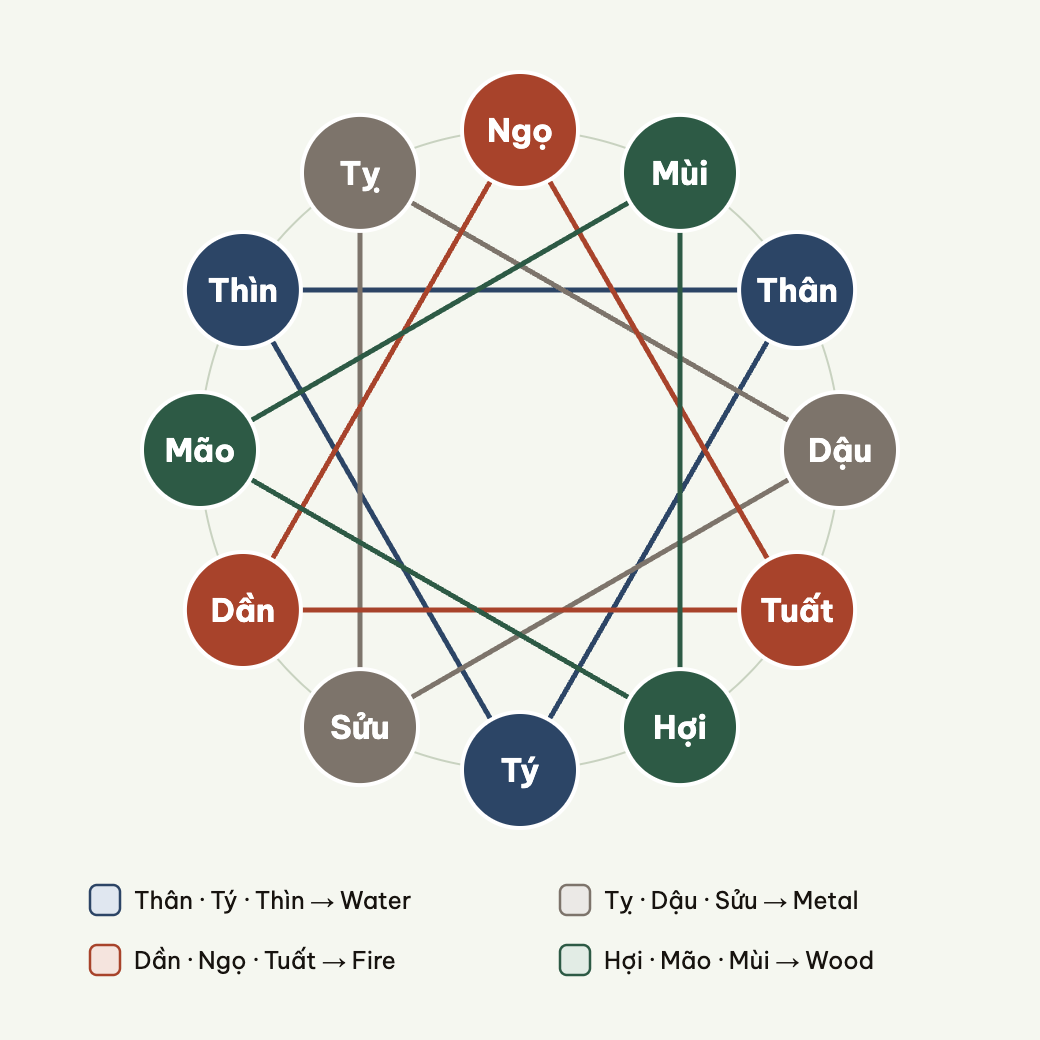
Conversely, within the Tứ Hành Xung (Four Clashing Signs) group of Tý - Ngọ - Mão - Dậu, the Rat is traditionally considered to clash with Ngọ (Horse), Mão (Cat), and Dậu (Rooster). This is one of three sets of four opposing signs along the Earthly Branch axis, often referenced when assessing marriage or business compatibility. That said, such clashes in traditional astrology are only a reference point, not the sole determining factor in any relationship.
What are recent Rat birth years?
Since the 12-animal cycle repeats steadily, people born in the Year of the Rat include those born in 1984, 1996, 2008, 2020, with the next Rat year being 2032. Each Rat year is paired with a different Heavenly Stem (Giáp Tý, Bính Tý, Mậu Tý, Canh Tý, Nhâm Tý, and so on), creating subtle differences in Nạp Âm destiny element even among people who share the same Rat sign.
Quick-Reference Table: the Rat sign
| Aspect | Content |
|---|---|
| Animal | Rat |
| Element of the branch | Water |
| Hour range | 23h-1h |
| Best-matched trio | Thân, Thìn |
| Clashing group of four | Ngọ, Mão, Dậu |
| Harm pair | Mùi |
Figures in this table match the results of the lookup tools on Nhật Nguyệt.


