Enneagram Type 2 , The Helper: In-depth Knowledge
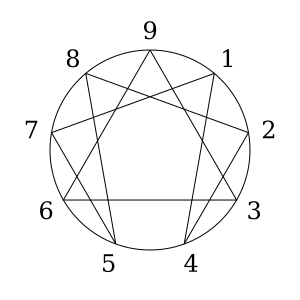
Enneagram is a comprehensive personality classification system of Greek origin, where 'Ennea' means 9 and 'Gram' means 'drawing'. It maps 9 distinct personality types on a circular diagram. While human nature contains all 9 types, life experiences push each person toward one dominant type. Type 2, known as The Helper, is one of the most relationship-oriented and emotional types.
Core Motivation and Fear
The Helper is driven by a deep need to feel loved, but crucially, they believe love is earned by being indispensable to others.
- Core Motivation: To be loved and appreciated.
- Core Fear: Being unwanted, unworthy of love, or abandoned.
- Hidden Longing: To feel worthy of love unconditionally, without having to earn it through self-sacrifice.
This creates a paradox: Type 2 gives the most, yet internally craves recognition the most.
Key Characteristics
Type 2 belongs to the Heart Triad (Feeling Center). They navigate the world through emotions and their self-image in others' eyes.
- Behaviorally: They proactively attend to others' needs, remembering birthdays and offering practical help. They have an exceptionally sharp 'emotional radar'.
- Emotionally: They feel proud and energized when asked for help. Conversely, having help rejected feels like a personal rejection.
- In Communication: Their language is warm, encouraging, and empathetic.
Strengths of The Helper
At their healthiest, Type 2 individuals are among the most positive and reliable personality types.
- Deep Empathy: They naturally sense and connect with others' emotions.
- Unconditional Generosity: They give time, energy, and presence without keeping score.
- Need-Reading Ability: They have a gift for seeing others' potential and are excellent relationship builders.
- Practical Altruism: Unlike abstract comfort, their help is concrete and action-oriented.
Hidden Shadows and Pitfalls
The greatest trap for Type 2 lies in repressing their own needs and subtle manipulation.
- Covert Manipulation: They may unconsciously use kindness to create a sense of indebtedness, leading to resentment when reciprocity doesn't match expectations.
- Self-Neglect: They care for others so much that they forget their own physical and emotional needs, leading to burnout.
- Inability to Receive: They are generous givers but find it extremely difficult to accept help, fearing it makes them weak.
- Pride as a Core Sin: Their 'deadly sin' is Pride. They pride themselves on never needing help, believing their selflessness entitles them to love.
Wings and Arrows Dynamics
- Wings: 2w1 tends toward principled, moral helping. 2w3 is more ambitious, outgoing, and craves visible success.
- Integration (Growth to Type 4): Healthy Type 2 moves toward Type 4, learning to face their own emotions and nurture themselves creatively.
- Disintegration (Stress to Type 8): Under prolonged stress, they become aggressive, controlling, and domineering, using anger to mask hurt.
Growth Advice for Type 2
- Practice receiving: Start by saying 'yes' when someone offers help.
- Set healthy boundaries: Learn to say 'no' without guilt.
- Examine expectations: Ask yourself if you help because it's needed or because you want to be liked.
- Allow yourself to exist without proving worth: Your value is inherent, not dependent on what you do for others.
For career guidance, Type 2 thrives in healthcare, education, counseling, HR, and community-building roles. The key is finding an environment that respects personal boundaries and prevents exploitation of their kindness.