



TL;DR: The Dần - Ngọ - Tuất triple harmony is the group of three zodiac animals belonging to the Fire element in the Earthly Branches system, comprising the Tiger (Dần), Horse (Ngọ), and Dog (Tuất). This group is formed based on the yin-yang and Five Elements principles of the ancients, symbolizing strength, passion, and loyalty. The article analyzes the origins, principles, and characteristics of this triple harmony group.
What is the Dần - Ngọ - Tuất triad?
In the 12 animal sign system (Earthly Branches) of East Asian culture, the triad (tam hợp) is a way of grouping three animal signs that share a harmonious, mutually supportive relationship. In the common division, the 12 animal signs are split into four triad groups, each tied to one of the five elements:
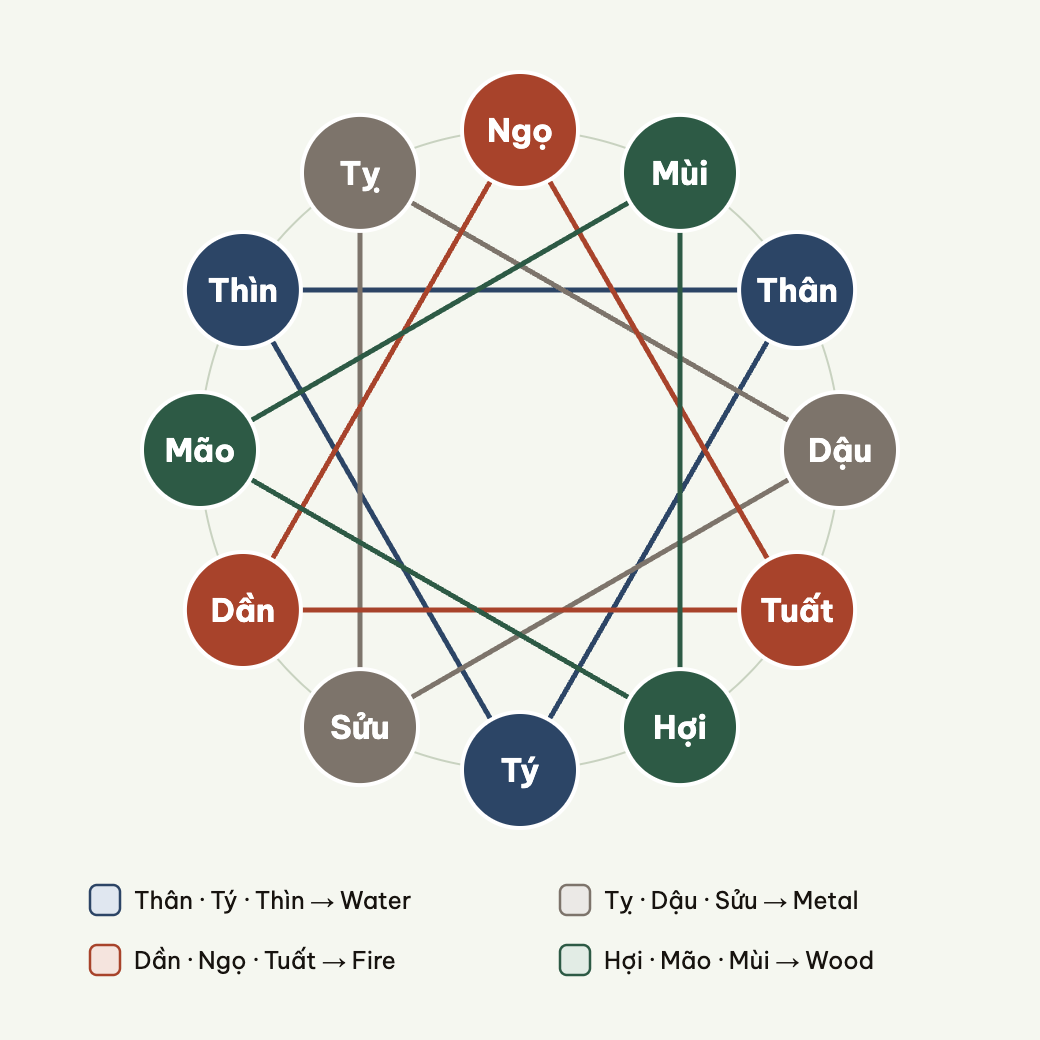
| Triad group | Animal signs |
|---|---|
| Thân - Tý - Thìn triad (Water element) | Monkey, Rat, Dragon |
| Dần - Ngọ - Tuất triad (Fire element) | Tiger, Horse, Dog |
| Tỵ - Dậu - Sửu triad (Metal element) | Snake, Rooster, Buffalo |
| Hợi - Mão - Mùi triad (Wood element) | Pig, Cat (Chinese zodiac: Rabbit), Goat |
The Dần - Ngọ - Tuất triad belongs to the Fire element, often called the Fire element group. These three animal signs share a yang nature (Dần, Ngọ and Tuất are all yang branches in the yin-yang view of the ancients), symbolising strength, passion, an unyielding spirit and loyalty.
Origins and basis of formation
According to documents from Tuổi Trẻ Online, the 12 animal sign system (Earthly Branches) was formed on a foundation of ancient philosophy. The ancients took the yin numbers (even numbers) 2, 4, 6, 8, 10, then took the middle number 6 and doubled it to create the 12 branches: Tý, Sửu, Dần, Mão, Thìn, Tỵ, Ngọ, Mùi, Thân, Dậu, Tuất, Hợi. Among these, the yang branches are Tý, Dần, Thìn, Ngọ, Thân, Tuất; the yin branches are Sửu, Mão, Tỵ, Mùi, Dậu, Hợi.
The ten Heavenly Stems and twelve Earthly Branches combine to produce the Lục thập hoa giáp (the 60-year cycle). The stem-branch calendar differed across the three dynasties of Hạ, Thương and Chu; today the calendar system of the Hạ dynasty is used, taking the month of Dần as the start of the year.
Assigning each animal sign to a time slot in the day is also based on the habits of the animals. Specifically:
| Animal sign | Time slot | Characteristics |
|---|---|---|
| Dần | 3am - 5am | When the tiger is at its most ferocious, hunting and moving powerfully in the deep forest. |
| Ngọ | 11am - 1pm | When the horse has its highest yang energy, full of vitality and at its most active. |
| Tuất | 7pm - 9pm | When the dog must stay alert to guard the house, at its most vigilant. |
These three time slots are all yang, reflecting a strong, actively energetic nature. The similarity in yin-yang and in character is the basis for forming the Fire element triad group.
What is the principle of the triad in the Earthly Branches?
The triad is not a random combination but rests on the laws of yin-yang and the five elements. Each triad group consists of three animal signs sharing the same element, forming a solid three-legged stance. In the Dần - Ngọ - Tuất group:
- Dần (Tiger) belongs to the Wood element, but when combined with Ngọ and Tuất it forms the Fire element group. This comes from the generating relationship: Wood generates Fire.
- Ngọ (Horse) belongs to the Fire element and is the centre of the group.
- Tuất (Dog) belongs to the Earth element, but Earth can generate Fire and contain Fire.
Combined, these three animal signs create a flourishing Fire force, symbolising strength, explosive energy and passion. The ancients held that people in this triad group tend to have strong, decisive characters, are full of energy and can inspire others.
Personality traits of each animal sign in the group
What is the character of people born in the year of Dần (Tiger)?
According to Tuổi Trẻ Online, people born in the year of the Tiger are often very quick to anger and lacking in firm stance, but they can also be very gentle and can shift their personality to adapt to circumstances. The tiger is the lord of the green forest, often nocturnal, and evokes images of dark shadows and storms. The hour of Dần begins from 3am to 5am, when the tiger returns to its cave after stalking through the night. The tiger represents strength, courage and majesty.
What is the character of people born in the year of Ngọ (Horse)?
People born in the year of the Horse tend to speak gently, are relaxed and generous. As a result, they are easily liked by many people but rarely take advice. People of this sign often have a very hot temper. The speed of a galloping horse makes people think of the sun shining down on the earth each day. In mythology, the sun is said to be linked to horses in a rage. This sign is often said to have a pure, noble and wise nature. People born in the year of the Horse are often valued for being intelligent, strong and full of warm human affection.
What is the character of people born in the year of Tuất (Dog)?
The year of Tuất indicates a prosperous future. Around the world, dogs are used to guard homes against intruders. Pairs of stone dogs are often placed on either side of village gates for protection. The year of Tuất is believed to be a very safe year. The dog symbolises loyalty and protection.
What is the relationship in the Dần - Ngọ - Tuất triad like?
The Dần - Ngọ - Tuất combination creates a diverse but harmonious mix of personalities:
- Dần brings fierceness, a pioneering spirit and a fighting spirit.
- Ngọ brings passion, freedom and the ability to spread positive energy.
- Tuất brings loyalty, protection and a sense of responsibility.
When these three animal signs combine, they complement one another: Dần supplies strength and decisiveness, Ngọ supplies energy and creativity, Tuất supplies stability and loyalty. This is the triad group of people of action, who love to explore and are not afraid to face challenges.
However, the weakness of this group is hot-headedness and impatience. All three animal signs tend to act on instinct, sometimes without thorough thought. Combined, they can create great strength but can also easily come into conflict if they do not know how to restrain themselves.
Applications in life and culture
In East Asian culture, the triad is applied in many areas:
- Marriage and family: The ancients often looked at triad compatibility when choosing a partner, in the belief that people in the same triad group will find it easier to get along and support each other in life.
- Business and cooperation: Choosing business partners from the same triad group is thought to help work go smoothly with fewer conflicts.
- Choosing days and hours: In feng shui and calendrical practice, the triad is used to choose auspicious days and hours for important events.
However, it should be noted that this is a folk belief and is for reference. The triad should not be treated as an absolute deciding factor for success or happiness. Relationships between people also depend on many other factors such as personality, circumstances, effort and communication.
How does the Dần - Ngọ - Tuất triad differ from other groups?
Compared with other triad groups, the Dần - Ngọ - Tuất Fire group has its own features:
- Water group (Thân - Tý - Thìn): This group leans towards intellect, flexibility and adaptability. Water symbolises gentleness and suppleness.
- Metal group (Tỵ - Dậu - Sửu): This group leans towards steadfastness, endurance and discipline. Metal symbolises sharpness and decisiveness.
- Wood group (Hợi - Mão - Mùi): This group leans towards creativity, sensitivity and compassion. Wood symbolises growth and development.
The Dần - Ngọ - Tuất Fire group stands out for its strength, passion and fighting spirit. This is the group of pioneers, who dare to think and dare to act and are not afraid of hardship.


