
TL;DR: The văn khấn mùng 1 cúng gia tiên (first-day-of-month ancestor prayer text) is not one fixed script but a structure of five parts: opening, self-identification, invitation to deities and ancestors, petition, and dedication. Traditional prayer books and commonly circulated versions differ in wording and in whether deities or ancestors are addressed first, so a household may follow any version as long as the core parts are kept and the heart is sincere.
What Is the Mùng 1 Prayer Text and Why Is There an Ancestor Offering on the First Day of the Lunar Month?
Mùng 1 âm lịch is the first day of the lunar month, regarded as the start of a new cycle. In Vietnamese folk belief, mùng 1 and the full moon (15th lunar day) are the two sóc vọng days, when people prepare offerings to deities and ancestors to pray for a peaceful, lucky, and favorable new month[1].
A văn khấn is ritual speech read before the altar when making an offering. It is not a mandatory incantation that must be recited word for word; it is how the living address the deceased and the deities who govern their living space, announcing the ritual, inviting them to witness and partake. So the question "how to read it correctly" is really about structure and ritual order, not about one single text.
What Parts Does the Mùng 1 Ancestor Prayer Text Include?
A mùng 1 ancestor prayer text, whichever variant, usually has five parts. Part one is the opening, often "Nam mô A Di Đà Phật" recited three times, then "Con lạy chín phương Trời, mười phương chư Phật, chư Phật mười phương". Part two honors the governing deities: Hoàng thiên, Hậu thổ, chư vị Tôn thần, ngài Bản cảnh Thành hoàng, ngài Bản xứ Thổ địa, ngài Bản gia Táo quân[2]. Part three honors ancestors, naming Tổ khảo, Tổ tỷ, chư vị hương linh nội ngoại. Part four is self-identification: the tín chủ's name, residence, the date, and the offerings. Part five invites the spirits to descend and witness, then the petition, ending with dedication and "Nam mô A Di Đà Phật" three times[2].
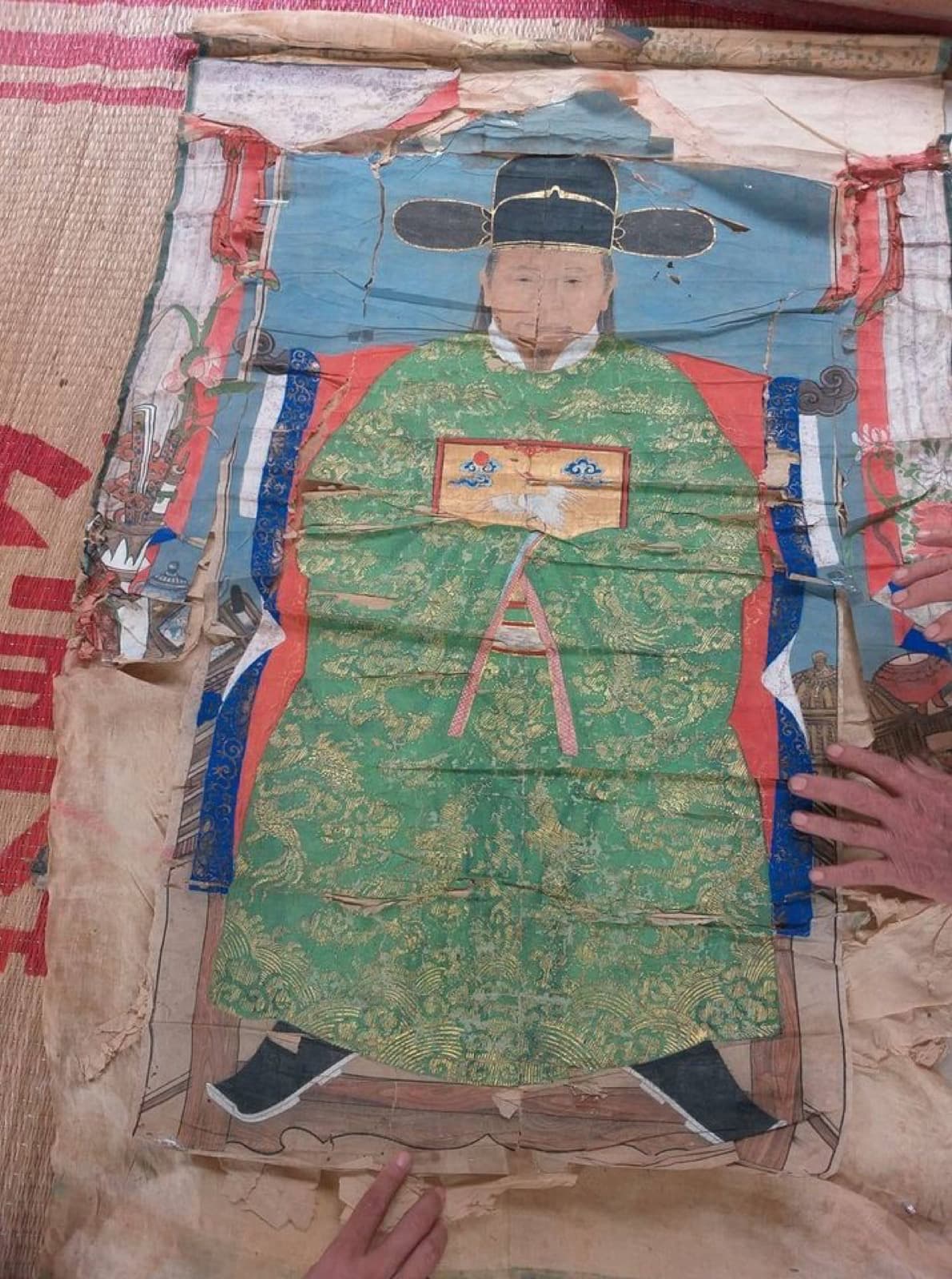
This structure shows an important feature: the mùng 1 prayer text addresses not only ancestors but also deities. In the prayer text for the 8th lunar month of Bính Ngọ 2026 published by VietNamNet, the householder honors Hoàng thiên Hậu thổ, Bản cảnh Thành hoàng, Bản xứ Thổ địa, Bản gia Táo quân, and only then ancestors, Hiển khảo, Hiển tỷ, chư vị hương linh[2]. This is the order of deities first, ancestors second, reflecting the belief that deities rank above in the hierarchy of the worship space.
Why Are There Many Different Prayer Texts, and Which Should Be Followed?
There are many versions because the prayer text is an oral text, hand-copied and reprinted over generations, and each region and family may add or omit. In a study on the practice of cúng sao giải hạn, author Lê Đức Hạnh notes that there are various documents for the prayer, including handwritten texts and printed ones such as Tập Khấn Nôm of Thái Bình, Văn khấn cổ truyền Việt Nam edited by Thượng toạ Thích Thanh Duệ and Nguyễn Bích Hằng, and Văn khấn nôm truyền thống by Thượng toạ Thích Viên Thành.
This means there is no "national standard" for the mùng 1 prayer text. Versions circulating in the press are usually compiled from traditional prayer books, and the articles themselves label them "Tổng hợp". For example, the mùng 1 prayer text for the 7th lunar month of 2026 on VietNamNet has two separate texts: one for deities and thổ công, and one for ancestors; the deity text adds figures such as ngài Đông Thần quân, ngài Bản gia Thổ địa, Long mạch, các ngài Ngũ phương, Ngũ Thổ, Phúc đức tôn thần, ngài Tiền hậu địa chủ Tài thần[3]. Compared with the 8th-month text, the list of deities differs slightly[2].
So the practical answer is: a household may follow whichever version fits its family tradition, as long as the core parts are kept: opening, self-identification, invitation to deities and ancestors, petition, dedication. More important than the wording is sincerity and understanding of what one is doing.
Is the Order of Deities Then Ancestors Mandatory?
Honoring deities first and ancestors second is the common order in current mùng 1 prayer texts[2][3]. The reason expressed in the texts is that deities govern the space while ancestors are members of the lineage, so deities are invited first to ask permission to hold the ritual in the area they govern, then ancestors are invited to witness.
However, some versions honor only ancestors without deities, or combine them. In the mùng 1 prayer text for the 7th lunar month, the ancestor section still includes homage to ngài Đông trù Tư mệnh Táo phủ Thần quân, Ngũ phương, Ngũ thổ, Phúc đức chính thần, and only then to Cao Tằng Tổ Khảo, Cao Tằng Tổ Tỷ[3]. So even within an "ancestor prayer" there is a deity section, showing that in practice the division is not absolute.
What Is on the Mùng 1 Offering Tray, and Must It Be Non-Vegetarian?
There is no hard rule for the mùng 1 offering tray. According to culinary artisan Phạm Thị Ánh Tuyết (Hà Nội), the ancestor tray is usually a savory feast with xôi, boiled chicken, soup, and rice, but depending on choice, some families offer a vegetarian tray[1]. A vegetarian offering should not lack incense, flowers, betel and areca, fruit, votive paper, water, plus a vegetarian tray of xôi, chè, and stir-fried vegetarian dishes. For a savory tray, families often prepare mung bean xôi, boiled chicken, stir-fried beef, bóng mọc soup, spring rolls, and lemongrass-steamed shrimp[1].
Families may also choose seasonal foods and dishes suited to their taste. The tray should be carefully prepared and nicely presented, showing the householder's sincerity[1].
One point worth noting is regional differences in the tray, though this is usually discussed in the context of Tết Nguyên đán rather than the ordinary mùng 1. According to cultural researcher Phạm Đình Hải, the offering trays on Tết days such as mùng 1, mùng 2, mùng 3 are mainly prepared items that can be the same, and most important is that the tray have hot rice, hot soup, new wine, and fresh water[4].
Common Mistakes When Reading the Mùng 1 Prayer Text
The first mistake is reciting by heart without understanding the meaning. The text contains many Sino-Vietnamese terms such as "tín chủ", "hương linh", "hiển khảo", "hiển tỷ", "cù lao tiên tổ"; without understanding, one may misread and lose connection with what one is saying.
The second mistake is omitting self-identification and address. This is the most important part ritually, because it is when the living introduce who they are, where they live, and what ritual they are performing. All prayer texts have blanks for name and residence[2][3].
The third mistake is reading too fast or too softly. The guide for Tết mùng 1 offerings states clearly: the prayer should be read clearly, stating the date and time, the householder's name, and address, and the householder must be sincere[4].
The fourth mistake is confusing the deity prayer and the ancestor prayer when there is only one altar. If the house has only one shared altar, the householder may read a combined text, or read the deity text first then the ancestor text, depending on family tradition.
Does Reading the Prayer Correctly Guarantee a Successful Offering?
No. In Vietnamese belief, the deciding factor is sincerity, not wording. Researcher Phan Kế Bính, in Việt Nam phong tục (1915), discussing giỗ chạp, emphasized that the original intent of those who established the rites was to show gratitude to predecessors, "là một ý bất vong bản mà thôi", not to hold a party or socialize[5]. That spirit applies to the mùng 1 offering too: offering is to remember and repay, not to chase form.
This also means a householder should not worry too much about missing a sentence or a word, or using a version different from a neighbor's. The greater concern is doing the ritual carelessly, without sincerity, or turning the offering into a drinking party, just as Phan Kế Bính criticized families who used giỗ as an excuse for merriment, drinking, gambling, and opium smoking[5].
How Does the Mùng 1 Prayer Text for the 7th Lunar Month Differ from Other Months?
In structure, the mùng 1 prayer text for the 7th month does not differ from other months. The difference is context: the 7th lunar month is also called tháng cô hồn in folk belief[3]. So on mùng 1 of the 7th month, besides honoring ancestors, many families also prepare fruit or set an offering tray for deities, thổ công, and ancestors, and prepare the full prayer text[3]. Some families also avoid major undertakings this month[3].
In calendrical terms, mùng 1 of the 7th lunar month of 2026 falls on Thursday, 13/8/2026 solar[3]. The 7th lunar month of 2026 begins on 13/8 solar and ends on 10/9 solar, meaning it has 29 days[1]. These are calendrical facts that can be cross-checked with a printed calendar or an independent calculation.
Conclusion
The mùng 1 ancestor prayer text is a ritual with a clear five-part structure, but the exact wording has many variants and none is considered the sole standard. Householders should understand each part, state their name fully, read clearly, and be sincere, rather than memorizing a text without understanding what they are saying. The offering tray may be savory or vegetarian, as long as it is carefully prepared and offered with respect for ancestors and deities.