What is tarot and why is it so appealing?
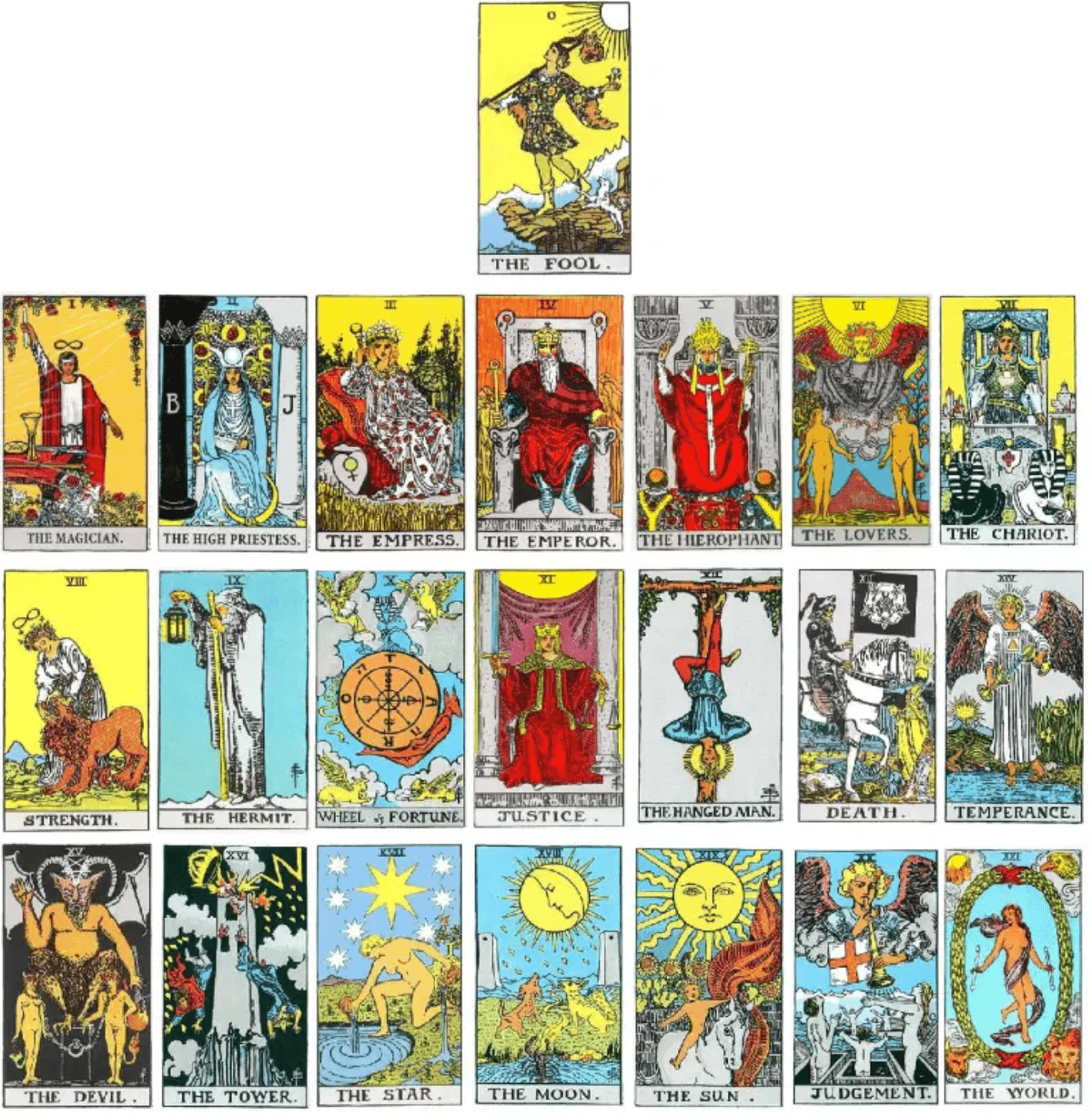
Tarot is a 78-card deck, each card carrying an image with astrological, constellation, or religious symbolism, along with its own story tied to human life. In the West, tarot is seen as a form of divination and healing. When it arrived in Vietnam, it quickly became a way of "fortune telling" to ease spiritual needs.
Tarot's appeal lies in making you feel heard without judgment. A student in Ho Chi Minh City shared that whenever she is stressed, she turns to tarot, and after each reading she feels calmer, less anxious, and gains more direction. A 25-year-old in District 3 said there are things he cannot share with family, so it is easier to talk to a stranger, and the cards help him make decisions faster.
That sense of relief is real. The problem is not the feeling itself, but whether you still keep the right to decide for yourself.
Where is the line between healing and dependence?
Healing is when tarot helps you name your emotions, see the problem from another angle, and then you move forward on your own. Dependence is when you no longer dare to decide without asking the cards first.
According to Master of Psychology Nguyen Thi Dao Luu, a lecturer at Van Lang University, she does not support the abuse of tarot reading because it is an activity not scientifically proven. If you let yourself be dominated by "cosmic signals" provided by others, you fall into a passive state. Reading tarot too often makes individuals dependent on others' predictions, losing the ability to think, decide, and be autonomous.
Dr. Le Thi Truc Anh, a cultural studies scholar at the Ho Chi Minh City Academy of Cadres, views the issue from a broader root: curiosity and the desire to guess the future are natural human motivations. But when fortune telling is tied to profit motives and commercialized on social media, it becomes a social problem with negative impacts. She also points to deeper causes: people who seek divination are often struggling to define their core personal values, have lost goals and direction, and face livelihood pressures and post-Covid-19 hardships such as unemployment, illness, separation, and rising divorce.
In other words, tarot does not create dependence. It only fills the void left by a lack of rational stability and psychological confusion.
Five signs you are dependent on a card
Sign 1: You cannot decide without asking the cards
This is the clearest sign. One interviewee admitted that the cards influenced his decision to continue or end a relationship. When a card has veto power over your choices, you have handed over your autonomy to it.
Sign 2: You come back more often, but do not feel lighter
Frequency itself is not the problem. The problem is the emotional curve. If after each reading you feel lighter, then a few days later you need another reading because the anxiety returns exactly as before, you are using tarot as a painkiller, not as a mirror.
Sign 3: You keep asking the same question
Repeating the same question hoping for a different answer is a sign you are not seeking information, you are seeking permission. You want the card to say what you already know but dare not do.
Sign 4: You spend beyond your means on readings
In reality, posts offering tarot readings publicly list prices from 35,000 to 250,000 VND, or "pay what you feel", based on the number of questions or time. Many people believe regardless and spend quite a lot on this. Many young people even quit their jobs to take tarot courses costing from 2 million to 10 million VND each, advertised as "you can practice professionally after just a few courses". When spending on tarot competes with other essential needs, that is a signal to stop.
Sign 5: You have no one else to ask
If tarot becomes the only place you dare to open up, the problem is no longer the card but that your support network has shrunk. One person confided that he turned to tarot because he could not share with family. Emotional isolation often precedes dependence, not the other way around.
| Sign | Specific manifestation | Level of concern |
|---|---|---|
| Cannot decide alone | Waiting for a card to veto or permit before acting | High |
| Coming back more often without feeling lighter | Feel light after a reading, then anxious again a few days later | Medium to high |
| Asking the same question again | Wanting to hear a different answer from the one received | Medium |
| Spending beyond means | Reading fees, courses competing with essential expenses | High |
| Losing support network | Tarot is the only place to open up | High |
Why does tarot cause dependence more easily than other practices?
Tarot has three features that make it prone to addiction. First, it gives quick and specific answers, while real life is often ambiguous. Second, it happens in a private setting, one teacher and one student, creating a sense of intimacy and safety. Third, it does not require you to change your behavior, only to come back.
Add the social media context, tarot services appear everywhere with attractive ads like "guaranteed accurate results, if not we refund 50%". Groups gather tens of thousands of followers, where readers treat this as their main income. When a belief is professionally marketed, the psychological barrier to doubt is also higher.
Legally, superstitious practices can be handled under the Cybersecurity Law, the 2015 Penal Code, Decree 158/2013/ND-CP and Decree 38/2021/ND-CP. In reality, there have been cases fined 7.5 million VND for posting superstitious clips, "spirit summoners".
When is tarot truly useful?
Tarot is useful when it serves as a self-reflection tool, not a judging authority. Specifically, it helps you ask better questions of yourself, see a situation from an angle you had not considered, and name emotions that are being covered up.
Dr. Le Thi Truc Anh advises that you can use tarot to relieve curiosity, but should selectively receive information. When you detect signs of exploitation or fraud, report immediately to authorities. Master Dao Luu also warns that many young people are exploited by bad actors for extortion when their weaknesses and worries are exploited, even being dragged into rituals to ward off bad luck, losing money and health. There are also cases of transferring deposits to book tarot readings and then the reader disappears.
How to keep tarot in its proper place?
The simplest practice is to set limits before reading. For example, only read once for one issue, do not ask again within a set period, and always write down your own decision before hearing the interpretation.
Another step is to expand your support network. If you have only one place to confide, find another friend, family member, or psychologist. Diversity of resources is a natural barrier against dependence.
Dr. Truc Anh suggests developing yourself instead of believing in divination: each person should be self-aware and list their own bad habits, then plan to gradually leave them each day, each week. According to her, people have good destiny not because of one good habit, but because of countless good habits that form a reliable character, making surrounding relationships more pleasant and useful.
Master Dao Luu emphasizes that young people need to cultivate their own abilities to increase confidence, believe in their own problem-solving capacity instead of waiting for supernatural forces to open the way, and build a healthy spiritual life with safe spiritual anchors.
Self-check questions before your next reading
Before opening the deck next time, you can ask yourself: am I seeking information or seeking permission? If the answer is permission, the card will not help. If it is information, write down what you want to know, and after hearing the interpretation, decide for yourself.
Another question: if there were no cards today, would I dare to do what I am considering? If the answer is no, the problem lies elsewhere, not with tarot.
Tarot is neither bad nor good. It is a tool, and a tool depends on the user. What matters is not the card you draw, but whether you still hold the right to write your own story or have handed the pen to someone else.