Traditions are fragmented and easy to exploit. Can knowledge fix that?
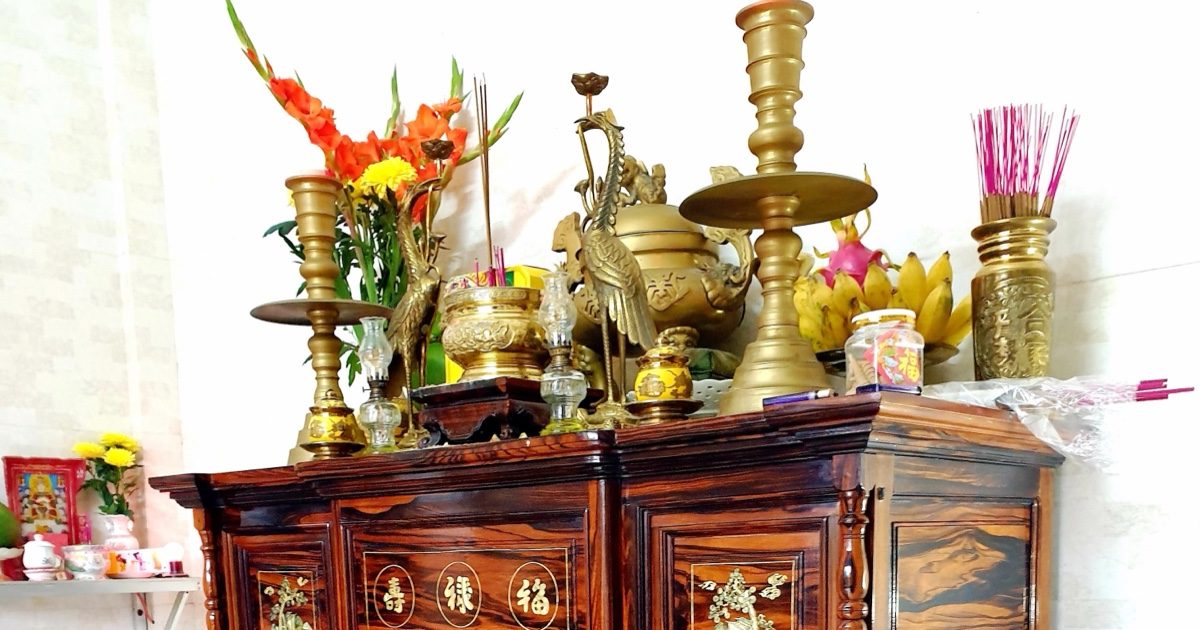
Image: Phương Huy (CC0, public domain), source
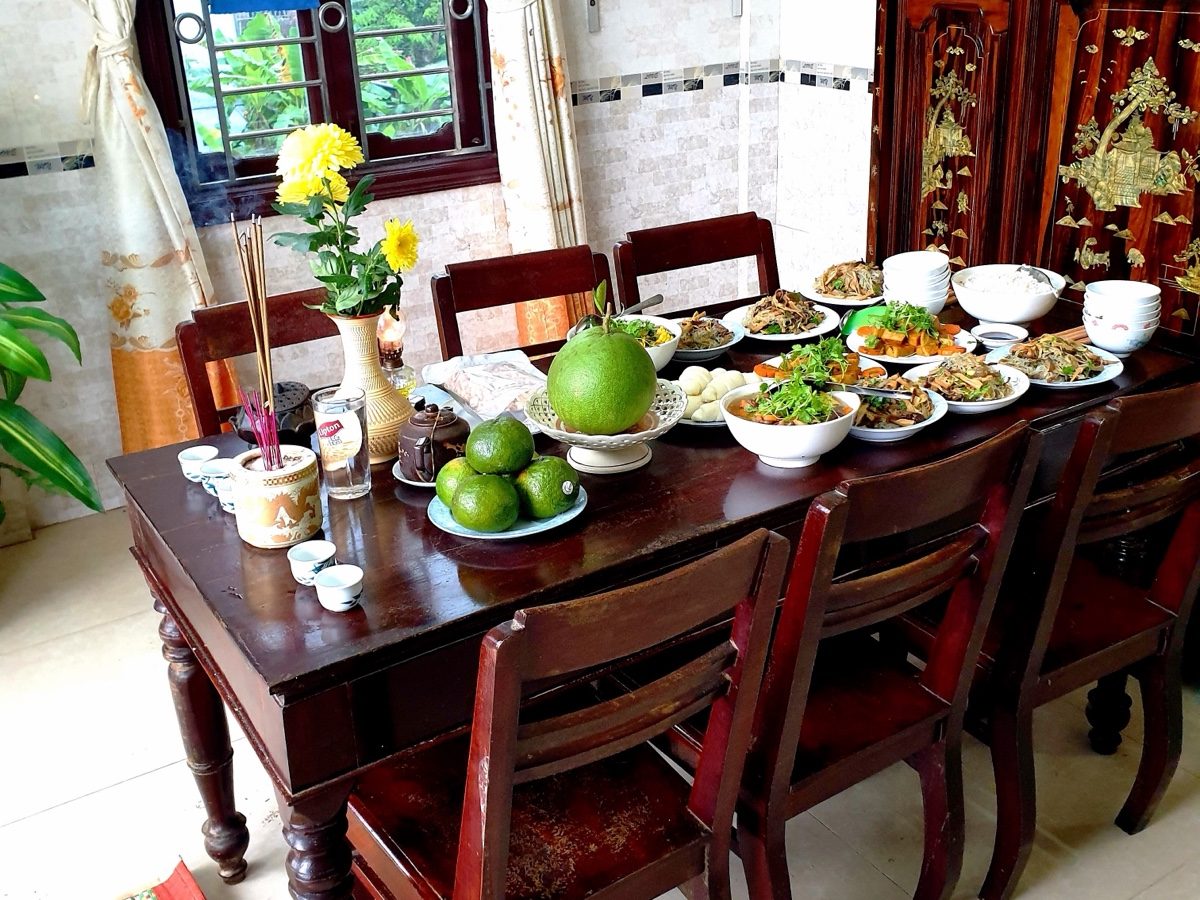
A family is preparing the first death anniversary for their grandfather. One of the children searches "what to offer at a first death anniversary", and ten pages give ten answers: one says the offering is made the day before, another says on the day itself, another attaches a long list of offerings and a phone number for a full-service package. None of them says where the information comes from.
So the family asks the eldest uncle, who remembers the most. He remembers how his village did it, but cannot say why, and is not sure how the next village does it.
The scene is so familiar that few people find it strange. This piece asks why it happens, and how far citing a source for each claim can help.
Why are Vietnamese customs so fragmented?
Because most customs are passed on by doing, not by writing. Children learn the rites by standing next to their grandparents, and each village and each clan keeps its own way. When the elders move away or pass on, that memory goes with them.
What has been written down sits in three places that are hard to reach:
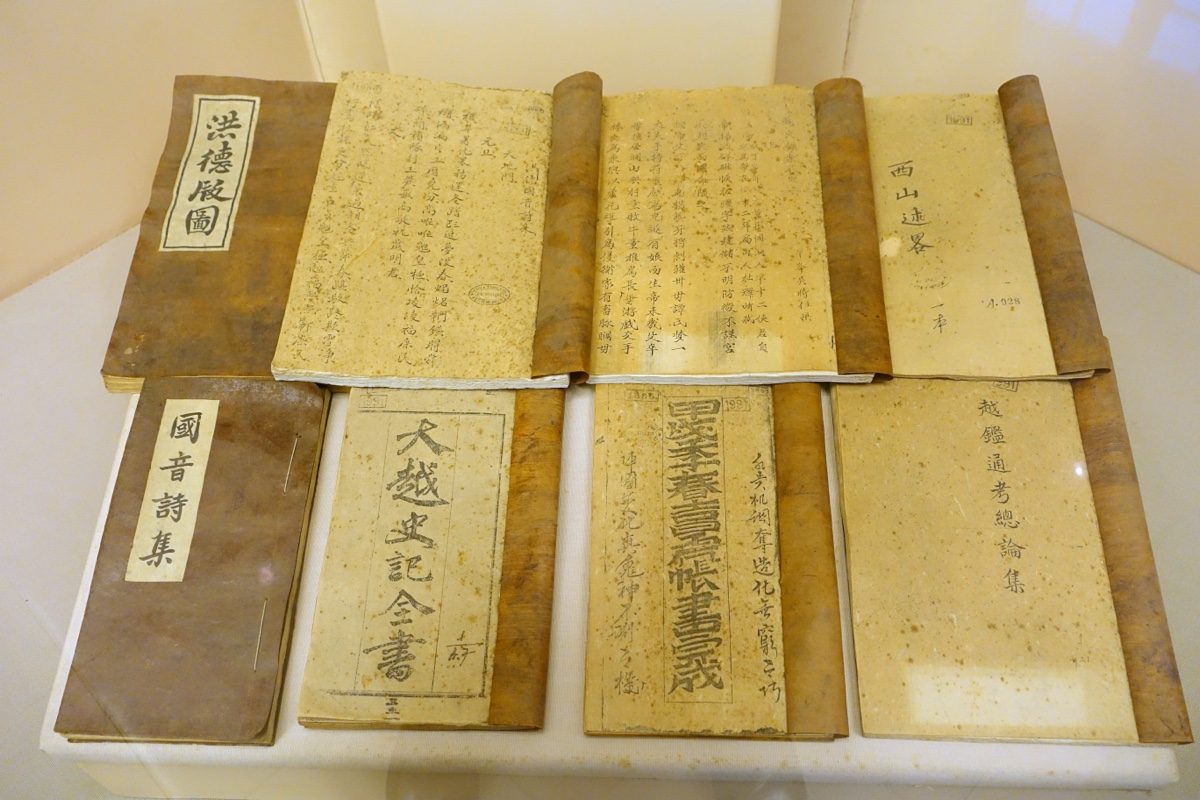
- Hán Nôm books: many records of rites are written in classical Chinese characters or in chữ Nôm, and few people today can read them in the original.
- Early 20th-century studies: such as Phan Kế Bính's Việt Nam phong tục (Vietnamese Customs), readable but known to few.
- Web pages: the easiest to find, but many are copied from one another, each copy adding or dropping a little, with no note of where it came from.
How does that gap get exploited?
When nobody can check what the tradition actually says, the most confident voice tends to be believed. A few scenes many people have met:
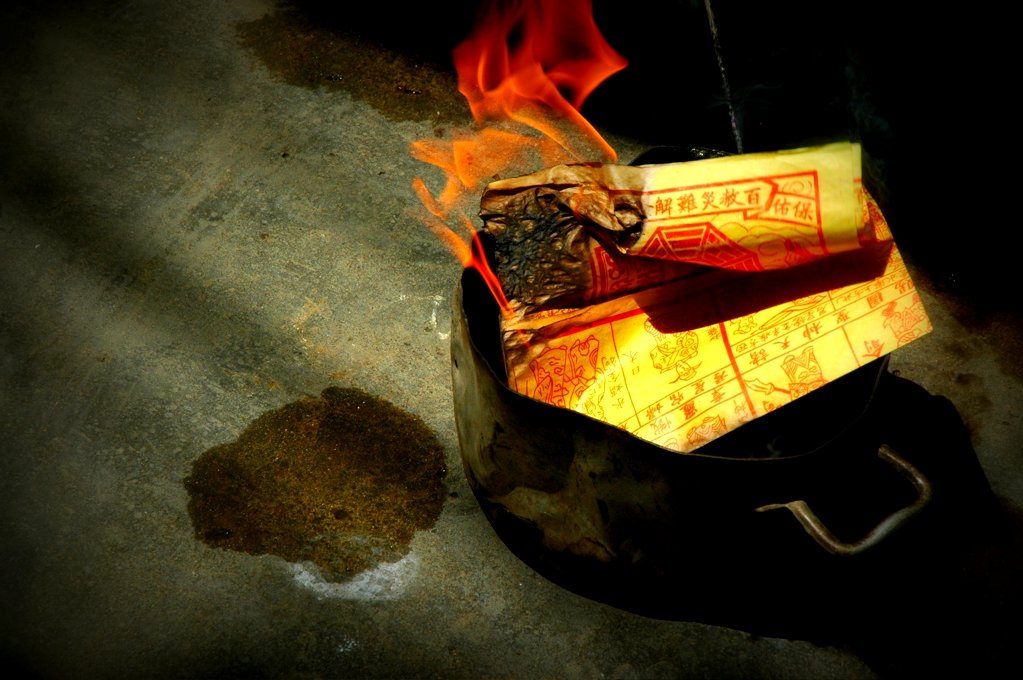
- A warning that this year brings "bad stars", followed by a full-service ritual to ward them off.
- A list of unlucky days so long that every month has something to avoid, then an item you must buy to undo it.
- Charms and objects sold as "from the old books", without saying which book or which passage.
What these scenes share is not the ritual itself. Making offerings to the stars, burning votive paper and choosing dates are real practices in many households. The problem is that the listener has no way to compare what they are told with what books and customs actually record.
What does "sourced knowledge" mean in practice?
It means every claim says what kind of claim it is and what it rests on. Having a source does not make every statement equally true. A claim about a lunar date, a claim about how one region holds a rite and a claim about yearly stars are three very different things:
- Calendar facts: lunar dates, leap months and solar terms are computed from the motion of the Moon and the Sun, and anyone can check them.
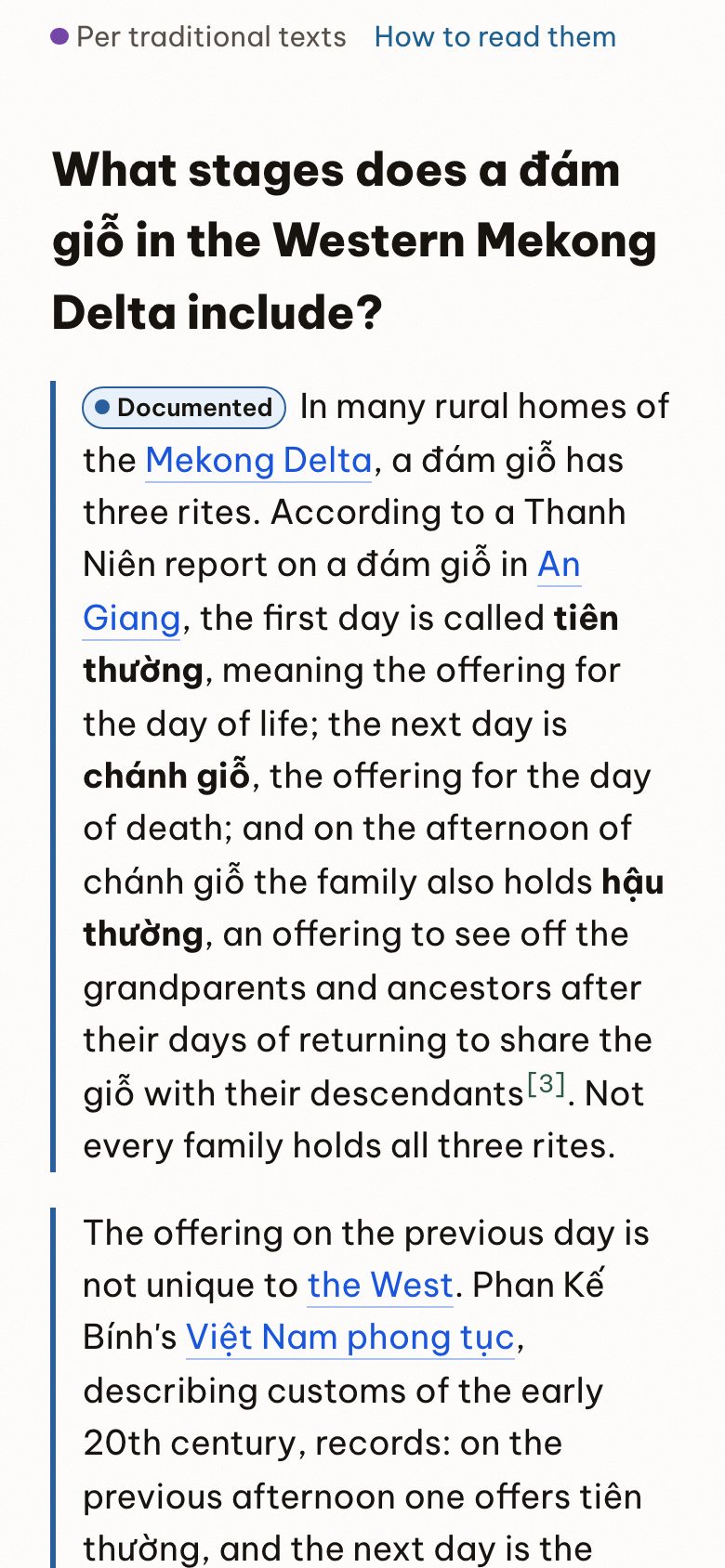
- Recorded customs: what studies and newspapers have described, for one place and one period. The tiên thường offering on the afternoon before a death anniversary, for instance, was recorded by Phan Kế Bính in Việt Nam phong tục.
- Folk beliefs: what many people believe, such as a yearly governing star. It is real as a belief, not as a fact.
- One school's rules: how a school places the stars or reads a chart from its own books. Another school may read it differently, and no school has been empirically tested.
Separated this way, "this year brings you bad stars" shows what it is: one school's rule, spoken in the voice of a fact.
Where does science help, and where does it not?
Science answers the calendar completely; on belief, it can only say what has been tested. Lunar dates are astronomical calculations, so they can be compared with data from NASA and the Paris Observatory (IMCCE). At Nhật Nguyệt, the calendar is checked against 2,474 NASA new moons from 1901 to 2100 and 4,824 IMCCE solar-term instants; solar-term times differ by 4.2 minutes on average.
Some questions sit right where the two meet. If someone died in a leap month, in which month is the anniversary held? Which years have which leap month is calendar, and computable; holding the yearly anniversary in the regular month is a custom, answered and recorded by the newspaper Giác Ngộ, not a calculation.
Whether a governing star makes someone's year better or worse is something no astronomical data can answer. There, the honest thing is to say plainly that it is a belief, not tested.
Is there anything sources cannot answer?
Yes, and saying so is part of citing sources. A book records the way of one village at one time; a family that does it differently is not necessarily wrong. Books do not always agree either, especially in the traditional arts, where each school has its own method.
Citing a source does not turn a belief into truth. It tells the reader where they stand: which book says this, who recorded it, and where nobody knows for sure.
What does a family gain from knowing the source?
A shared way of doing things that everyone in the family understands. Once the reason for a rite is written down, relatives far away can still do it themselves, without waiting for the one person in the clan who remembers. The family keeps one anniversary date together, knows why each dish is on the tray, and leans less on whoever claims to know best.
For each person, a Tử Vi or Bát Tự chart read the way the traditional books read it, with a note of which book says what, is a way to look back at one's own temperament and work. It is not a verdict, and it does not foretell the future. Nhật Nguyệt guarantees nothing about anyone's fate.
How is Nhật Nguyệt trying to do this?
By building the knowledge first, and the tools after. A few numbers measured on 20 October 2026:
- 1,723 articles published, of which 391 cite a source for individual sentences, pointing to original texts, licensed newspapers or research. That is only about a quarter; the rest have a reference list at the end but do not yet cite sentence by sentence.
- Each passage carries a label: Calendar, Documented, Folk belief, Per traditional texts or Unproven. What each label means is on the Types of knowledge page.
- 10 entries on the Corrections page record in public what was wrong and has been fixed.
- 33 open datasets on the lunar calendar, the sexagenary cycle and festivals are on the Open data page, for anyone to download and compare.
The article on death anniversaries in the Mekong Delta is one example: the passages on the tiên thường, chánh giỗ and hậu thường rites all carry the Documented label and note numbers pointing to Việt Nam phong tục or to reports in the newspaper Thanh Niên.
What is still unresolved?
Which way a family should follow is something sources cannot decide for it. Citing sources lets readers check what they hear and lays the different practices side by side. But when the book says one thing, the grandparents taught another, and the neighbours do it a third way, who in the family decides, and on what basis?