Introduction to the 3-Card Spread
In Tarot practice, a spread is a specific arrangement of cards used to answer a question or shed light on a situation. Among countless spreads, from simple to complex, the 3-card spread is considered the "golden key" for both beginners and professional readers. It strikes a balance between simplicity – only three cards – and interpretive depth, as each position carries its own layer of meaning.
The most common 3-card spread is the Past – Present – Future model. It helps the reader see the flow of time and the causal connections between events. An article in Tuổi Trẻ Online also touched on choosing Tarot cards to "reveal the past, present, or future" (Cherry Trần, 2024), showing the popularity of this topic among Tarot enthusiasts in Vietnam.
However, reading Tarot is not merely about looking up the meaning of each card. An accurate reading requires a subtle perception of the question's energy, the ability to connect cards, and the humility to recognize that Tarot is a tool for inner reflection, not an absolute prophecy.
Meaning of Positions in the 3-Card Spread
Position 1: The Past – Foundation and Lessons
The first card, usually placed on the left, represents what has already happened – experiences that have shaped who you are in the present. It is not just "the past" but also the root of the issue – thought patterns, beliefs, or events that have led you to this moment.
When reading this card, ask yourself:
- What past event is influencing this question?
- What lesson did I learn from that experience?
- Is there something from the past I am still clinging to that I need to release?
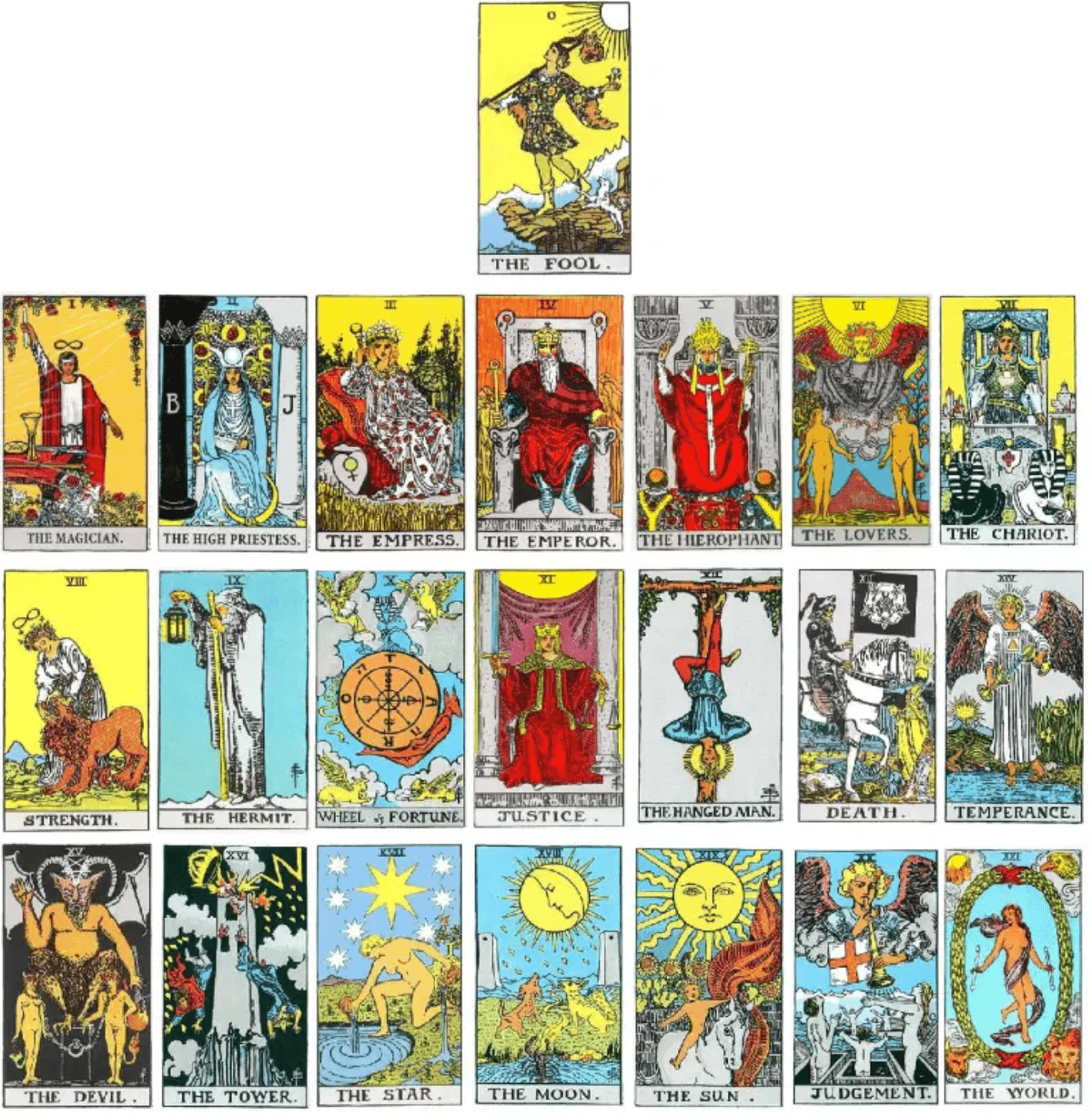
For example, if the card is The Hermit, it may indicate a period when you withdrew from society to seek inner truth. That experience made you more contemplative and independent, but it may also have created isolation. If you are asking about a current relationship, this card suggests that you have had past wounds or lessons about solitude, and that affects how you connect with others today.
Position 2: The Present – Current Reality
The second card, in the middle, reflects the current situation, the energy surrounding you, or the direct answer to your question. This is often the most important card in the spread, as it shows where you are on your journey.
When interpreting, consider:
- What stage is the issue in: beginning, climax, or end?
- What is your dominant emotion right now?
- Is there any factor being overlooked that is actually crucial?
For instance, if the middle card is The Tower, your present is undergoing sudden upheaval or collapse. Instead of panicking, see it as a necessary shock to break down old structures, paving the way for reconstruction. Conversely, if it is The Sun, you are in a bright, successful, and energetic phase.
Position 3: The Future – Potential and Trends
The final card, on the right, represents the potential outcome if you continue on your current path. It is crucial to emphasize: the future in Tarot is not a fixed destiny, but a trend that can change based on your actions and decisions.
Many beginners misunderstand this card as a "certain outcome," leading to anxiety or complacency. In reality, it is like a weather forecast – if you know it will rain, you can bring an umbrella or change your plans. Similarly, if the future card is The Devil in a career question, it warns of the risk of being trapped by material desires, power, or a toxic environment. You can proactively change that environment or mentally prepare to face it.
Steps for a Complete 3-Card Reading
Step 1: Formulate a Clear Question
A good question determines the quality of the reading. Instead of asking "What will my future be?", ask specifically: "What do I need to know about my current relationship?" or "What energy from the past is affecting my career?"
Step 2: Shuffle and Draw 3 Cards
After focusing your mind on the question, shuffle the deck and draw three cards. You can draw from the top or freely choose from any position – this depends on your preferred school of thought. Some readers prefer to draw each card individually for each position, while others draw all three before flipping.
Step 3: Flip and Observe Initially
Before looking up meanings, take a few seconds to look at the three cards as a whole. What is the dominant color? Are there recurring symbols? What is your first feeling? This is important intuitive information.
Step 4: Interpret Each Card by Position
Start with the past card, read its traditional meaning, then adjust it to fit the context of the question. Take quick notes of keywords that come to mind.
Step 5: Synthesize into a Story
Connect the three cards into a logical narrative. For example:
- Past: Five of Cups – you have experienced loss and regret.
- Present: Two of Cups – you are building a new connection.
- Future: Ten of Cups – if you learn to let go of the past, you will achieve lasting happiness.
You see, the three cards do not stand alone; they create a story of healing: from hurt to connection and ultimately fulfillment.
Common Variations of the 3-Card Spread
Beyond the time model, the 3-card spread can serve many other purposes:
Body – Mind – Spirit
- Card 1: Physical health, body energy
- Card 2: Mental state, thoughts, anxieties
- Card 3: Spiritual aspect, connection to life purpose
Problem – Solution – Outcome
- Card 1: Nature of the problem, root of difficulty
- Card 2: Direction for resolution, actions to take
- Card 3: Result if the solution is applied
Option A – Option B – Advice
This spread helps you compare two paths. Cards 1 and 2 represent the two options, and card 3 is advice from the universe.
Important Notes When Reading a 3-Card Spread
Avoid Rigid Interpretations
Each card has multiple layers of meaning. The Fool can mean a new beginning, but also reckless naivety. Rely on the position, surrounding cards, and the question to choose the appropriate layer.
Pay Attention to Reversed Cards
If you use reversed cards, they often indicate blocked energy, deficiency, or inward direction. For example, The Star reversed may be loss of faith or hope, rather than healing as in the upright position.
Ask Open-Ended Questions Instead of Closed Ones
Instead of asking "Should I change jobs?" – a yes/no question – ask "What do I need to know about changing jobs?". This allows for a deeper reading.
Always Remember: Tarot is a Reflective Tool, Not a Verdict
As the Tuổi Trẻ Online article emphasized, such Tarot quizzes are for entertainment and reference only (Cherry Trần, 2024). In serious practice, Tarot does not give absolute answers; it helps you see your inner world more clearly, enabling you to make wise decisions yourself.
Conclusion
The 3-card spread – Past, Present, Future – is a powerful yet accessible tool for both beginners and experienced readers. By understanding the meaning of each position, learning to connect the cards into a narrative, and keeping an open mind, you can tap into Tarot's depth to illuminate your life.
Start with small questions, practice regularly, and most importantly – trust your own intuition. Because in the end, Tarot is just a mirror; the one looking into it is the one who creates meaning.
References
- Cherry Trần (2024). "Lá bài Tarot hé lộ quá khứ, hiện tại hay tương lai của bạn", Tuổi Trẻ Online.