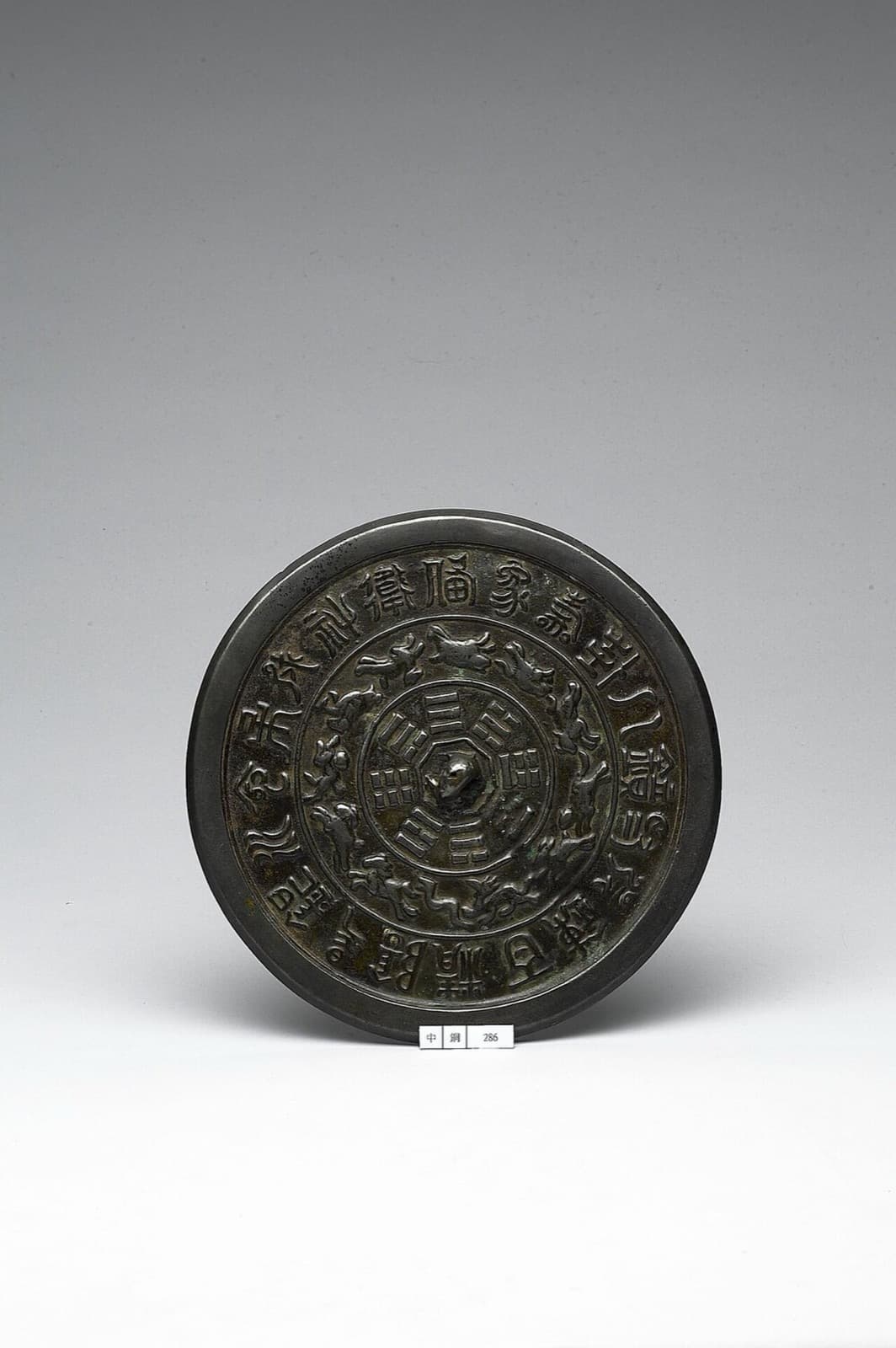
Introduction to Ngũ Quyết Loan Đầu Feng Shui
Loan Đầu Feng Shui (also known as Form School) is one of the most classical and foundational schools of Chinese Feng Shui, emerging during the Tang and Song dynasties. Unlike the Lý Khí school (which uses compass, Bagua, Hetu, and Luoshu to calculate directions based on fate and time), Loan Đầu focuses on observing the natural forms of mountains, rivers, and surrounding terrain. Ngũ Quyết refers to the five core elements that a Loan Đầu practitioner must master: "Long (Dragon), Huyệt (Acupoint), Sa (Sand), Thủy (Water), and Hướng (Direction)." Among these, "Direction" plays a decisive role in connecting the structure with the flow of cosmic energy. If Long, Huyệt, Sa, and Thủy are considered the physical body of a good grave or house, then Direction is the spirit that activates the full potential of the other elements.
Direction in Ngũ Quyết: Concept and Differences from Other Schools
Definition of "Direction" in Loan Đầu
In Ngũ Quyết, "Direction" (向) is generally understood as the orientation of the main axis of the house or the direction the façade (main door, bright hall) faces. However, unlike the simple determination in some Lý Khí schools, direction in Loan Đầu is never separated from the topographical context. The ancients said: "The Dragon sets the direction, the Direction sets the pattern." This means the direction must be chosen to align with the flow of the dragon vein, mountain forms, and water features.
Comparison with the Lý Khí School
The Lý Khí school (such as Bát Trạch or Huyền Không Phi Tinh) often relies on the homeowner's age, destiny, or construction time to determine good or bad directions based on life palaces or flying stars. In contrast, Loan Đầu prioritizes the actual terrain. A direction considered good by Lý Khí, if facing a straight road, sharp rocks, or rushing water, is still considered bad by Loan Đầu. Conversely, a direction not matching one's fate but having a spacious bright hall, gathering water, and auspicious sand can be acceptable if properly adjusted. Thus, Ngũ Quyết Loan Đầu is seen as the foundation for all other schools; without it, Lý Khí calculations lack practical basis.
Mechanisms and Operating Principles of Direction in Loan Đầu
Direction and Vital Energy Flow
The core principle of Feng Shui is to find places with vital energy (good qi) and avoid dead energy (bad qi). In Loan Đầu, house direction acts as the "gateway" to receive qi from the environment. When the house faces elevated terrain, winding rivers that embrace it, or a flat and spacious bright hall, qi gathers, bringing peace and prosperity. Conversely, if the direction faces strong drafts, straight roads, or sheer cliffs, qi disperses, causing instability for the residents.
The Role of the Bright Hall in Establishing Direction
The Bright Hall (the open space in front of the house) is central when assessing direction in Loan Đầu. An ideal direction must have a spacious, clean bright hall with water gathering (like a pond or curved road) embracing it. It is through the bright hall that qi accumulates before entering the house. If the bright hall is cramped or blocked by tall buildings or rocky hills, even a compass-good direction cannot gather qi. Therefore, when determining direction, practitioners often stand at the dragon vein, observing the whole scene to choose the direction with the best bright hall, not just pointing a compass at the door.
Combination of Direction and Water Methods
In Ngũ Quyết, Water is considered the determinant of wealth. The saying "Mountains govern people, Water governs wealth" emphasizes water's role. House direction is often chosen to welcome water (rivers, lakes, seas, or main roads) in front or to the side, but it must be gathering and embracing water, not direct rushing or reverse water (flowing away from the house). If the house faces water coming from an auspicious direction (in Loan Đầu, usually slow, winding water from a strong dragon vein), wealth will be abundant. Conversely, if water flows straight, swiftly, or turns its back, it is considered a broken pattern.
Classification of Direction Types in Loan Đầu
Direction by Dragon Vein: Dragon Direction
Dragon veins are long mountain ranges or hills, seen as the backbone of the terrain. In Ngũ Quyết, the direction is determined by the dragon vein's flow. There are two main types:
- Reverse Dragon Direction: The house faces opposite the dragon vein's flow. This is favored because it creates a sense of heading forward and rising.
- Forward Dragon Direction: The house faces the same direction as the dragon vein. This can disperse qi if there is no strong backing mountain.
There are also patterns like "Dragon and Tiger in Harmony" (mountains on both sides embracing), and the need for balance among the rear (Black Tortoise) and front (Red Bird) to form a stable "Four Guardians" structure.
Direction by Sand: Sand Direction
Sand refers to small hills, mounds, or artificial structures (tall buildings, towers) around the acupoint. House direction must avoid harmful sand such as those pointing directly at it, sharp peaks, oppressive formations, or threatening shapes. In contrast, gentle sand (like round hills, embracing forms, or those resembling servants paying respect) strengthens fortune. For example, a round, low hill in front resembling an "inkstone" or "precious pearl" is good, bringing intelligence and academic success.
Direction by Water: Water Direction
This method determines direction based on water flow. In Loan Đầu, water is likened to the earth's blood vessels. The ideal house direction often has water flowing from a good direction (often northwest or northeast, depending on the situation), surrounding the house, then slowly exiting. The ancients paid special attention to "embracing water" (water curving around) and "reverse water" (water turning away). A house facing water that embraces it in a U-shape or arc brings prosperity and abundant wealth. Conversely, if water flows straight away from the front, called "direct water departure," wealth will be swept away.
Direction by Acupoint: Qi-Receiving Direction (Façade, Main Door)
The acupoint is where the dragon vein converges, the site for a house or grave. The qi-receiving direction is typically based on the acupoint's position, so the main door or façade faces the best qi flow. In practice, one stands at the acupoint, observing which direction has a wide bright hall, gathering water, good natural light, and avoids harmful energies like power poles, dead old trees, or sharp corners of other buildings.
Practical Examples of Choosing House Direction by Loan Đầu
Example 1: House on Flat Land with a Small River in Front
Imagine a flat plot with a small river curving in an arc embracing it in front. According to Loan Đầu, this is a "gathering water" pattern, very good. The house direction should face the river, but pay attention to the flow's position. If the river flows from east to west, the main door should face east or southeast to welcome the incoming water, as water coming brings wealth energy. However, avoid facing the direction where water flows away, as it disperses wealth.
Example 2: House Between Two Mountain Ranges (Dragon and Tiger Formation)
A house in a small valley with a high rear mountain as support (Black Tortoise), a low round hill in front (Red Bird), and low hills on both sides (Green Dragon left, White Tiger right) is a "complete Four Guardians" formation. The house direction should face the low hill in front, as that is where qi gathers. If the main door is offset, it disrupts balance, causing family discord. In such cases, a compass is used to precisely orient the dragon vein axis and acupoint, then the main door is set to favorable directions like Sheng Qi or Tian Yi, but always prioritizing a view of the bright hall.
Example 3: Modern Townhouse Without Natural Mountains or Rivers
In modern cities, natural features are rare. Loan Đầu is adapted by treating tall buildings as mountains and streets as rivers. House direction should avoid straight roads pointing at the house, T-junctions, or intersections, and avoid sharp corners of tall buildings. Instead, choose a direction facing a wide courtyard, park, artificial lake, or a curved road embracing the house. These act as the bright hall and gathering water, allowing smooth qi flow.
Comparative Views and Application Notes
Differences Between Loan Đầu and Lý Khí in Practice
Many people today focus only on direction by age (Bát Trạch) or stars (Huyền Không), forgetting Loan Đầu is the root. If a house has a good Lý Khí direction but faces a polluted canal or is completely shaded by a tall building, Lý Khí becomes meaningless. Conversely, if a house has good terrain and a solid dragon vein but a direction not matching one's fate, it can still be stable, just not fully activated for luck. Therefore, skilled practitioners combine both: use Loan Đầu for location and overall direction, then Lý Khí for fine-tuning details.
Limitations of Being Overly Fixated on Direction
Loan Đầu emphasizes harmony between humans and nature. Being overly fixated on direction while ignoring light, ventilation, privacy, or health of residents is a mistake. A house with a good direction but dark, damp, or poorly designed will exhaust its inhabitants. Conversely, a poorly oriented house with smart design, greenery, and natural light can be an ideal home. Thus, applying Ngũ Quyết requires flexibility and holistic consideration, not mechanical rules.
Modern Scientific Perspective
From a scientific view, house direction affects wind, sunlight, temperature, humidity, and human psychology. For example, south-facing houses in Vietnam get cool summer breezes and avoid cold winter winds, reducing energy costs and enhancing comfort. This aligns with Loan Đầu's view of south as having abundant yang qi, good for health. However, modern science does not recognize concepts like dragon veins or qi as measurable physical entities; they are metaphors for terrain, climate, and environment. Therefore, Feng Shui should be seen as an art of harmonizing living spaces, not an absolute prophecy system.
Conclusion
In Ngũ Quyết Loan Đầu Feng Shui, house direction is not a dry compass number but a synthesis of dragon vein, sand forms, water methods, and orientation toward the bright hall. Determining the correct direction requires careful observation of terrain, understanding water flow, and mountain positions. When house direction harmonizes with the natural environment, residents feel peaceful, healthy, and have opportunities for growth. However, remember that Feng Shui is just one contributing factor to a good life; personal effort, healthy lifestyle, and social relationships are more important. Treat Feng Shui as a tool to live more harmoniously with your space, not a prophecy determining fate.

