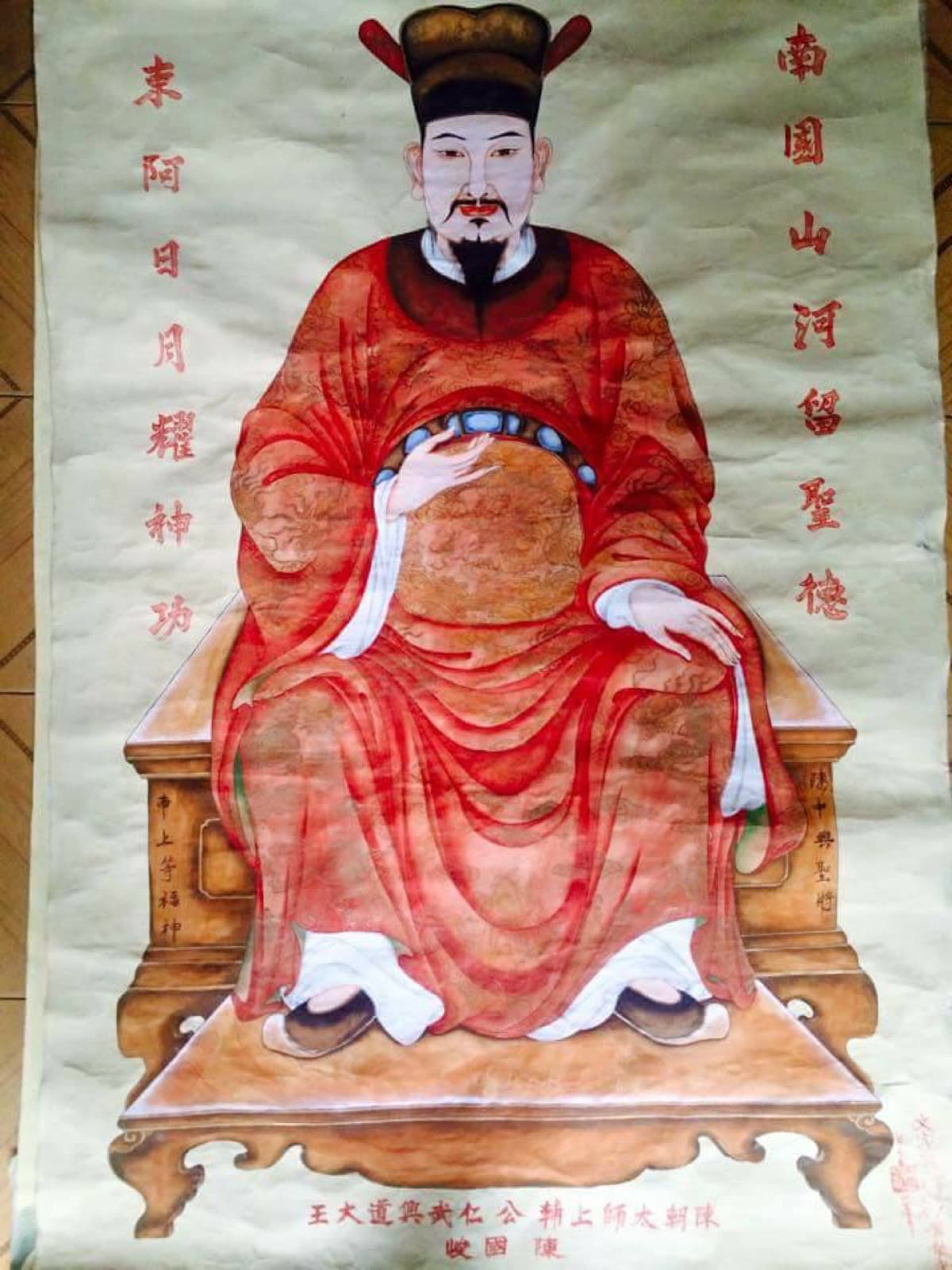
General Introduction to Le Thanh Hau Nguyen Huu Canh
Le Thanh Hau Nguyen Huu Canh (1650-1700) was an outstanding general, politician, and military strategist under the Nguyen Lords in Dang Trong (Cochinchina). He was born in 1650 in Van Ninh commune, Quang Ninh district, Quang Binh province, into a family with a martial tradition. His father, Nguyen Huu Dat, was a meritorious official under Lord Nguyen Phuc Tan, renowned for his strategic acumen and served as the commander of Ninh Loi garrison.
Historical records describe Nguyen Huu Canh as handsome, intelligent, and eager to learn from a young age, mastering both martial arts and military strategy. At the age of 19, he began his military career and quickly proved his talent in campaigns to suppress Champa and Chenla forces, contributing to the defense of the southern border of Dang Trong.
Historical Context and the Southern Expansion
The Situation of Southern Vietnam Before 1698
Before Nguyen Huu Canh's expedition, the region now known as Southern Vietnam (including Dong Nai, Gia Dinh, and the western provinces) was a wild land under the influence of the Chenla Kingdom (Cambodia). Since the early 17th century, Vietnamese migrants from central and northern provinces had begun to settle, clearing land and establishing villages. However, these settlements were scattered, spontaneous, and lacked organization or governance by the Nguyen Lords.
Land reclamation mainly occurred along the Dong Nai and Saigon rivers, where the soil was fertile and transportation convenient. Migrant communities lived in small hamlets, largely self-sufficient, without a unified administrative structure. This situation posed challenges for security, tax collection, and economic development.
The 1698 Expedition and Its Landmark Decisions
In 1698, facing the urgent need to govern and develop the new territory, Lord Nguyen Phuc Chu appointed Nguyen Huu Canh as Supreme Commander to conduct an expedition to the southern region. This was a historic decision that opened a new chapter in Vietnam's southern expansion.
Nguyen Huu Canh established his headquarters at Cu Lao Pho, now in Hiep Hoa ward, Bien Hoa city, Dong Nai province. From this base, he implemented a series of important measures:
- Establishing the administrative system: He divided the new land into two administrative units, Gia Dinh prefecture and Phuoc Long district, creating the Bien Hoa and Phien Tran (later Gia Dinh) garrisons. This was the first time Southern Vietnam was organized into administrative units directly under the Nguyen Lords, laying the foundation for long-term stability.
- Recruiting and integrating migrants: He actively encouraged more people from other regions to clear land and establish villages, strengthening the region's workforce.
- Land reclamation: He organized land clearing, expanded agricultural areas, and developed plantations.
- Compiling population and land registers: He conducted surveys and created records to manage the population and land, providing a basis for taxation and social administration.
- Setting tax policies: He established reasonable tax rates, ensuring stable revenue while easing the burden on the people.
These decisions not only helped Southern Vietnam stabilize and develop quickly but also created a robust legal and administrative framework, laying the groundwork for the rise of bustling urban centers like Saigon and Gia Dinh later.
Historical Relics and Places of Worship
The Nguyen Huu Canh Shrine in Bien Hoa
After Nguyen Huu Canh's death in 1700, to honor his immense contributions, the people of Bien Hoa and Dong Nai converted the Binh Hoanh communal house in Binh Hoanh village, Tran Bien canton, into the Binh Kinh communal house for his worship. This is one of the oldest and most sacred temples in Southern Vietnam, dedicated to a founding statesman.
The shrine is located in Hiep Hoa ward, Bien Hoa city, Dong Nai province, on the very site of Nguyen Huu Canh's former headquarters. Though renovated multiple times, it retains its ancient and solemn architectural features. In 1994, the shrine and Nguyen Huu Canh's tomb were classified as a national historical and cultural relic by the Ministry of Culture and Information (now the Ministry of Culture, Sports and Tourism).
The Spiritual Significance of the Shrine
The Nguyen Huu Canh shrine is not only a place of worship but also a cultural and spiritual center for local residents. People come not only to offer incense in memory of the founding statesman but also to pray for peace, luck, bountiful harvests, and prosperous business. The shrine has become a symbol of gratitude and the national ethic of "remembering the source when drinking water."
The Death Anniversary: Traditional Rituals and Cultural Value
Time and Place of the Ceremony
The death anniversary of Le Thanh Hau Nguyen Huu Canh is held annually on the 16th day of the fifth lunar month at the shrine and tomb of Nguyen Huu Canh, Hiep Hoa ward, Bien Hoa city, Dong Nai province. This is his official death anniversary, preserved by the community through generations.
Main Rituals of the Ceremony
The ceremony is conducted solemnly with full traditional rites:
- Incense offering: Representatives of local authorities, monks, nuns, and a large number of people offer incense to the spirit of Le Thanh Hau.
- Offering of gifts: Offerings such as flowers, fruits, chung cakes, tet cakes, and traditional dishes are arranged respectfully on the altar.
- Reading of eulogy: A eulogy is read, recounting the life and merits of Nguyen Huu Canh, while expressing deep gratitude of later generations to the pioneer of the land.
- Ritual ceremonies: Traditional ritual performances are conducted by village elders, creating a solemn and reverent atmosphere.
Accompanying Cultural Activities
Alongside the main rituals, the ceremony features various cultural and artistic activities, adding a lively and engaging festive spirit:
- Painting contests: Competitions on themes of historical figures and the landscapes of Bien Hoa and Dong Nai attract widespread participation, especially among young people.
- Floating lanterns: Thousands of flower-shaped lanterns are released on the Dong Nai River, creating a shimmering, magical scene that honors those who contributed to the nation.
- Artistic fireworks display: A fireworks show lights up the night sky, captivating thousands of residents and visitors.
These activities not only enrich the spiritual and cultural life of the people but also help educate the younger generation in patriotism and national pride.
The Ceremony Recognized as National Intangible Cultural Heritage
The 2025 Recognition Decision
A particularly significant event took place during the 2025 ceremony. On June 11, 2025 (the 16th day of the fifth lunar month), at the relic site of Nguyen Huu Canh's shrine and tomb, the People's Committee of Bien Hoa city (Dong Nai) solemnly held a ceremony to receive the certificate recognizing the "Death Anniversary of Le Thanh Hau Nguyen Huu Canh" as a National Intangible Cultural Heritage. This decision was issued by the Ministry of Culture, Sports and Tourism, acknowledging the great cultural and historical values of this traditional ritual.
This recognition is a fitting tribute to the efforts of the local government and people across generations to preserve the heritage. It also provides an opportunity to promote the image and cultural values of Bien Hoa and Dong Nai to domestic and international visitors.
Significance of the Heritage Recognition
The recognition of the death anniversary as a National Intangible Cultural Heritage carries multiple important meanings:
- Affirming historical value: It acknowledges Nguyen Huu Canh's immense contributions to the nation's southern expansion and affirms the position of Bien Hoa and Dong Nai in the historical process.
- Preserving and promoting cultural values: It facilitates the preservation and promotion of traditional cultural values tied to the ceremony, preventing the risk of decline or loss.
- Educating tradition: It serves as a vivid lesson in patriotism and the spirit of "remembering the source when drinking water" for present and future generations.
- Promoting tourism: It creates a cultural tourism highlight, attracting visitors and contributing to local socio-economic development.
The Community's Role in Preserving the Heritage
Participation of Local Residents
The death anniversary of Le Thanh Hau Nguyen Huu Canh could not have survived and thrived for over 300 years without the active and voluntary participation of the local community. The people of Bien Hoa and Dong Nai have always regarded the ceremony as a responsibility and a source of community pride. They are involved in every stage, from preparing offerings and decorating the shrine to participating in rituals and cultural activities.
Knowledge and skills for organizing the ceremony, from altar arrangement and feast preparation to ritual procedures, are passed down through generations. This transmission ensures the ritual remains faithful to tradition and preserves its unique cultural identity.
Government Preservation and Promotion Strategies
The local government of Dong Nai province has outlined specific strategies and measures to preserve and promote the heritage value of the ceremony:
- Preserving and restoring original values: The Department of Culture, Sports and Tourism, in coordination with relevant units, researches, collects, and documents intangible cultural values tied to the ceremony, restoring rituals and folk games at risk of extinction.
- Enhancing the community's role as the subject: Encouraging and facilitating direct participation of local residents in the practice and preservation of the heritage, avoiding rigid "heritagization" that distances from the community.
- Strengthening communication and promotion: Increasing publicity about the heritage's value through mass media and social networks, raising community awareness and attracting visitor interest.
- Researching and proposing relic upgrades: Conducting research and preparing scientific dossiers for submission to authorities for recognition as a special national relic, creating better conditions for the preservation and promotion of the relic site.
The Ceremony in the Context of Other Commemorative Festivals
The death anniversary of Le Thanh Hau Nguyen Huu Canh is part of a series of festivals and rituals honoring those who contributed to the nation across the country, such as:
- Hung Kings Festival (Phu Tho): Commemorates the Hung Kings, founders of the nation, held annually on the 10th day of the third lunar month.
- Tran Hung Dao Death Anniversary (Hai Duong and Red River Delta provinces): Honors the national hero who repelled the Mongol invasions, held on the 20th day of the eighth lunar month.
- Nghinh Ong Festival (southern coastal provinces): Honors whales, patron deities of fishermen, reflecting the unique culture of coastal communities.
Although each festival has its own distinct character and meaning, they all share a common thread: expressing gratitude and reverence for those who served the community and the nation. This creates a special cultural beauty of the Vietnamese people, fostering community bonds and educating the younger generation in tradition.
Conclusion
The death anniversary of Le Thanh Hau Nguyen Huu Canh is a precious cultural heritage, rich in historical, cultural, and spiritual values of the nation. This ritual is not only an occasion to remember and honor the pioneer who expanded the southern borders but also a symbol of the "remembering the source when drinking water" tradition, community solidarity, and national pride.
The recognition of the ceremony as a National Intangible Cultural Heritage in 2025 is a well-deserved acknowledgment, while also placing significant responsibility on current generations to preserve, conserve, and promote the heritage's value. Every citizen, agency, and organization should join hands to ensure the ceremony endures, serving as a spiritual anchor and a source of pride for the people of Bien Hoa and Dong Nai in particular and the Vietnamese nation as a whole.

