



TL;DR: Tang Đố Mộc is the Na Yin for the years Quý Sửu and Nhâm Tý, symbolizing the mulberry tree growing by the water, representing resilience, patience, and strong vitality. In the Five Elements, this Wood element is compatible with green colors and Water, Fire elements, but should avoid the dominance of Metal and Earth.
What is Tang Đố Mộc nạp âm?
In the Lục Thập Hoa Giáp (the 60-year cycle of the Vietnamese sexagenary calendar), each year carries not only a Heavenly Stem and Earthly Branch but is also assigned a nạp âm: a name that symbolises the Five Elements nature of that year. Tang Đố Mộc (桑柘木) is the nạp âm of the two years Nhâm Tý and Quý Sửu. The name is understood as "Mulberry Wood", a soft, pliable wood often used to make bows and arrows, musical instruments, or handicraft items.
The reason these two years are assigned the image of the mulberry tree lies in the combination of Heavenly Stem and Earthly Branch, which creates a special Wood state. Nhâm belongs to Water, and Tý also belongs to Water, symbolising a powerful current. Ất belongs to Wood, while Mùi belongs to Earth and carries the meaning of soft soil along a bank. The mulberry is a water-loving tree that grows well in damp places, along rivers and lakes. This nạp âm is therefore pictured as clumps of lush green mulberry by the water's edge, absorbing the essence of heaven and earth in order to grow.
What does Tang Đố Mộc mean in the Five Elements?
Wood in the Five Elements represents growth, development, flexibility and creativity. It is the power of beginnings, of spring, and it carries positive energy. However, each kind of Wood has its own shade of character. If Đại Lâm Mộc (great forest wood) is strong and imposing, then Tang Đố Mộc possesses resilience, endurance and a remarkable capacity to adapt.
The mulberry tree is not tall, yet its vitality is fierce. It can grow in barren land, along the coast, or even on rocky slopes. For this reason, people who carry the Tang Đố Mộc nạp âm often show these distinctive character traits:
| Trait | Explanation |
|---|---|
| Patience and endurance | They do not rush and do not try to force a stage to burn faster. Like the mulberry growing slowly, they take steady steps to reach their goals. |
| High adaptability | Whatever harsh circumstances they find themselves in, they can find a way to survive and develop. |
| Flexibility and skill | Mulberry wood is pliable and easy to bend. People of this element are often deft in communication and conduct, knowing how to adjust themselves to suit the situation. |
| Deep inner life | They have a rich inner world and are sensitive to the shifts around them. Just as the mulberry needs water to live, they need understanding and empathy from others. |
How do the Five Elements interact with Tang Đố Mộc?
According to the principles of the Five Elements, all things exist in relationships of mutual generation (support) and mutual overcoming (restraint). For Tang Đố Mộc:
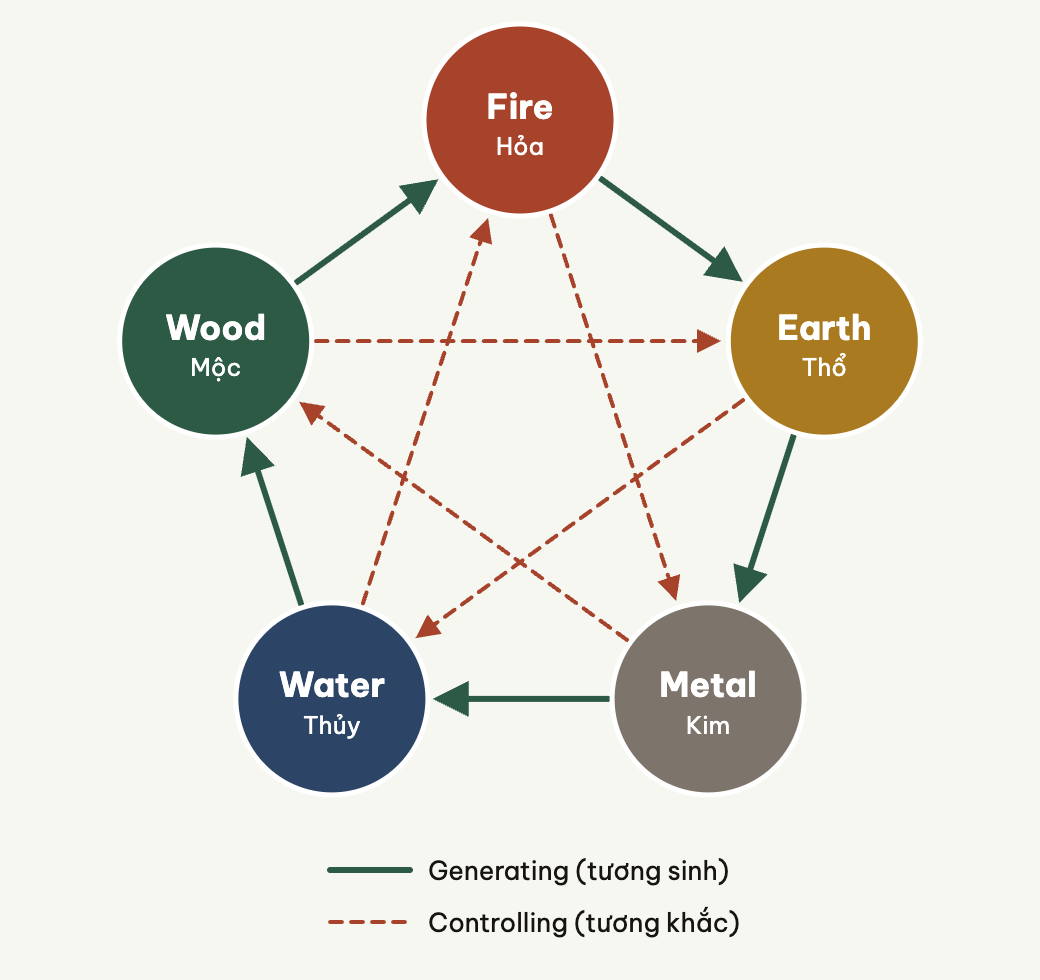
Relationships of mutual generation
- Water generates Wood: This is the most important relationship. Water is the source of life for the mulberry. People of the Tang Đố Mộc element receive much luck and ease when they encounter people or factors belonging to the Water element (black, ocean blue) in life.
- Wood generates Fire: Dry mulberry makes good fuel. People of this element can "generate" energy for people of the Fire element, and this very relationship also creates momentum for their own development.
Relationships of mutual overcoming
- Metal overcomes Wood: Metal (axe, saw) is what destroys trees. People of the Tang Đố Mộc element should be cautious with people or objects belonging to the Metal element (white, grey, silver), because they easily give rise to conflict and obstruction.
- Wood overcomes Earth: The mulberry draws nutrients from the soil. This means that people of this element can cause loss or difficulty for people of the Earth element if they are in a business or cooperative relationship.
How do you apply Tang Đố Mộc in feng shui and daily life?
Understanding the Five Elements nature of the Tang Đố Mộc nạp âm, people of the past often applied it to choosing colours, house directions and feng shui objects in order to strengthen positive energy and dissolve unfavourable points.
Colours that suit and colours to avoid
- Compatible colours: People of the Tang Đố Mộc element should use colours belonging to the Wood element such as green, and colours belonging to the Water element such as black, ocean blue, so as to be supported by mutual generation. These tones bring a feeling of relaxation and balance, and help strengthen health and spirit.
- Colours to avoid: They should limit the use of colours belonging to the Metal element (white, grey, silver), because these can create restraint. Using too much white in the living space can make people of this element feel stifled and lacking in vitality.
Orienting the living space
In feng shui belief, a living space needs balance among the elements. For people of the Wood element, bringing green plants and flowers into the home is natural and auspicious. However, care should be taken not to keep too many climbing plants or dense foliage, as this creates a feeling of stuffiness. Placing a small fish tank (the Water element) or a few red decorative items (the Fire element) is also a way to create mutual generation and help the energy in the home circulate better.
Advice on career and life
People who carry the Tang Đố Mộc nạp âm are not suited to work that is too rushed or high-pressure. They do best in fields that demand meticulousness, perseverance and creativity, such as research, education, the arts, or work connected to plants and the environment. In life, they should learn to be more proactive and more willing to think and act boldly, so as not to miss good opportunities. Building relationships with people of the Water and Fire elements will bring much luck and ease.


