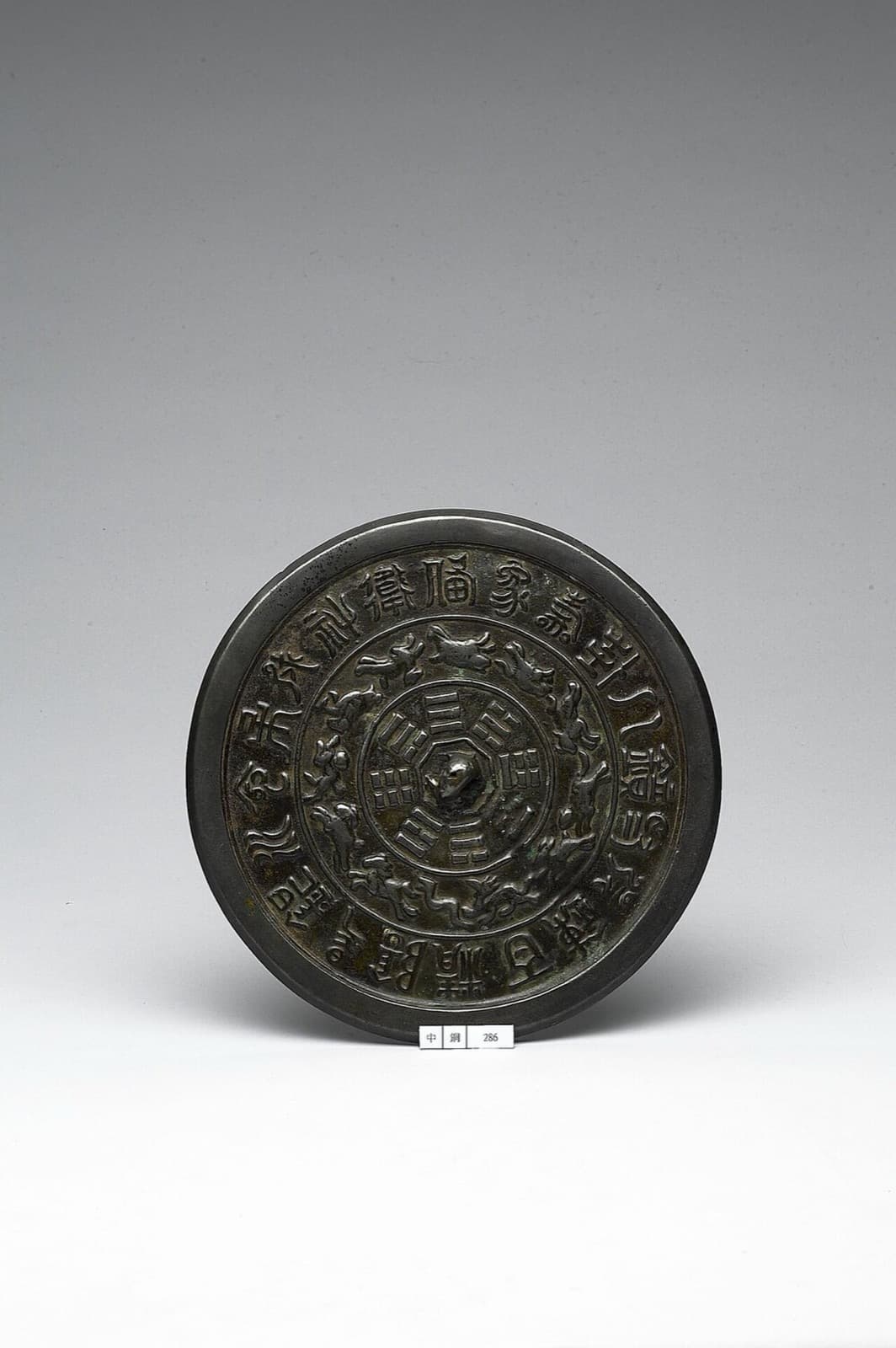
Introduction to the 24 Mountain Directions System in Feng Shui
The 24 mountain directions system is a core foundation of geographical feng shui (for both yin and yang dwellings), used to determine the orientation of a house, grave, or piece of land. This system divides the 360-degree circle into 24 equal parts, each 15 degrees wide, and each part is assigned a character from a combination of heavenly stems, earthly branches, and trigrams.
Specifically, these 24 mountain directions include: 8 heavenly stems (Jia, Yi, Bing, Ding, Geng, Xin, Ren, Gui), 12 earthly branches (Zi, Chou, Yin, Mao, Chen, Si, Wu, Wei, Shen, You, Xu, Hai), and 4 trigrams (Qian, Kun, Gen, Xun). Each mountain direction carries its own five element and yin-yang nature, and is used in various feng shui schools such as Ba Zhai, Xuan Kong Flying Stars, San He, or Luan Tou.
Dinh Mountain: Position and Basic Attributes
Dinh mountain is one of the 8 heavenly stems in the 24 mountain directions system. To understand Dinh mountain clearly, we need to consider the following attributes:
Geographical Position
Dinh mountain is located between 157.5 and 172.5 degrees on the feng shui compass. In relation to the main directions, Dinh mountain belongs to the South, but slightly deviates toward the Southeast. In terms of relative position, Dinh mountain lies between Si mountain (to the Southeast, from 142.5 to 157.5 degrees) and Wei mountain (to the Southwest, from 172.5 to 187.5 degrees). Thus, if a house or grave has an exact coordinate of 165 degrees, it is called "sitting Dinh" (toa Dinh).
Five Elements and Yin-Yang
Dinh mountain belongs to the Wood element and has Yin nature. In the five elements system, Ding is a Yin stem belonging to the Fire element according to the ten heavenly stems (Jia and Yi belong to Wood, Bing and Ding to Fire, Wu and Ji to Earth, Geng and Xin to Metal, Ren and Gui to Water). However, it is important to distinguish these two concepts. When referring to the 24 mountain directions, each mountain is assigned its own five element based on San He feng shui principles, which does not completely coincide with the five element of the heavenly stem.
In yin-yang, Ding is a Yin stem. This means Dinh mountain carries a static, inward nature, suitable for people with deep inner life, wisdom, and patience. The yin-yang nature of a mountain direction plays an important role in determining fortune or misfortune when combined with other factors such as water methods, time, and the owner's destiny.
Related Trigram and Palace
Dinh mountain lies in the Xun palace of the Eight Trigrams. The Xun palace corresponds to the Xun trigram (trigram number 4 in the Eight Trigrams), belongs to the Wood element, and its position is the Southeast. In the Later Heaven Eight Trigrams, the Xun palace represents the eldest daughter, carrying meanings of gentleness, penetration, and growth. In terms of the human body, the Xun palace relates to the thighs, blood, and nervous system.
How to Determine the Dinh Mountain Direction
Determining the Dinh mountain direction accurately requires care and precision in measurement. Below are the basic steps:
Using a Feng Shui Compass
The feng shui compass (luo pan) is the main tool to determine the mountain direction. When measuring, the practitioner should stand at the center of the house or in front of the main door (depending on the school). The compass should be placed on a horizontal surface, avoiding metal objects or electronic devices that can disturb the magnetic field.
When the compass needle stabilizes, the measurer will determine the exact degree of the house's direction. If the reading falls between 157.5 and 172.5 degrees, then that mountain direction is identified as Dinh. Specifically:
- From 157.5 to 165 degrees: Dinh combined with Si (leaning toward Si mountain)
- Exactly 165 degrees: Pure Dinh (center)
- From 165 to 172.5 degrees: Dinh combined with Wei (leaning toward Wei mountain)
The Issue of Combined Directions (Jian Shan)
In feng shui, when a mountain direction lies at the boundary between two mountains, it is called a combined direction. For example, if the direction is around 158 degrees, meaning it is a combination of Dinh and Si, the interpretation becomes more complex than for pure Dinh. The combined direction requires considering additional factors about the mountain and direction, as well as the interaction between the two mountains. If the reading falls within about 3 degrees around the boundary (i.e., approximately 154.5 to 157.5 or 172.5 to 175.5), it is called "void" (Khong Vong), often considered an unfavorable position to be avoided.
Feng Shui Significance of the Dinh Mountain Direction
Significance in Terms of Space and Energy
Dinh mountain belongs to the Wood element, which symbolizes growth, development, and advancement. When a house or grave sits on Dinh mountain, Wood energy is activated, bringing sustainable development, similar to trees growing from the earth. This is especially beneficial for those working in education, research, culture, arts, or fields related to creativity and knowledge.
Considering the na am relationship and the generating cycle of the five elements, Wood generates Fire. Since Ding is also a Fire stem in the ten heavenly stems, Dinh mountain has an internal harmony between Wood (the element of the mountain) and Fire (the element of the stem). This generating relationship creates a powerful energy flow, promoting the reputation, career, and leadership abilities of the owner.
Significance in Ba Zhai Feng Shui
In the Ba Zhai school, Dinh mountain belongs to the Xun palace. The Xun palace is one of the Four Auspicious (four good directions) in Ba Zhai when considered according to the destiny house. Those with East Four House (destiny belonging to the Kan, Li, Zhen, Xun palaces) will be compatible with a house sitting Dinh and facing Gui, or sitting Gui and facing Dinh, because the Xun palace belongs to the East Four House.
Specifically, if a person has the Xun palace destiny (belonging to the East Four House), living in a house sitting Dinh can bring many good things. Conversely, those belonging to the West Four House (destiny belonging to the Qian, Kun, Gen, Dui palaces) will not be compatible with this direction, because the Xun palace and the West Four House are in a relationship of absolute loss or five ghosts in some specific cases.
Significance in Xuan Kong Flying Star Feng Shui
In Xuan Kong Flying Star, each mountain direction is assigned a star (period star) and combined with the time period (era). Dinh mountain belongs to one of the mountains of the Xun palace, and when combined with the energy of each period (San Yuan Jiu Yun), it creates different star combinations.
For example, in Period 8 (2004-2023), the Dinh direction has different prosperous mountain and prosperous facing stars depending on the specific combination. In Period 9 (2024-2043), Dinh mountain belongs to the area with star number 9 (Jiu Zi You Bi), which is the current period star, bringing good fortune in reputation, wealth, and positive emotions. This makes the Dinh mountain direction especially valuable in the current and upcoming period.
Specific Cases and Interpretation of the Dinh Mountain Direction
Sitting Dinh, Facing Gui
This is one of the mountain direction configurations frequently mentioned in feng shui books. Sitting Dinh, facing Gui means the back of the house is on Dinh mountain (around 165 degrees), and the front is on Gui mountain (around 15 degrees). This configuration belongs to the North-South axis, slightly deviating toward the Southeast and Northwest.
In Luan Tou feng shui, the configuration of sitting Dinh, facing Gui is often considered a good land formation if there is a high mountain behind and a wide bright hall with water gathering in front. In terms of family members, this configuration is often interpreted to benefit the eldest daughter (due to the Xun palace), bringing intelligence, education, and good communication skills to family members, especially women.
Sitting Dinh, Facing Ren
Sitting Dinh, facing Ren is also a mountain direction configuration on the North-South axis, but the Ren direction lies between 345 and 360 degrees. This configuration is similar to sitting Dinh, facing Gui, but the facing direction leans more toward the Northwest. In some schools, this configuration is seen as combining the Xun and Qian mountains (since Ren direction is close to the Qian palace), creating a combination of Wood and Metal, which may bring both growth and challenges.
Sitting Dinh, Facing Xin
Sitting Dinh, facing Xin (Xin direction is between 285 and 300 degrees) is a configuration where the back is in the Southeast and the front is in the West. This creates a Southeast-West axis, belonging to a combination of East Four House and West Four House, and requires careful examination of the relationship between mountain and direction.
Principles for Comprehensive Interpretation of the Dinh Mountain Direction
Combining with Water Methods
In feng shui, the mountain governs people (influencing health, offspring), and the direction governs wealth (influencing finances and career). Therefore, when interpreting Dinh mountain, both the mountain part (behind) and the direction part (in front) must be considered. If there is a solid mountain or tall building behind, Dinh mountain will be prosperous. If there is water in front (river, lake, road, or open space), the direction will be prosperous.
For Dinh mountain, which belongs to the Wood element, water coming from which direction will affect the degree of good or bad. Water belongs to the Water element, which generates Wood. Therefore, if the front of a house sitting Dinh has water or a winding road belonging to the Water element, it will enhance the energy of Dinh mountain, bringing prosperity.
Combining with Time Periods
The time factor plays a decisive role in interpreting a mountain direction. A mountain direction can be good in one period but bad in another. Dinh mountain in Period 9 (2024-2043) is considered to have many advantages because it belongs to the area with the Jiu Zi star (star number 9), which is currently prosperous. The Jiu Zi star belongs to the Fire element, which generates the Wood element of Dinh mountain, creating auspiciousness in fame, wisdom, and social recognition.
Combining with the Owner's Destiny
Finally, interpreting a mountain direction cannot be separated from the destiny of the owner or user of the space. A mountain direction that is geographically good but conflicts with the owner's destiny will not bring positive effects. People with a Wood or Fire destiny are often considered more compatible with Dinh mountain than those with a Metal destiny, because Metal controls Wood.
However, in modern feng shui, many experts believe that over-reliance on the owner's destiny can reduce the objectivity of assessing the terrain. Instead, a harmonious combination of mountain direction, water methods, time periods, and the owner's destiny is needed for the most comprehensive interpretation.
Practical Notes When Applying the Dinh Mountain Direction
Avoid Being Too Rigid
Determining a mountain direction based solely on exact degrees can lead to rigidity in practice. In modern urban environments, finding a house with an absolutely precise mountain direction is rare. Instead, the overall context of the house should be considered, including the surrounding location, wind direction, light, and other environmental factors.
Differences Between Schools
Different feng shui schools have different approaches to the Dinh mountain direction. The San He school emphasizes the relationship between mountain and water based on the San He combination principles. The Xuan Kong school emphasizes time energy and the combination of stars. The Ba Zhai school emphasizes the owner's destiny and the relationship between people and house. Each school has its own strengths and limitations, and researchers need a multi-dimensional view to make appropriate assessments.
Feng Shui Is One Part, Not Everything
Finally, it must be emphasized that feng shui is only one of many factors affecting the quality of human life. Effort, moral character, social environment, and economic and cultural factors all play equally important roles. The application of feng shui should be done scientifically and reasonably, avoiding extreme superstition.
Conclusion
The Dinh mountain direction in the 24 mountain directions system is a complex and multi-dimensional topic. With its position in the Xun palace, Wood element, and Yin nature, Dinh mountain carries deep meanings of growth, wisdom, and adaptability. Understanding and correctly applying this mountain direction requires a combination of theoretical knowledge, practical skills, and sensitivity to specific contexts. Regardless of the school of interpretation, the most important thing remains the balance and harmony between people and their living environment.