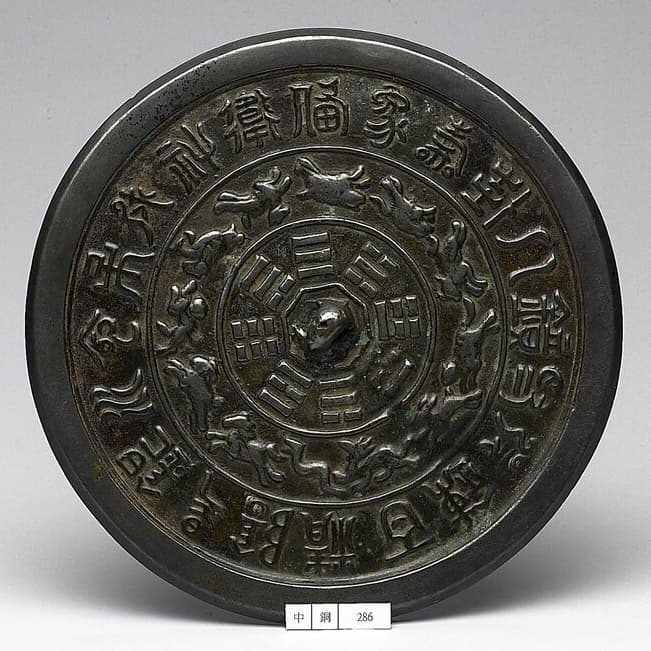
Introduction to the I Ching and the System of 64 Hexagrams
The I Ching, also known as the Zhou Yi, is one of the most ancient and profound Chinese classics, with influence spreading across East Asian cultures. Originating from the observation of natural phenomena and the laws of cosmic change, the I Ching is not just a divination system but also a philosophy of life and a science of change. According to psychologist Carl Gustav Jung, the 64 hexagrams of the I Ching serve as tools to determine the meaning of 64 different yet archetypal life situations. Each hexagram is a composite symbol of a state, a phase, or an existing relationship, and casting the hexagram is seen as a way to connect with the "quality" of the present moment.
In the system of 64 hexagrams, the Pure Kun hexagram (number 2) holds a particularly important position, right after the Pure Qian hexagram (number 1). If Qian symbolizes Heaven, the yang principle, creativity, and initiative, then Kun symbolizes Earth, the yin principle, receptivity, and nurturing. The opposition yet complementarity between these first two hexagrams lays the foundation for the entire yin-yang philosophy of the I Ching.
Origins and Structure of the Pure Kun Hexagram
Historical Origins and Legends
According to legend, the I Ching was built over generations: Fu Xi drew the eight trigrams, King Wen expanded them into 64 hexagrams and wrote the judgment texts, the Duke of Zhou wrote the line texts, and Confucius and his disciples wrote the Commentary on the Judgment, the Commentary on the Images, and the Great Commentary to explain them. The Pure Kun hexagram, as one of the eight trigrams and one of the 64 double hexagrams, was formed and transmitted very early. The image of a gentle, all-embracing mother earth has always been linked with the yin principle in Eastern culture. While the Qian hexagram is associated with the high heavens, beginnings, and creative power, the Kun hexagram is linked to the lowly earth, protection, and the ability to give birth to all things.
Structure of the Hexagram
The Pure Kun hexagram is a double hexagram, consisting of two single Kun trigrams (the single trigram is Kun, its image is Earth) stacked one on top of the other. Each single Kun trigram consists of three yin lines (broken lines), so the double hexagram has all six lines as yin. Its symbol is six consecutive broken lines, forming the image of thick earth, soft yet extremely solid.
In the eight trigrams, Kun is located in the southwest according to King Wen's order, or in the north in Fu Xi's order. The element of Kun is Earth, its characteristic color is yellow (the color of soil), and its nature is yielding, soft, and still.
Philosophical Meaning of the Pure Kun Hexagram
Symbol of Mother Earth and Compliance
The Pure Kun hexagram symbolizes earth, mother, and pure yin. Earth is where all things are born and thrive; it does not create on its own like Heaven, but it nurtures and completes what Heaven has initiated. Therefore, the highest virtue of Kun is compliance, listening, receiving, and cooperating. In the relationship between Heaven and Earth, Heaven provides light, rain, and sunshine, while Earth absorbs them so plants can sprout. Without Earth, the seeds of Heaven cannot germinate. Compliance here is not weakness or resignation but profound wisdom: knowing one's position and relying on others' strengths to fulfill a shared mission.
The Power of Persistence and Humility
The I Ching says: "Kun: sublime success, furthering through the perseverance of a mare." The mare symbolizes endurance, loyalty, and skill. Unlike the stallion of the Qian hexagram, the mare does not run fast but can run long distances. It represents a quiet, unassuming yet immensely powerful strength. The noble person following Kun should cultivate the virtues of Earth: tolerance, loyalty, and humility. They do not compete for position or flaunt their talents, but their persistence and substance lead to great achievements.
The Relationship Between Qian and Kun
Qian and Kun are opposing yet inseparable principles. Qian is movement and creation; Kun is stillness and completion. Qian is the king and father; Kun is the minister and mother. However, this distinction is not imposed but a natural division in the cosmos. A society, family, or individual seeking holistic development needs both elements: the initiative and decisiveness of Qian and the listening, patience, and detail of Kun. Lacking either leads to imbalance. Kun reminds us that it is not always necessary to push forward; there are times when the art lies in stepping back, observing, and waiting for the right moment.
The Lines of the Pure Kun Hexagram and Their Meanings
First Line (Initial Six): "Treading on frost, hard ice will come"
The first line of Kun is a yin line at the lowest position. It advises that when you see small, negative signs like frost, you should know that the cold winter is approaching. This is a lesson in keen awareness and early prevention. Great things start small; the wise are not careless about hidden dangers.
Second Line (Six in the Second Place): "Straight, square, great; without effort, nothing is unfavorable"
This is a yin line in the central position, correct and central. It symbolizes the virtue of Earth: straightness, squareness, and greatness. A person with such virtue need not follow any model, for their nature is already good, and naturally all they do aligns with the Way.
Third Line (Six in the Third Place): "Keeping talent hidden, one can remain correct; if following a king's affairs, do not claim credit, but have a good ending"
This line is in an incorrect position (the third is a yang position but a yin line), reminding us of humility. Those with talent should not boast; when working for others, they should not claim credit, thus ensuring a good outcome.
Fourth Line (Six in the Fourth Place): "Tying up the sack, no blame, no praise"
This line advises caution in speech and action during dangerous times. Like a sack with its mouth tied shut, revealing nothing, one avoids mistakes but also receives no praise. This is a time for stillness and inaction.
Fifth Line (Six in the Fifth Place): "Yellow lower garment, supreme good fortune"
This line is in a high, central position, symbolizing the mean, culture, and virtue. Yellow is the color of Earth and harmony. A noble person in this position has encompassing virtue, earning admiration and bringing great blessings.
Top Line (Top Six): "Dragons fight in the field; their blood is black and yellow"
The last line of Kun is yin developed to its extreme, leading to conflict with yang. This warns of excess yin: when gentleness becomes weakness, and yielding becomes resignation, conflict and bloodshed ensue. Yin should not try to usurp the position of yang.
Applications of the Pure Kun Hexagram in Life
In Work and Career
When you cast the Pure Kun hexagram, it suggests that now is not the time to initiate new projects or take pioneering risks. Instead, you should play a supportive role, cooperating with visionary leaders. Focus on completing current tasks meticulously and carefully. This is also a good time to learn, develop skills, and build lasting relationships. Patience and humility will lead to long-term success.
In Relationships
Kun advises you to listen more, understand, and empathize with others. In love and marriage, yielding and tolerance are key to maintaining happiness. Do not impose your opinions; learn to cooperate and solve problems together. Gentleness and care from the feminine (or yin-energy) side will bind family members together.
In Self-Cultivation
The Pure Kun hexagram is a lesson in humility and tolerance. The noble person should emulate Earth's virtue: enduring impurity yet producing lush harvests. Do not overvalue the ego; sacrifice the small for the great. Inner stillness and depth are great strengths to weather any storm.
Comparison with Other Hexagrams
Unlike the Qian hexagram (pure yang), which emphasizes creativity and leadership, Kun (pure yin) emphasizes cooperation and support. While Qian advises "Heaven moves vigorously; the noble person strives unceasingly," Kun advises "Earth's condition is receptive; the noble person nurtures all things with broad virtue."
Compared to the Tai hexagram (Heaven over Earth), where Heaven and Earth unite for smooth progress, Pure Kun represents a prior state where Earth has not yet united with Heaven; things are still latent and undeveloped. The inquirer must understand the context of each hexagram to respond appropriately.
Conclusion
The Pure Kun hexagram, symbolized by the all-embracing mother Earth, is one of the most important hexagrams in the I Ching. It reflects the yin principle in Eastern philosophy and serves as a practical guide for life: teaching humility, patience, listening, and cooperation. In a turbulent world that prizes competition and expansion, Kun reminds us that true strength lies not only in dominance but also in nurturing, protecting, and completing. Understanding and applying Kun's philosophy helps each person achieve balance, peace, and sustainable success.
Quick-Reference Table: Hexagram The Receptive
| Aspect | Content |
|---|---|
| King Wen number | 2 |
| Chinese name | 坤 |
| Symbol | ䷁ |
| Vietnamese name | Thuần Khôn |
| Upper trigram | Kun (Earth), Earth element, Southwest |
| Lower trigram | Kun (Earth), Earth element, Southwest |
| Six lines, first line at the bottom | 1st yin, 2nd yin, 3rd yin, 4th yin, 5th yin, 6th yin |
| Image | The earth is broad and thick, carrying all things. |
| Reading | A hexagram of pure yin, standing for receptivity, support, and endurance. The classics read it as the way of one who yields yet still accomplishes. Its strength lies in capacity rather than contention. |
*Số liệu trong bảng khớp với kết quả các công cụ tra cứu trên Nhật Nguyệt.*


