What Is Physiognomy and Why Discuss Its Origins?
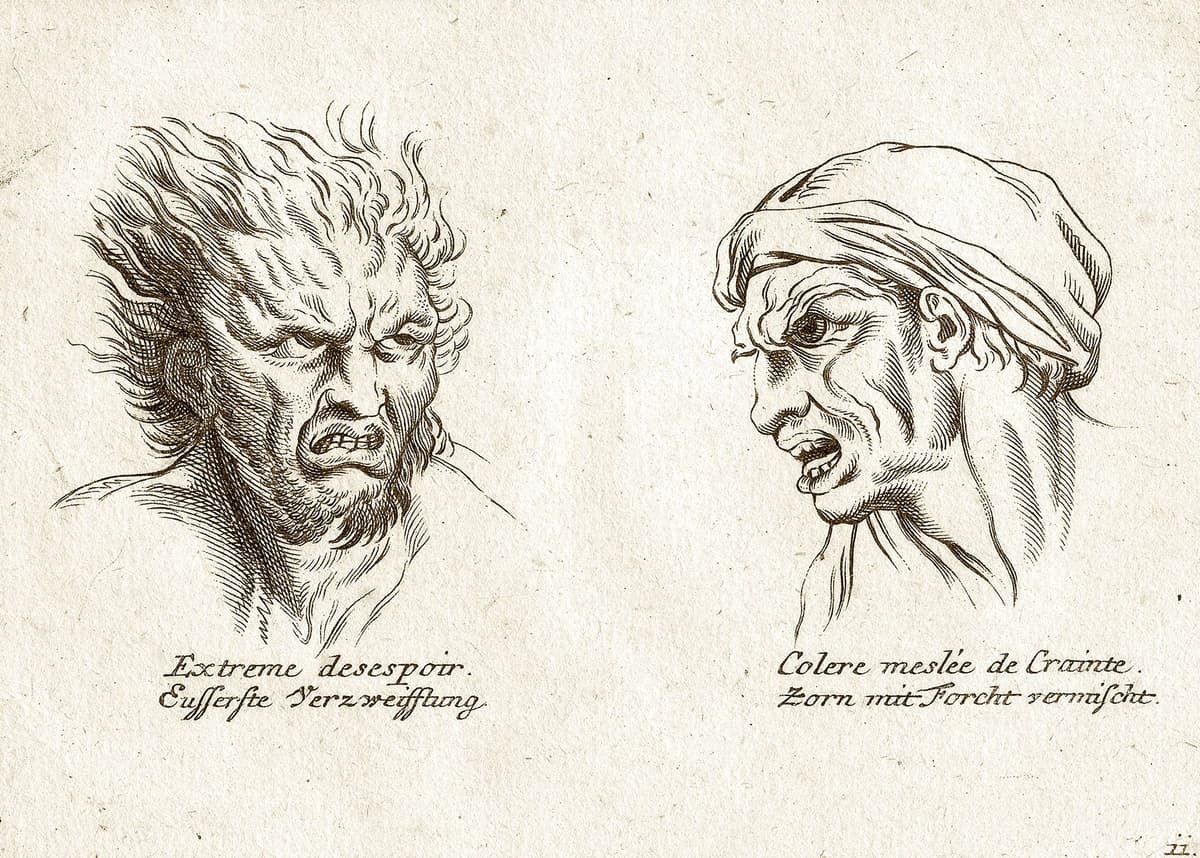
Physiognomy is a method of observing physical features, mainly the face and hands, to infer a person's personality, destiny tendencies and life stages. In Eastern thought, the face is seen as a mirror reflecting inner life and fate, while the hand is likened to a miniature map of life.
This is long-standing traditional knowledge, of a reference nature, not verified by modern science. Tracing its origins is not to assert right or wrong, but to understand why a system of observing humans has endured for thousands of years in East Asian culture, and why it still appears in the spiritual life of Vietnamese people today.
The Multi-Threaded Origins of Face Reading
Origin Legends Across Civilizations
The origins of physiognomy are often mentioned with various legends in India, China, Greece and Egypt. Over centuries of cultural exchange, these schools blended and formed Eastern physiognomy as it is today. Notably, there is no single "founding father", but a process of accumulation from many sources.
The Principle "Appearance Arises from the Mind"
Ancients believed that "appearance arises from the mind", meaning inner life and lifestyle can gradually shape facial features, spirit and outward bearing. This is the foundational principle: the body is not immutable, but partly reflects each person's cultivation and life experience. This view keeps physiognomy from being framed as fixed destiny, opening the possibility of change over time.
Main Facial Feature Systems
The face is the center of physiognomy, divided into various feature systems. Each system has its own naming and interpretation, but all aim to describe the link between outward shape and aspects of life.
Five Officials: The Five Main Organs
The Five Officials is the most mentioned system of five features: eyebrows, eyes, nose, mouth and ears.
- Eyebrows are called the Longevity Official, often related to lifespan, emotions and social relationships.
- Eyes are the Monitoring Official, representing wisdom, temperament and fortunes, where the spirit of the eyes is valued more than shape.
- The nose is the Judgment Official, tied to wealth, career and will.
- The mouth is the Intake-Output Official, reflecting speech and blessings.
- The ears are the Sun Official, symbolizing blessings, wisdom and longevity.
Reading each feature relies not only on size but also on balance, color, moisture and harmony with the whole face.
Five Peaks and Six Palaces: Two Zoning Methods
The Five Peaks and Six Palaces are two facial zoning systems with overlaps but different interpretations. The Five Peaks emphasize five raised areas, likened to five mountains on the face:
- The forehead is the Southern Peak, symbolizing wisdom and early-life fortunes.
- The nose bridge is the Central Peak, representing midlife and career.
- The chin is the Northern Peak, reflecting later life and stability.
- The left cheekbone is the Eastern Peak, the right cheekbone the Western Peak, related to power, career and relationships.
The Six Palaces include two forehead bones (Upper Palace), two cheekbones (Middle Palace) and two jawbones (Lower Palace). This system is often used to assess relationships with superiors, personal power and endurance in later life.
Three Courts and Five Element Shapes
The Three Courts divide the face vertically into three parts: the upper from hairline to eyebrows, the middle from eyebrows to nose base, the lower from nose base to chin. Each part corresponds to an age stage and a group of aspects such as wisdom, career and later life. Balance among the three is seen as a sign of harmony.
The Five Element Shapes classify people by the five elements Metal, Wood, Water, Fire, Earth based on physique, face, skin color and personality:
- Metal-shaped people are often square and upright.
- Wood-shaped people are tall and slender, flexible.
- Water-shaped people are full and gentle.
- Fire-shaped people have sharp features, quick.
- Earth-shaped people are solid and loyal.
Each element shape has its own interpretation of personality and career tendencies.
Palm Reading and Additional Signs
Three Main Lines on the Hand
Palm reading is a branch of physiognomy focused on creases on the palm. The three main lines often mentioned are the Life Line, Head Line and Heart Line. There are also secondary lines such as the Fate Line, Marriage Line, Wealth Line and many small branches.
- The Life Line is often understood to reflect vitality and overall health, not simply a lifespan forecast.
- The Head Line relates to thinking, logic and creativity.
- The Heart Line reflects how one loves and connects emotionally.
- The Fate Line is tied to work and advancement.
Each line is read based on length, depth, clarity, starting point and branches. Note that palm lines can change over time due to habits, work and health, so traditional reading also emphasizes flexibility rather than fixity.
Moles and Voice
Moles are among the signs of interest in folk physiognomy. Position, size, color and prominence of moles are said to reveal different aspects of personality and destiny. Facial moles are often tied to life stages and social relationships. Moles on eyebrows, cheekbones, lips, chin, earlobes or nape each have their own interpretation.
Besides shape, voice is also part of Eastern physiognomy. The Five Sounds include five voice types corresponding to the five elements: Gong (Earth), Shang (Metal), Jue (Wood), Zhi (Fire) and Yu (Water). Each voice type is described by its own timbre, range and rhythm. Ancients believed voice could partly reveal personality and temperament, but this remains a traditional view to be considered cautiously.
Physiognomy in Vietnamese Culture: The Imprint of The Tale of Kieu
With profound thinking and masterful language, the great poet Nguyen Du successfully and deeply encapsulated many cultural concepts and values in The Tale of Kieu. One of these is the matter of inferring characters' personality, inner life and fate through outward expressions, which in Eastern thought is physiognomy.
This is evidence that physiognomy exists not only in technical books, but has permeated literature, into how Vietnamese people observe and explain humans. Through The Tale of Kieu, principles such as "appearance arises from the mind" and the correspondence between facial features and fate are expressed artistically rather than dryly as a technical interpretation.
Distinguishing Physiognomy from Modern Anthropology
A common confusion is equating physiognomy with the field of anthropology. In fact, anthropology is an integrated science combining knowledge from natural sciences, social sciences, humanities and arts to study humans comprehensively. Emerging in the 19th century, anthropology holds a particularly important academic position, with deep practical significance and high international character.
Anthropology is divided into 5 fields, including physical anthropology, archaeology, socio-cultural anthropology, linguistic anthropology and applied anthropology. These fields form a framework for holistic research on humans in the past and present everywhere in the world. Vietnamese anthropology today is built on inheriting the tradition of ethnology that formed in our country from the early 20th century combined with modern Euro-American anthropological traditions.
The core difference: anthropology uses fieldwork, theory, comparison and description of human socio-culture; while physiognomy relies on observation and folk experience to infer individuals. Studying anthropology is not studying to read fortunes. Clearly distinguishing the two fields helps learners avoid confusing a modern social science with traditional reference knowledge.
How Should Physiognomy Be Understood Correctly?
Face reading is a branch of traditional Eastern knowledge, with cultural and reference value. Conclusions in physiognomy are based on observation and folk experience, not verified by modern science. Therefore, learners should see it as a cultural perspective, not a tool for certain predictions about wealth, health or marriage.
The important thing is to keep an open but clear-headed attitude, not placing absolute faith in any interpretation. Each person's life also depends on effort, choices and specific circumstances, not only on features of the face or hands. As a cultural heritage, physiognomy deserves serious study of its history and symbolic meaning, but should be placed in its proper position: a tradition of observing humans, not a set of destiny rules.