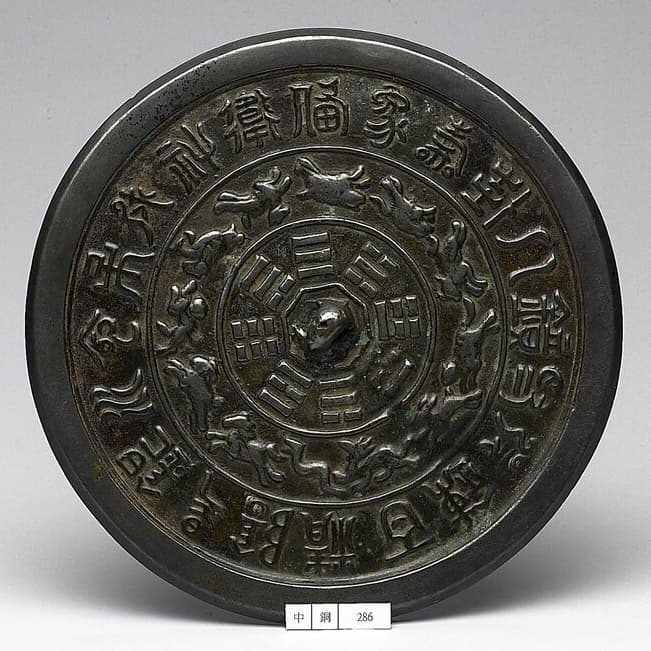
General Introduction to the Wind Heaven Xiao Xu Hexagram
The Wind Heaven Xiao Xu hexagram (風天小畜) is the 9th hexagram in the 64 hexagrams of the I Ching, located in the Upper Canon. It is composed of the lower trigram Qian (Heaven, ☰) and the upper trigram Xun (Wind, ☴), meaning Wind above, Heaven below. Thus, it is also called the Wind over Heaven hexagram.
The name "Xiao Xu" (小畜) can be understood on multiple levels. "Xiao" (小) means small, and "Xu" (畜) means to nourish, raise, restrain, or accumulate. Therefore, Xiao Xu implies a small-scale nurturing or cultivation, a modest accumulation, or a temporary restraint that is not yet strong. This differs from the Da Xu hexagram (Hexagram 26) later, where accumulation and restraining power have reached a grand and comprehensive level.
Origins and Position of the Hexagram in the Sequence of 64
Traditionally, the I Ching is believed to have originated in ancient times, undergoing various stages of formation. Modern research, such as the work of scholar Nguyen Vu Tuan Anh introduced in Nhan Dan newspaper, offers new perspectives on the roots of the I Ching, suggesting that this knowledge system may belong to an ancient civilization predating human history as we know it. The author also proposes that the ancient Vietnamese civilization on the southern bank of the Yangtze River might be one of the sources that inherited and developed this wisdom. Nevertheless, the most common and systematic understanding is based on the I Ching text we have, linked to ancient Chinese cultural traditions and commentaries by Eastern sages.
The position of Xiao Xu in the sequence of 64 hexagrams is explained through the order of mutual generation and transformation. After the first eight hexagrams, from Pure Qian, Pure Kun to Bi (Union), all things begin to gather, forming communities. Once gathered into groups (Bi), elements of disharmony inevitably arise, requiring nurturing and education to harmonize. Xiao Xu appears as a necessary phase: after initial gathering, a small and modest period is needed to nurture and cultivate stability. The Judgment states: "Xiao Xu: Success. Dense clouds, no rain, from our western region." This describes a state of overcast sky, clouds gathered but not yet enough to produce rain. It is an image of accumulation and preparation not yet mature enough to burst forth.
Structure and Operating Principles of the Hexagram
Line 5 and the Role of the Soft Yin
The most distinctive feature of Wind Heaven Xiao Xu is having only one Yin line at the fourth position (Line 4). This Yin line assumes the role of the ruling line, situated as a high minister, close to Line 5 (the Yang line in the noble position of a leader). This single weak Yin line has the responsibility to restrain, regulate, and nourish five strong Yang lines around it. This is a very special and interesting structure.
The hexagram operates on the interaction between the inner Qian and outer Xun. Qian is heaven, strength, completeness, and initiative. Xun is wind, penetration, gentleness, and skill. The image of wind blowing over heaven, stirring but unable to shake heaven's stability, can only pass over, embrace, and gradually influence softly. Thus, the hexagram teaches that with small strength, one should not use forceful or confrontational means, but rather use flexibility, cleverness, and gradual penetration to achieve goals.
Meaning of Inner and Outer Trigram
- Inner Trigram Qian (☰): Symbolizes the inner self. It represents strength, perseverance, clarity, and full potential. It shows that the noble person in this phase possesses ample virtue, talent, and great aspirations.
- Outer Trigram Xun (☴): Symbolizes action and external conduct. It represents penetration, gentleness, humility, and tact. It embodies a method of action: not using force or dominance but gentle persistence to persuade and transform.
The combination of inner strength and outer gentleness forms a profound philosophy of action: within, full of passion and desire, but without, calm and patient. If one achieves this, one can gradually reach small goals, laying the foundation for greater successes later.
Detailed Analysis of the Line Statements
Line 1: "Return to the proper path. How could there be blame? Good fortune."
Line 1 is a Yang line at the first position of the inner Qian. At the initial stage, this line aspires to advance but is at the bottom, lacking strength. The advice: "Return to your own path. How could there be blame? Good fortune." This means in the early career phase, when strength is weak, the best approach is to be content, cultivate oneself, and follow the righteous path, avoiding hasty competition. Returning to principles and oneself brings good outcomes.
Line 2: "Pulled back, good fortune."
Line 2 is a Yang line at the center of the inner Qian, with qualities of integrity and correctness. The advice: "Being pulled back brings good fortune." This line wishes to advance but is restrained by the Yin line above. However, due to its central and correct virtue, it listens and accepts guidance from Line 4 (the ruling line). Knowing when to stop and heed wise advice when conditions are not yet ripe brings good fortune and avoids danger.
Line 3: "The carriage loses its wheel spokes. Husband and wife turn against each other."
Line 3 is a Yang line at the top of the inner trigram, in an incorrect position (Yang at a Yin place). The warning: "The axle is removed; husband and wife turn against each other." This line is too hasty, wanting to advance without heeding the restraint of Line 4, leading to breakdown, loss of mobility (carriage losing its axle), and conflicts with close associates. This is a lesson about stubbornness, impatience, and lack of cooperation, leading to failure and strained relationships.
Line 4: "Sincere, bloodshed and anxiety disappear, no blame."
Line 4 is the only Yin line, the ruler of Xiao Xu. The statement: "With sincerity, bloodshed and anxiety disappear, no blame." This line uses gentleness and integrity to transform the five Yang lines. It does not use power or schemes but uses trust to set an example and persuade. Thus, it can restrain and regulate the aggressiveness of the Yang lines effectively, bringing the whole hexagram to safety and blamelessness.
Line 5: "Sincere and linked, enriching with neighbors."
Line 5 is a Yang line in a noble, central, and correct position. The advice: "With sincerity, unite with those nearby, enrich together with neighbors." This line does not become complacent due to its high position; instead, it uses its integrity to connect and share with other Yang lines, progressing together. It shows that a good leader not only cares for oneself but also cooperates and shares benefits, creating collective strength.
Line 6: "Rain has fallen, rest has come, virtue is fully accumulated. A woman persisting brings danger. The moon nearly full, a noble person advancing brings misfortune."
Line 6 is a Yang line at the end of the hexagram, having reached a stage of successful accumulation. The statement: "It has rained, it has rested, virtue is fully stored. If a woman is too persistent, danger. The moon is almost full; if the noble person advances, misfortune." This is an important warning. After achieving success through patience and accumulation (rain has fallen), continuing excessive action, greed, or wanting to advance further (like a woman overly clinging to virtue, or the moon wanting to remain full) will bring danger. The principle is to know when enough is enough and stop at the right time.
Philosophical Meaning and Practical Lessons
In Work and Career
Xiao Xu offers a highly practical advice for those in the startup phase or with grand plans but limited resources. It advises not to rush stages, not to announce goals too early before capable of achieving them. Instead, focus on developing knowledge, skills, building good relationships, and patiently waiting for the right time. This phase is like clouds gathering but not yet raining, requiring more time and careful preparation.
In Social Relationships
The greatest lesson is using gentleness to overcome strength. In arguments, conflicts, or negotiations, using force or authority to overwhelm others often does not yield lasting results. The wise approach is to use softness, tact, listening, and understanding to find common ground. Patience and sincerity have greater transformative power than aggression.
In Self-Cultivation
The hexagram reminds each person of humility and contentment. Even after achieving certain successes (Line 6), one should not be overly ambitious or seek further conquests. Knowing when to stop and preserve achievements is also a form of wisdom. Moreover, nurturing one's character and accumulating knowledge daily in small amounts (Xiao Xu) is the solid foundation for all great future successes (Da Xu).
Comparison with Related Hexagrams
Xiao Xu and Da Xu (Hexagram 26)
These two hexagrams have complementary names and meanings. While Xiao Xu has one Yin line nourishing five Yang lines, Da Xu has two Yin lines (Lines 4 and 5) nourishing four Yang lines. In Xiao Xu, accumulation is small, restraining power is weak, only enough for minor changes. In Da Xu, accumulation is great, restraining power is strong, capable of significant changes, helping all things develop steadily. If Xiao Xu is the stage of sowing and tending, Da Xu is the stage of harvesting and storing.
Xiao Xu and Hexagram 10 (Lu, Conduct)
Following Xiao Xu is the Lu hexagram. If Xiao Xu is a phase of inner nurturing and accumulating strength, Lu is the phase of applying what has been accumulated into practice, walking the path according to rules and propriety. This relationship shows the logical development of all things: accumulation (Xiao Xu) is the prerequisite for action (Lu). Once adequately prepared, stepping out into the world and acting according to principles becomes easier and safer.
Conclusion
The Wind Heaven Xiao Xu hexagram carries multiple layers of profound meaning, not just as a prediction of fortune but as a philosophy of life and a subtle strategy for conduct. It teaches the value of patience, accumulation from small things, the power of gentleness and sincerity. The hexagram reminds us that strength and aggression are not always optimal. There are times when the wisest action is to step back to advance, to wait and nurture potential until things ripen. The message of "dense clouds but no rain" is a reminder of a promising preparatory phase, where persistence and silent effort are keys to unlocking brilliant success in the future.
Quick-Reference Table: Hexagram The Taming Power of the Small
| Aspect | Content |
|---|---|
| King Wen number | 9 |
| Chinese name | 小畜 |
| Symbol | ䷈ |
| Vietnamese name | Phong Thiên Tiểu Súc |
| Upper trigram | Xun (Wind), Wood element, Southeast |
| Lower trigram | Qian (Heaven), Metal element, Northwest |
| Six lines, first line at the bottom | 1st yang, 2nd yang, 3rd yang, 4th yin, 5th yang, 6th yang |
| Image | Wind moves across the sky: dense clouds, but no rain yet. |
| Reading | Accumulated strength is still small, not yet enough to produce results. The advice is to stay at the level of steady small gains. Small things done consistently still shape the current. |
*Số liệu trong bảng khớp với kết quả các công cụ tra cứu trên Nhật Nguyệt.*
