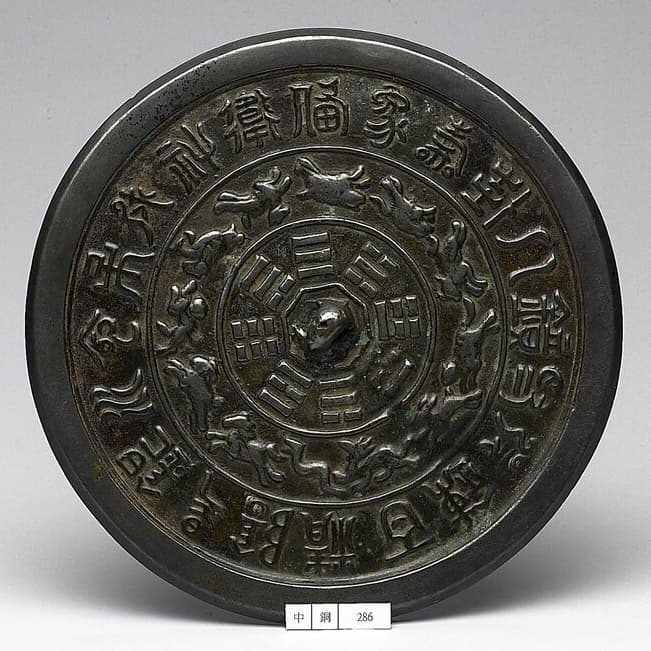
Introduction to Hexagram 23 (Bo)
Hexagram 23, named Bo (剥), meaning "Splitting Apart" or "Stripping," is the 23rd hexagram of the I Ching. It is composed of the trigram Gen (Mountain ☶) above and Kun (Earth ☷) below. The image is a mountain resting on the earth, but one that is gradually being eroded from its base, causing it to lose stability. This symbolizes a process of stripping away, decline, and collapse from the foundation upward.
Examining the lines, Bo consists of five Yin lines with a single Yang line at the top. This structure indicates that the dark, passive force (Yin) has almost completely overwhelmed the light, active force (Yang). In the philosophy of the I Ching, Yang represents the noble person and positive energy, while Yin represents the petty person and negative influence. Therefore, this hexagram depicts a time when inferior people are thriving while the noble person is isolated and must retreat to preserve integrity.
Deep Meaning of the Hexagram
Decline and Stripping
The name "Bo" implies flaying, peeling, or stripping away. This hexagram describes a gradual decline within an organization, relationship, or destiny, not caused by a dramatic event, but by steady erosion from within and below. Like a mountain weathered away by rain and wind, collapse often begins with small, seemingly insignificant flaws that accumulate over time.
Isolation of the Yang Line
The single Yang line at the top is surrounded by five Yin lines. This portrays a person of virtue in chaotic times, one whose talents are not utilized and who faces isolation. The ancient wisdom advises that the noble person should not resist the tide of the times but rather yield to preserve life and await a better opportunity. This is a profound philosophy of humility and adaptive wisdom.
Cosmic Cycle
In the dialectical view of the I Ching, nothing is permanently in decline. Hexagram 23 is followed by Hexagram 24 (Return, Fu), indicating that the extreme point of decline marks the beginning of renewal. When Yin reaches its peak, Yang begins to regenerate from below. This reminds us that even in the darkest times, seeds of hope and change always exist.
Applications in Daily Life
In Career and Work
When Hexagram 23 appears regarding work, it warns of a difficult period: declining revenue, loss of support from superiors, or competitors eroding one's position. The advice is to avoid reckless actions or desperately clinging to what is being lost. Instead, accept reality, temporarily withdraw from unnecessary conflicts, focus on strengthening inner capacity, and wait for the situation to turn.
In Relationships
In matters of love or social relations, Bo indicates cracks, loss of trust, or third-party interference gradually destroying the bond. This hexagram is often unfavorable for romance, suggesting separation or difficult-to-heal wounds. It is crucial to objectively identify the root cause of the erosion, whether it is selfishness, disrespect, or external factors, to determine the right course of action, whether to repair the relationship or decisively move on.
In Self-Cultivation
For personal growth, Bo teaches humility and stillness. When at the peak (symbolized by the mountain), one tends to become arrogant, inviting internal decay. The hexagram advises regular self-reflection, maintaining a pure mind, continuous learning, and humble listening. The stillness of Gen reminds us that in turbulent times, remaining calm and clear-headed is the most valuable asset.
General Advice When Encountering Hexagram Bo
- Recognize the times: Honestly assess the situation and accept that you are in a difficult phase.
- Yield to preserve: Do not fight the overwhelming current. Sometimes stepping back allows for greater progress later.
- Nurture inner strength: Invest time in learning, health, and spirit to prepare for recovery.
- Wait for the opportunity: Remember that Bo is followed by Return (Fu). No darkness is permanent; patience and faith are essential.
Hexagram Bo is one of the most profound cautionary hexagrams in the I Ching. It is not merely a prediction of decline, but a lesson in life wisdom: facing adversity, knowing when to stop, and nurturing hope amidst collapse.
Quick-Reference Table: Hexagram Splitting Apart
| Aspect | Content |
|---|---|
| King Wen number | 23 |
| Chinese name | 剝 |
| Symbol | ䷖ |
| Vietnamese name | Sơn Địa Bác |
| Upper trigram | Gen (Mountain), Earth element, Northeast |
| Lower trigram | Kun (Earth), Earth element, Southwest |
| Six lines, first line at the bottom | 1st yin, 2nd yin, 3rd yin, 4th yin, 5th yin, 6th yang |
| Image | The mountain rests on the earth, its base wearing away. |
| Reading | A phase of erosion in which the foundation is worn down bit by bit. The text advises pausing large undertakings and protecting the root. What declines is held to belong to a cycle that turns again. |
*Số liệu trong bảng khớp với kết quả các công cụ tra cứu trên Nhật Nguyệt.*