Tet Feast Trays – A Cultural Mirror of Vietnam's Three Regions
Tet (Lunar New Year) is the most important holiday in Vietnam, and the Tet feast tray is not just a family meal but a symbol of reverence for ancestors, reflecting the culture, climate, and natural resources of each region.
Northern Region
The Northern Tet tray, especially in Hanoi, is known for its completeness and elegance. According to To Thi Huong Giang, who has preserved Hanoi's traditional Tet feast for over 20 years, traditional trays came in various formats: 8 bowls and 8 plates, 4 bowls and 8 plates, 4 bowls and 6 plates, or even 8 bowls and 12 plates for wealthy families. A family of five often chooses 4 bowls and 8 plates for the full offering tray.
Typical dishes:
- Bowls: bamboo shoot soup with pork hock, glass noodle soup with chicken innards, 'bong tha' (pork skin soup), and pigeon stewed with young rice and lotus seeds. For larger trays, additional options include meatballs, snail soup, fish fin, braised chicken, and kohlrabi soup.
- Plates: pork roll (gio lua), cinnamon pork roll (cha que), head cheese (gio thu), fried spring rolls, and boiled chicken – the five essential dishes. These are complemented by stir-fried chicken innards with pineapple, fried battered shrimp, and char siu.
The signature dish is canh bong nau tha – a delicate soup made with pork skin, various vegetables like cauliflower, peas, baby corn, kohlrabi, carrots, mushrooms, and meatballs. The broth is made from chicken stock, dried shrimp, and sometimes dried scallops for a sweet, umami flavor. The soup is served in a special bowl with a flared rim to showcase the ingredients.
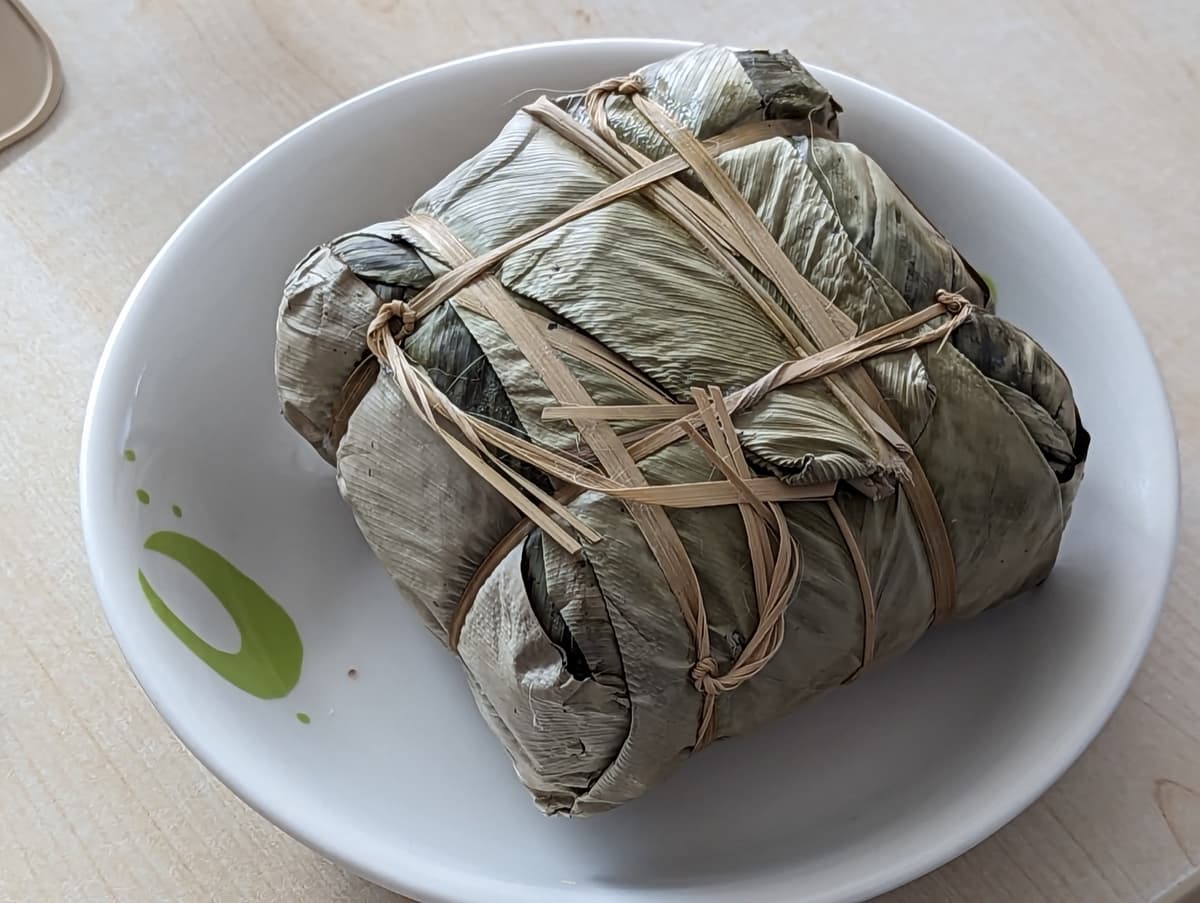
Additionally, the offering tray includes a bowl of steamed rice (scooped only once), a plate of banh chung (square sticky rice cake) cut into eight pieces, and a plate of xoi (sticky rice). These are not counted as main dishes. Pickled vegetables and pickled onions are essential side dishes.
Central Region
The Central region, with the ancient capital Hue as its culinary center, offers a Tet tray imbued with imperial elegance and sophistication. Hue cuisine is considered an art form, as locals eat not only to satisfy hunger but to appreciate the visual beauty and refinement in each dish. The Tet tray often features elaborate preparations and beautiful presentations, reflecting the influence of the Nguyen dynasty's royal court.
Common dishes include small square banh chung, pork roll, shredded chicken with pomelo peel, and intricate dishes like 'nem cong' (dragon-shaped spring rolls) and 'cha phuong' (phoenix-shaped pork pie). However, detailed lists of specific Central Tet dishes are limited in available sources, so this article can only outline the general elegance for which Hue cuisine is famous.
Southern Region
In contrast to the North's formality and the Central region's refinement, the Southern Tet tray is more liberal, prosperous, and deeply connected to the riverine culture. With a mild climate and fertile land, the South has abundant fresh ingredients year-round, leading to a tray full of fresh produce, tropical fruits, and seafood.
Key dishes include banh tet (cylindrical sticky rice cake with savory or sweet fillings), thit kho tau (pork braised in coconut water, served with pickled bean sprouts), canh kho qua (bitter melon soup stuffed with meat, symbolizing overcoming hardship), and boiled chicken or duck with ginger fish sauce. These dishes often have a sweeter taste, using coconut water and characteristic Southern herbs.
The Southern fruit tray (mam ngu qua) is also distinctive, following the saying “Cau sung vua du xai” (Ask for enough to use), corresponding to fruits: custard apple (mang cau), fig (sung), coconut (dua), papaya (du du), and mango (xoai). They also add pineapple (thom) for the wish of many children and grandchildren, and a pair of watermelons for luck. Conversely, they avoid certain fruits due to their names' inauspicious meanings: banana (chuoi – similar to 'chui nhui', meaning failure), pear (le – similar to 'le let', meaning crawling, defeat), and oranges/tangerines (cam, quyt – implying 'quyt lam cam chiu', meaning making others suffer).
Comparison Table
| Criteria | North | Central | South |
|---|---|---|---|
| Signature dishes | Banh chung, gio lua, cha que, fried spring rolls, canh bong | Small banh chung, pork roll, imperial dishes like nem cong, cha phuong | Banh tet, thit kho tau, bitter melon soup, boiled chicken/duck |
| Arrangement style | Even number of bowls/plates (4 bowls 8 plates, etc.), emphasizes fullness and harmony | Highly aesthetic, beautiful presentation with fine details | Liberal, less concerned with quantity, focuses on rich flavors and abundance |
| Fruit tray | Banana, pomelo, peach, tangerine – arranged according to five elements with five colors | Diverse, not strict: dragon fruit, banana, watermelon, custard apple, pineapple... | Custard apple, fig, coconut, papaya, mango – meaning 'cau sung vua du xai', avoid banana, pear, orange, tangerine |
| Cultural influence | Red River Delta rice culture, emphasizes ritual and family | Hue imperial court culture, refined, artistic | Southern river culture, liberal, practical, focused on luck and prosperity |
Reasons for Differences
The differences stem from several factors:
- Natural conditions: The North has four seasons, requiring warming dishes and seasonal vegetables. The South's mild climate and fertile land allow for a more abundant tray with tropical fruits and coconut-based dishes. The Central region, with its coastal advantages but harsh weather, often prepares dishes carefully for preservation.
- History and culture: The North is the cradle of Vietnamese culture with a long history of wet rice agriculture, valuing fullness and reunion. The Central region was once the imperial capital, blending royal cuisine with local traditions. The South, as a frontier land, developed a more liberal and practical lifestyle.
- Beliefs and customs: Each region has its own concepts of lucky dishes and taboos, especially visible in the fruit tray. The North follows the five elements, the South uses wordplay to attract luck, and the Central region is more flexible, offering whatever is available with sincerity.
Despite these differences, all Tet trays share a common purpose: expressing reverence for ancestors, wishing for a peaceful and prosperous new year, and strengthening family bonds during the spring festival.