


TL;DR: The Celestial Executioner is a powerful sha (negative chi) formed when a straight road, corridor, or gap points directly at a house, feeling like a sword slicing into it. Remedies typically involve using shields, concave mirrors, or adjusting the door direction to deflect the attacking energy.
What is Thiên Trảm Sát?
Thiên Trảm Sát (天斬煞), also known in English as "Celestial Executioner" or "Heavenly Executioner", is one of the most frequently mentioned forms of sát khí (bad energy) in residential feng shui, especially in modern cities with high building density. This concept is not a curse or a spiritual omen, but a way of explaining how landform and energy flow affect a living space.
In essence, Thiên Trảm Sát forms when a gap, or a long, straight road or corridor, points directly at the main door, a large window or the balcony of a house. The energy flowing from this gap or road is compressed and moves at high speed, creating a strong current of sát khí, like the slash of an invisible blade. In feng shui, energy needs to circulate in a harmonious, gentle way. A current that is too fast, too strong and directed straight in will break this balance.
Common forms of Thiên Trảm Sát
There are two common forms of Thiên Trảm Sát and one variant that homeowners should pay particular attention to:
- Form 1: Caused by the gap between high-rise buildings. This is the most common form in urban areas. Looking out from inside the house, you see a narrow gap created by two high-rise buildings standing close together. This gap acts like a "wind tunnel", forcing all the air and wind into one narrow point and creating enormous pressure. If this gap lines up with the main door or a bedroom window, the house is considered to be affected by Thiên Trảm Sát.
- Form 2: Caused by a road or alley pointing straight at the house. The house sits at the end of a dead-end road, or a long, straight road or small alley runs directly into its door. Like the gap between high-rise buildings, this road also creates a powerful current of xung sát (clashing energy). In folk belief, this is also called "a road pointing at the house" (road pointing at house).
- Variant form: A long corridor inside the house. This is not only an external factor; inside the house, a miniature form of Thiên Trảm Sát can also occur. If the main door opens onto a long, straight corridor and this corridor ends at the door of the main bedroom or the bathroom door, the incoming energy is accelerated and strikes straight into these functional areas, causing an energy imbalance in the living space.
A summary table of the forms of Thiên Trảm Sát, the level of impact by distance, and the remedies.
| Form of Thiên Trảm Sát | Source of sát khí | Position struck directly |
|---|---|---|
| Form 1 | Gap between high-rise buildings | Main door or bedroom window |
| Form 2 | Straight road or alley | House door |
| Variant form | Long corridor inside the house | Main bedroom door or bathroom door |
| Distance | Level of impact | |
| Under 30 metres | The most severely affected zone | |
| From 30 to 60 metres | Significantly reduced | |
| Over 60 metres | Almost negligible | |
| Remedy | How to do it | |
| Plant trees | Plant a row of tall, leafy trees in front of the house door or in front of the gap or road pointing in | |
| Build a wall or screen | Build a low or high wall in front of the yard, or place a screen directly in front of the main door | |
| Make a roof or porch | Build a roof or a wide porch | |
| Concave mirror | Hang outside the house, above the door or window, facing the source of sát khí | |
| Hexagonal shield | Hang outdoors |
How do you identify the level of impact of Thiên Trảm Sát?
Not every case of seeing a gap or a road is strong sát khí. The level of impact of Thiên Trảm Sát depends on many factors:
At what distance from the source of sát khí is a house affected?
- Distance under 30 metres: This is the most severely affected zone. The current of xung sát is at its most intact and powerful, directly affecting the health and wealth of the family.
- Distance from 30 to 60 metres: The level of impact is significantly reduced. The current has begun to disperse and weaken, though it should still be remedied if possible.
- Distance over 60 metres: The impact is almost negligible, and there is no need to worry too much.
What are the characteristics of the source of sát khí?
- The width of the gap or road: The narrower the gap, the greater the wind pressure and the stronger the sát khí. Conversely, a gap that is too wide (over 10 metres) will reduce the compression effect.
- The length of the road: The longer and straighter the road, the more the current is maintained and accelerated.
- The position struck directly: Sát khí is strongest when it strikes the main door (the main entry point for energy into the house). If it only strikes a storage room window or a wall with no door, the level of impact will be much milder.
What are the signs that a house is affected?
According to feng shui belief, a house affected by Thiên Trảm Sát over a long period can cause family members to be constantly stressed and tired, and prone to health problems such as headaches, insomnia and illnesses related to the nervous system. In terms of career and finances, there may be many obstacles, difficulty holding on to money, and a tendency toward arguments and lawsuits. However, these are only relative observations in feng shui, not absolute rules.
How do you remedy Thiên Trảm Sát?
The goal of the remedy is not to "destroy" the current, but to weaken it, deflect it or shield against it in order to minimise its negative impact. Below are common and easy-to-apply methods:
What are the physical shielding methods?
This is the most direct and effective group of methods, working on the principle of creating an obstacle to block the current of xung sát before it enters the house.
- Plant trees: Plant a row of tall, leafy trees (such as areca palms, banana plants or bamboo) in front of the house door or in front of the gap or road pointing in. The canopy will disperse the current, turning a fast, strong flow into a slower, gentler one. Trees also help purify the air and create a pleasant feeling.
- Build a wall or screen: Build a low or high wall in front of the yard, or place a screen directly in front of the main door. This obstacle will prevent the current from flowing straight into the house. Note that the screen or wall should not be too close to the door; there needs to be a certain gap so that energy can still circulate.
- Make a roof or porch: If the main door is struck directly by a road, adding a roof or a wide porch can deflect the current downward and out to both sides.
How are feng shui objects used?
Feng shui objects do not "drive away" sát khí in a spiritual sense, but work as tools to direct the flow of energy.
- Concave mirror (concave bagua mirror): This is the most frequently mentioned object for remedying Thiên Trảm Sát. A concave mirror draws in and shrinks the image of the source of sát khí, thereby reducing its pressure. The mirror should be hung outside the house, above the door or window, facing the source of sát khí. Never hang a concave mirror inside the house, as it can cause other negative effects.
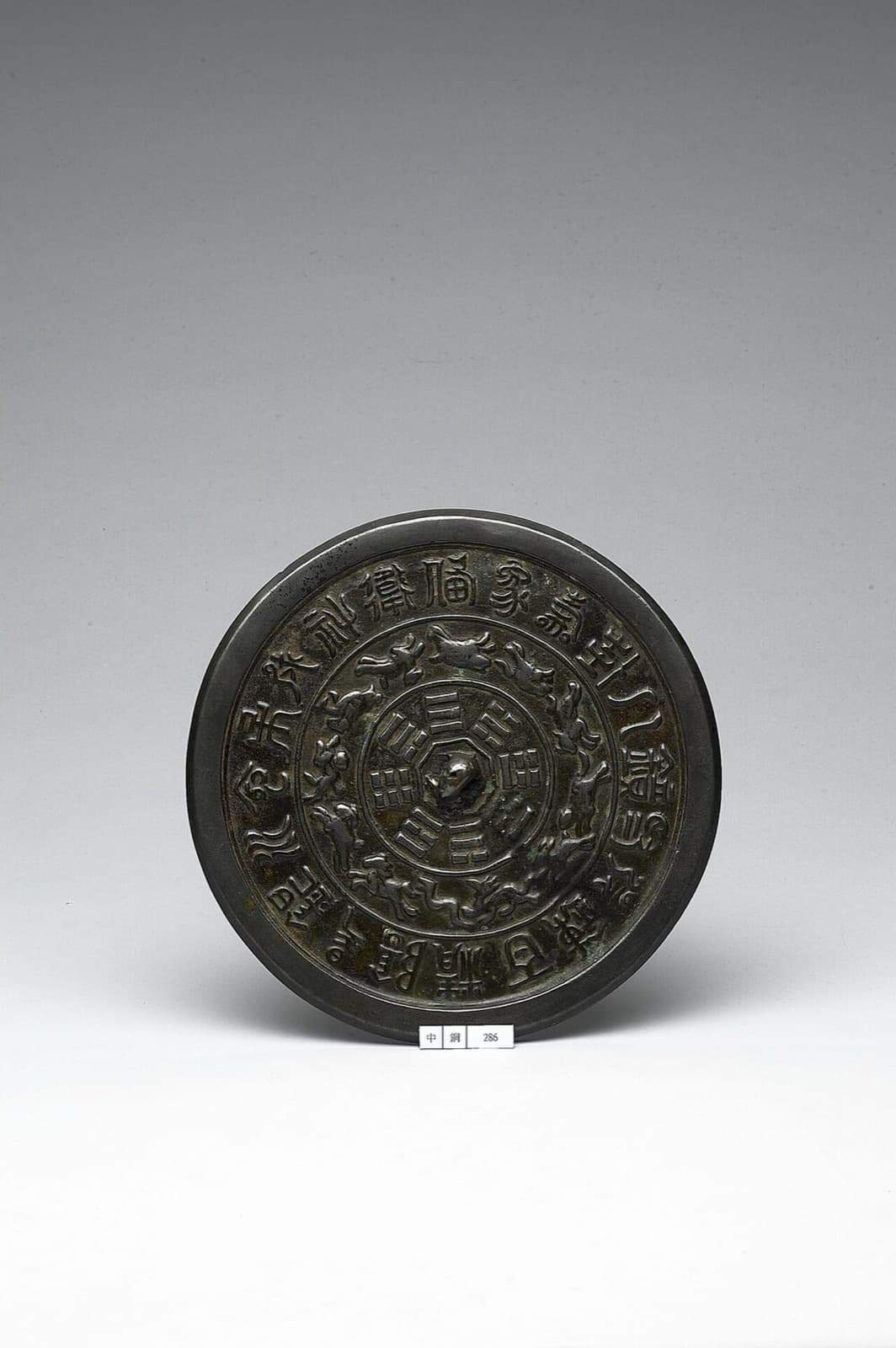
- Hexagonal shield (bagua talisman): This shield is usually made of wood or metal, with the bagua diagram carved on it. It is hung outdoors, similar to the concave mirror, to neutralise currents of sát khí from outside. This object is more symbolic and spiritual than physical.
- Wind chimes or metal tubes: Hang wind chimes or hollow metal tubes near the window or doorway affected by sát khí. When the wind blows through, these metal tubes produce sound, dispersing and reducing the intensity of the current. In the five elements, metal generates water, which helps soften energy that is too strong.
How can the interior be adjusted?
If you cannot act from the outside, you can remedy it from the inside:
- Change the door position: If possible, change the opening direction of the main door or move the main entrance to another, safer direction that is not struck directly by sát khí.
- Use a floor mat: Place a mat in a colour corresponding to the homeowner's destiny directly in front of the main door. This mat is considered a mild "obstacle" that helps slow the current before it enters the house.
- Place indoor potted plants: Place a large plant with a wide canopy at the window or beside the doorway that receives the sát khí. The plant will obstruct and disperse the current.
- Rearrange the space: Avoid placing a desk, bed or stove in line with the doorway or a long corridor. If this cannot be avoided, place a small screen or a bookshelf to deflect the energy.
What should you keep in mind about Thiên Trảm Sát?
- Do not worry too much: Identifying and remedying Thiên Trảm Sát is only one part of creating a good living space. Do not, out of an obsession with sát khí, put psychological pressure on yourself and your family.
- Prioritise natural solutions: Among the remedies, using trees, walls and screens are natural, safe solutions that bring many other benefits (such as improving the air and increasing aesthetics).
- Consult an expert: For complex cases, ask an experienced feng shui expert for advice, to help find the solution best suited to the structure of the house and your particular circumstances.
- An objective perspective: Feng shui is an ancient doctrine about the living environment. Its effects are difficult to verify scientifically. So approach it with an open but clear-headed mind, combined with ensuring the factors of lighting, ventilation, safety and comfort for your home.
Overview article on the topic: What is feng shui? Foundational principles and how to apply them


