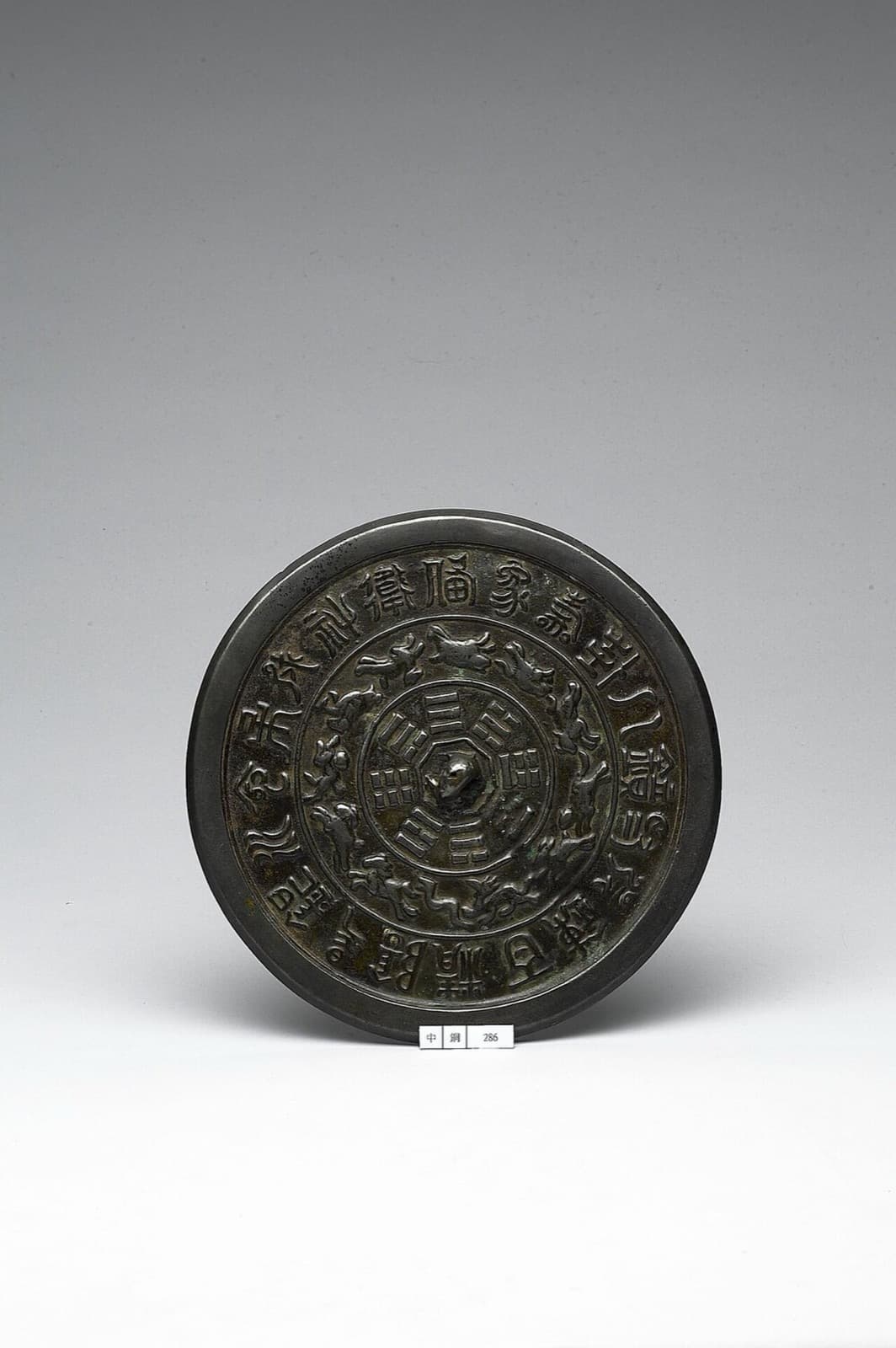
What the Luban rule is
The Luban rule is a measuring convention from traditional carpentry and building, named after Lu Ban, the carpenter of the state of Lu revered as the patron of the trade. What sets it apart from an ordinary rule: alongside its graduations, characters are written along the body marking each stretch as favourable or not.
A carpenter uses it not to learn how long something is, but to check whether that number falls in a stretch considered good. This is why certain figures recur in Vietnamese building practice until they become defaults: main doors at 81cm or 86cm, interior doors at 69cm or 81cm.
Three rules for three kinds of thing
The commonest confusion is that there are three different rules, with different cycle lengths, for three different kinds of object. Using the wrong one gives a wholly wrong answer even when the measurement itself is right.
The 52.2cm rule measures CLEAR OPENINGS: the inside of a doorway, a window, a vent, a light well. Eight divisions of 65.25mm each, four marked in red and four in black, each subdivided five ways.
The 42.9cm rule is the classical 魯班尺. It measures SOLID OBJECTS: plinths, foundations, beds, cabinets, tables, steps. Eight divisions carrying the characters 財病離義官劫害本, each subdivided four ways.
The 38.8cm rule, the 丁蘭尺, measures altars, ritual objects and graves. It has ten divisions, six favourable and four not, unlike the other two.
Reading a dimension
The arithmetic is simpler than people expect. Convert to millimetres, divide by the rule's cycle length, and see where the REMAINDER falls.
A door 82cm wide is 820mm, read on the 52.2cm rule. Dividing 820 by 522 gives one cycle and a remainder of 298. With eight divisions of 65.25mm, 298mm falls in the fifth, a favourable one. Hence its familiarity to anyone who fits doors.
Because the rule repeats, a much larger dimension reads the same way: you only need its cycle number and its remainder.
An arithmetic detail that often gets rounded away
Many sources give each division of the 52.2cm rule as "65mm" and each subdivision as "13mm". Those are rounded. Divided properly, 522 over 8 is 65.25mm, and over 5 again is 13.05mm.
The difference sounds negligible but it accumulates: by the eighth division the rounded method is 2mm off. For a dimension sitting near a boundary, 2mm is enough to read it into the wrong division. If two tools disagree about a number close to a boundary, this is usually why.
A second source of divergence is the boundary convention: which division a dimension lands in when it sits exactly on the mark. There is no shared standard, so each tool picks one. What matters is not which, but saying which.
Division names: where sources disagree
Comparing the tables in circulation, two sources can give different names for the same position on the 42.9cm rule. Some write the sixth and eighth as "Nạn" and "Mạng"; others as "Kiếp" and "Bản".
The way to settle it is to return to the original characters. The 魯班尺 carries 財病離義官劫害本, Tài, Bệnh, Ly, Nghĩa, Quan, Kiếp, Hại, Bản. So "Kiếp" and "Bản" are correct; the others are variant Vietnamese renderings.
This is why, when consulting a table, it is worth checking whether it prints the characters. With them you can verify; with Vietnamese names alone you cannot tell which version you are reading.
What the rule cannot do
The Luban rule is a cultural convention with no scientific basis. It says nothing about structure, loading, minimum clear widths for escape routes, or dimensions suited to the people who will use the building.
A door in a favourable division that is too narrow is still a door that is hard to walk through. In practice, builders settle the dimensions that satisfy engineering and function FIRST, then adjust by a few millimetres to land in a favourable division. Doing it the other way round puts custom above safety.
Read that way, the rule keeps what is good about it: a convention that let a trade pass down its working numbers, and a thread connecting someone building a house today to the carpenters of many generations before.