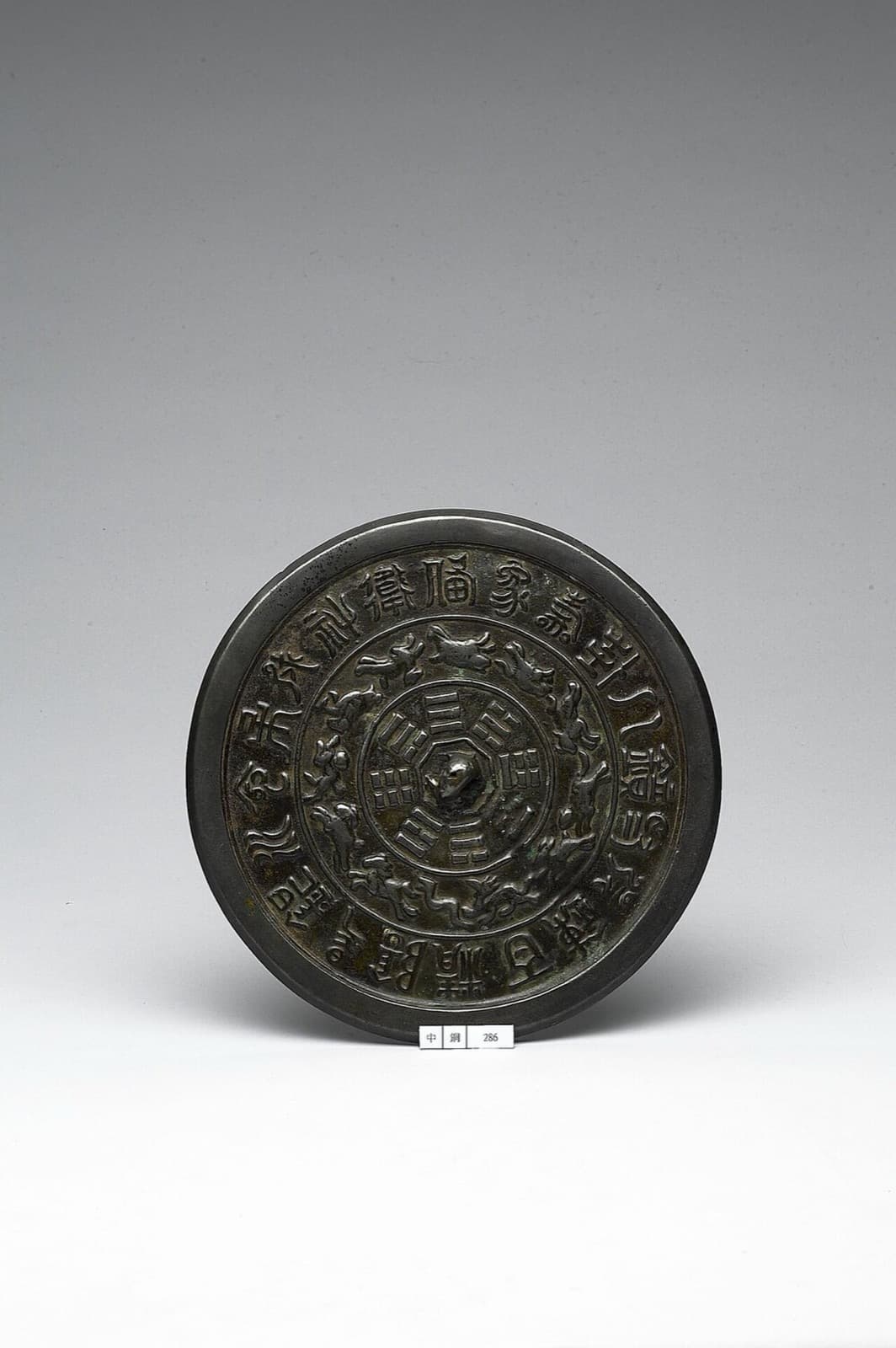
Introduction to the 24-Mountain System
In Eastern feng shui, especially the San He and San Yuan schools, the 24-mountain system (Er Shi Si Shan) is the core foundation for determining the orientation of a house, grave, or architectural structure. Instead of using only the eight main directions of the Bagua (Qian, Kun, Zhen, Xun, Kan, Li, Gen, Dui), feng shui practitioners divide the 360-degree compass into 24 equal parts, each spanning 15 degrees. Each mountain is named after one of the Heavenly Stems, Earthly Branches, or trigrams, creating a more refined energy map than simply identifying a direction roughly.
Each of the 24 mountains is not merely a geographic direction but carries a complex set of attributes: five elements, yin-yang, Na Jia, relationships with trigrams, and most importantly, its interaction with time (period energy) and space (terrain). Understanding each mountain, including the Yi Mountain, is key to accurately interpreting the auspiciousness of a house or grave.
Yi Mountain: Position and Basic Attributes
Position on the Compass
Yi Mountain is located due East, slightly leaning toward the Southeast. On the 24-mountain compass, the East is divided into three mountains: Jia (approximately 67.5 to 82.5 degrees), Mao (82.5 to 97.5 degrees), and Yi (97.5 to 112.5 degrees). Thus, Yi Mountain occupies about 15 degrees, from 97.5 to 112.5 degrees on the compass, measured clockwise from North (0 degrees).
Five Elements and Yin-Yang
Yi Mountain belongs to the Wood element. This is one of its most important characteristics because the mountain's element determines its generative or destructive relationships with other factors such as house direction, water flow, or the homeowner's age. In the stem-branch system, Yi is a yin stem (even-numbered), so Yi Mountain is considered a yin Wood mountain. This yin quality gives Yi Mountain a soft, flexible energy, favoring quiet, persistent growth rather than the strong outburst of yang Wood like Jia Mountain.
Relationship with Trigrams
In the 24-mountain system, each group of mountains corresponds to a Later Heaven Bagua trigram. Yi Mountain belongs to the three mountains of the Zhen trigram (Jia, Mao, Yi). Zhen symbolizes thunder, movement, beginnings, spring, and the eldest son. However, note: Mao is the main mountain of Zhen, while Yi Mountain is in the transition zone toward the Xun trigram (Southeast). Therefore, Yi Mountain carries both the energy of Zhen (action, initiation) and Xun (penetration, spreading, wind).
Na Jia and Other Relationships
According to the Na Jia principle, the stem Yi is associated with the Dui trigram (Lake). This means that when interpreting Yi Mountain, besides its Wood element and Zhen trigram, one must also consider its relationship with Dui. Dui symbolizes marsh, joy, speech, and the youngest daughter. The combination of Wood (growth) and Dui (communication, joy) adds another layer of meaning: growth achieved through interaction and happiness.
Good and Bad Meanings of Yi Mountain
General Perspective
No mountain direction is absolutely good or bad in feng shui. Yi Mountain can bring blessings if used correctly and harmonized with other factors, but it can also cause problems if placed in conflicting relationships. Evaluating Yi Mountain requires multiple layers of information.
Yi Mountain in Relation to Facing and Water
In residential feng shui, one often examines the sitting-facing pair. If a house sits Yi and faces Xin (sitting in Yi, looking toward Xin), or sits Xin and faces Yi, the interpretation varies greatly between schools. Yi Mountain is often considered favorable when water (ponds, lakes, rivers, roads) gathers in a compatible position according to water methods, for example, water from the Qian direction (Northwest) flowing toward Yi, creating a water-gathering formation that brings wealth.
Yi Mountain in the Three Cycles Nine Periods
In the San Yuan school, the interpretation of Yi Mountain also depends on current and future period energy. Yi Mountain is one of the 24 mountains, and each period (lasting 20 years) has prosperous mountains (illuminated by good stars) and declining ones. For instance, in some periods, Yi Mountain may be visited by Wu Qu (a star of wealth and fame), but in other periods, by Po Jun (a malefic star of loss and accidents). Thus, timing is crucial.
How to Interpret Yi Mountain in Practice
Step 1: Determine the Exact Degree
The first and most critical step is to measure the exact degree of Yi Mountain. Yi Mountain spans from 97.5 to 112.5 degrees. However, this 15-degree range is further divided into three sub-sections of 5 degrees each: the central (proper), the left overlapping, and the right overlapping. If the compass needle points exactly to the center (105 degrees, called Yi Mountain proper), the interpretation differs from pointing to about 100 degrees (overlap with Jia) or 110 degrees (overlap with Mao). Determining whether it is a proper or overlapping reading affects whether certain stars or trigrams can be used.
Step 2: Examine the Relationship with the Facing
After identifying the sitting mountain, determine the facing direction. The facing is always directly opposite the sitting, exactly 180 degrees away. If the sitting is Yi (105 degrees), the facing is Xin (285 degrees). Then, assess the Yi-Xin pair in terms of relationships such as the Three Harmonies group of Mao (with Hai-Mao-Wei) or the group of You (Si-You-Chou). This classification helps determine the prosperity or decline of the period energy.
Step 3: Combine with the Homeowner's Age and Destiny
Although modern residential feng shui does not entirely depend on age, considering the relationship between Yi Mountain and the homeowner's destiny is important. Homeowners with Wood destiny (either annual or palace) are often considered compatible with Yi Mountain because of the same element. Fire destiny is also good because Wood generates Fire. Conversely, Metal destiny may face challenges because Metal controls Wood, requiring appropriate remedies. However, this is only one layer of information and should not be overemphasized.
Step 4: Analyze the Surrounding Terrain and Landscape
A house sitting Yi and facing Xin needs support from behind (the Southeast) and openness in front (the Northwest). The back (sitting) should have a mound, tall building, or solid object to provide backing. The front (facing) should have open space, water, or a winding road that embraces it, avoiding sharp objects like utility poles, dead trees, or pointed corners of other buildings pointing directly at it. If the front is too barren, windy, or has a straight road pointing in, even a prosperous Yi Mountain cannot exert its full effect.
Step 5: Interpret with Flying Stars
In the Xuan Kong Flying Star school, one creates a chart with nine palaces, each containing a star. For a house sitting Yi and facing Xin, stars are placed in each palace based on the period and direction. Star combinations produce specific meanings. For example, if the Sheng Qi star (a favorable star for health and offspring) arrives at the facing, combined with Yi Mountain, the homeowner can expect sustainable growth and obedient children. Conversely, if the Wu Huang star (a very malefic star of disaster and illness) arrives at the mountain, immediate remedies are necessary.
Yi Mountain in Yin House Feng Shui (Graves)
For yin houses (graves), Yi Mountain is also an important criterion. The ancients highly valued choosing the mountain for graves because they believed it directly affected descendants' blessings. A grave sitting Yi and facing Xin, if placed where the dragon vein is good, the facing mountain is clear, and water gathers at Xin, is considered an imperial acupuncture point, bringing prominent fame to future generations. However, if placed incorrectly, with the dragon vein broken or water flowing backward or directly away, it can cause unpredictable consequences.
One crucial rule in yin house interpretation is the water outlet (where water flows out). For Yi Mountain, a good water outlet is often in positions of different groups. Specifically, if Yi Mountain belongs to the Wood group (according to the Mao Three Harmonies), the water outlet should be in Earth positions (so Wood controls Earth to retain wealth) or Fire positions (Wood generates Fire to release energy and avoid overflow). Determining the correct water outlet requires field experience and deep knowledge of geography.
Different Views and Considerations
Differences Between Schools
Not all feng shui schools view Yi Mountain the same way. The San He school emphasizes Three Harmonies, Three Combinations, and water methods, while the San Yuan school focuses on period energy and flying stars. The Luan Tou school (terrain analysis) almost ignores mountain names, focusing only on landforms and shapes of mountains and rivers. Because of these differences, a house may be deemed good by one school but not by another.
Modern and Scientific Perspectives
It is important to acknowledge that feng shui is a traditional and experiential field, lacking clear empirical scientific evidence linking house orientation to human destiny. Applying feng shui, including interpreting Yi Mountain, should be viewed as an art of arranging living space harmoniously with the natural environment, bringing a sense of peace and positivity to the homeowner, rather than as an absolute tool for predicting the future. Factors such as light, ventilation, convenience, and psychological comfort remain top priorities.
General Advice
If you plan to build a house or choose an orientation and are advised that Yi Mountain is suitable, consider it comprehensively. Do not rely solely on the mountain name. Combine it with the ages of family members, the plot's structure, prevailing wind direction, and traffic and amenities. A beautiful home is one where you truly feel comfortable and happy.
Conclusion
Yi Mountain is one of the important 24 mountains, carrying profound feng shui meanings. Understanding its position, five-element attributes, trigram relationships, and interpretation methods is essential for anyone seriously studying Eastern feng shui. However, always remember that feng shui is only one part of life's bigger picture. Personal effort, ethics, and a healthy lifestyle are the most decisive factors for a fulfilling life. Applying feng shui principles, such as choosing Yi Mountain, should be done flexibly, harmonizing with real conditions and modern life needs.
Quick-Reference Table: the Ất mountain
| Aspect | Content |
|---|---|
| Position among the 24 mountains | 8 |
| Type | Thiên Can |
| Direction | East |
| Governing trigram | Chấn |
| Compass range | 97.5° tới 112.5° |
| Dragon cycle | Nhân |
*Số liệu trong bảng khớp với kết quả các công cụ tra cứu trên Nhật Nguyệt.*
