From knowledge to formulas, tools and personalization: a Bát Tự example
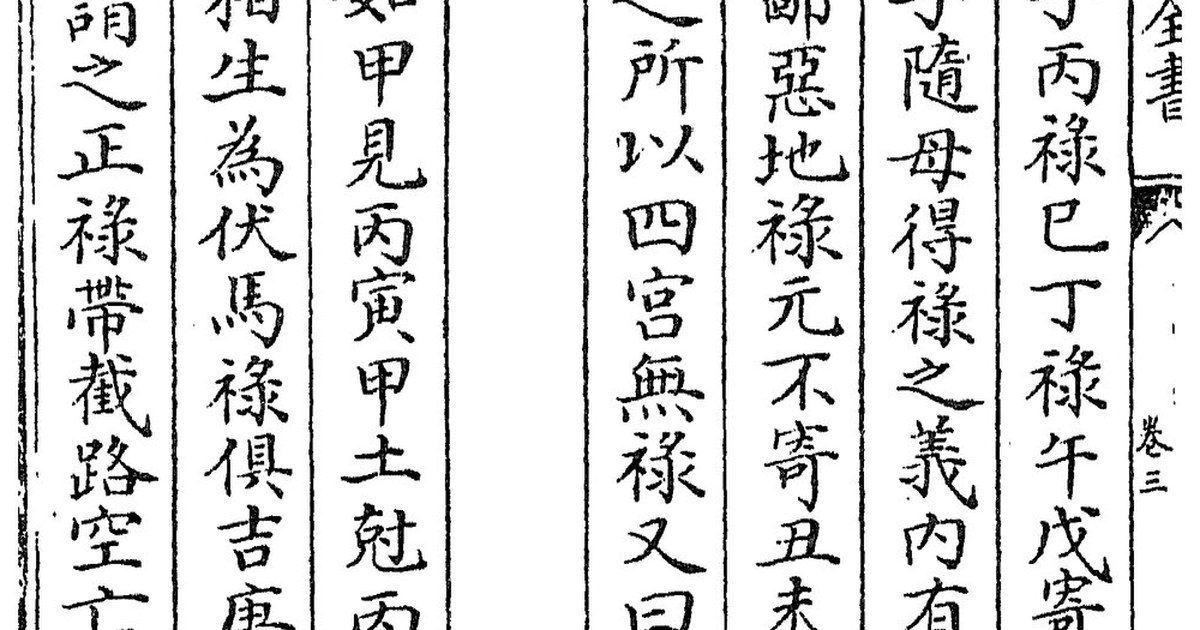
Image: Vạn Dân Anh (soạn); bản quét của Đại học Chiết Giang (CADAL) (CC0, public domain), source
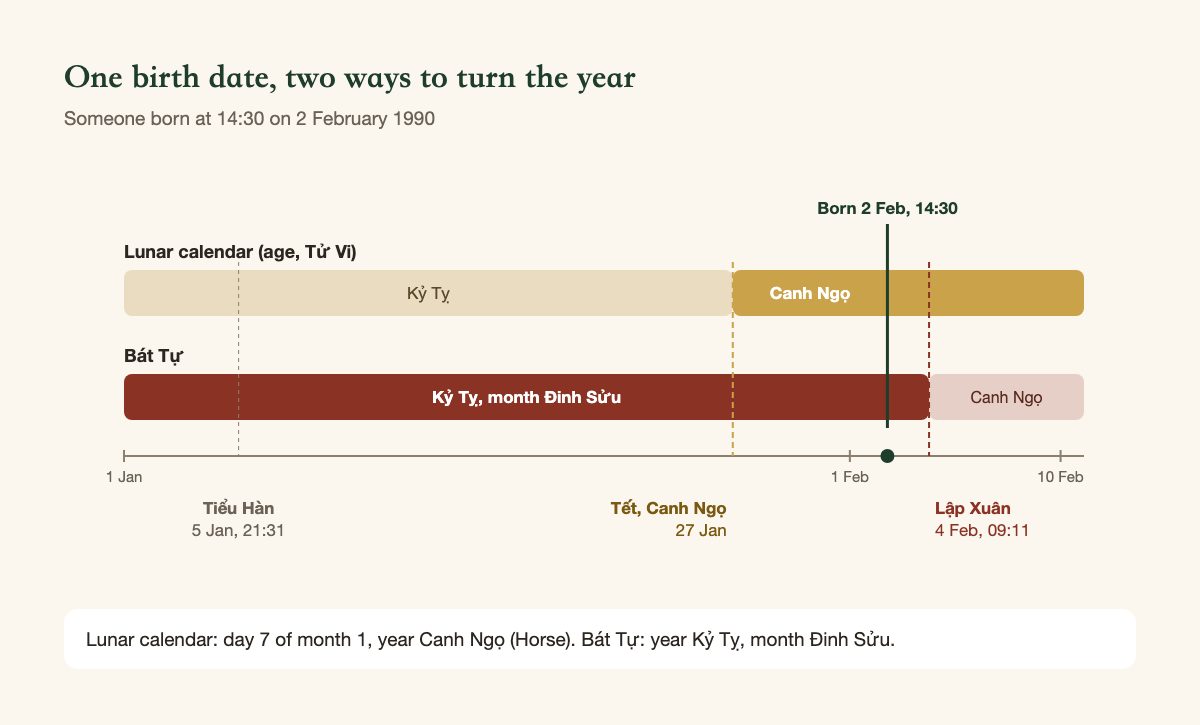
Two people, both born at 14:30 on 2 February 1990, ask two masters. The first says this person is a Horse, year Canh Ngọ. The second sets up a Bát Tự chart and writes Kỷ Tỵ as the year pillar. Neither is wrong. They turn the year at two different moments, and neither explains it.
This post walks through how Nhật Nguyệt goes from a book to a result for one person, using that very chart as the example.
Why not start with the tools?
Because a tool is only as right as the knowledge underneath it. Nhật Nguyệt is built in four layers, and each layer is built only on the one before it:
- Knowledge: primary texts, research and official records, with a source for every claim.
- Formulas: whatever can be calculated becomes code, then gets checked against independent data.
- Tools: every result carries where its rule comes from and where schools differ.
- Personalization: the formulas are applied to each person's birth date and hour.
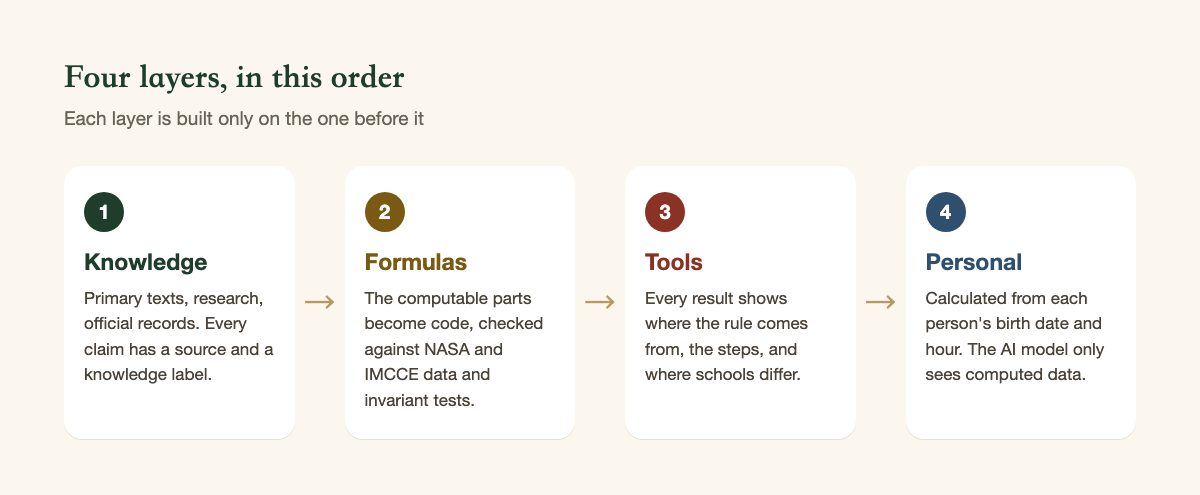
Doing it the other way round, building the tool first and looking for books later, is the easiest way to get a result that looks certain and that nobody can explain.
Layer 1: where does Bát Tự knowledge come from?
From the books of the Tử Bình school, read as one school's books rather than as science. One of the most cited is Tam Mệnh Thông Hội (Sanming Tonghui) by Wan Minying, compiled in the Ming dynasty. The page below is a scan of volume three, from the Siku Quanshu edition.
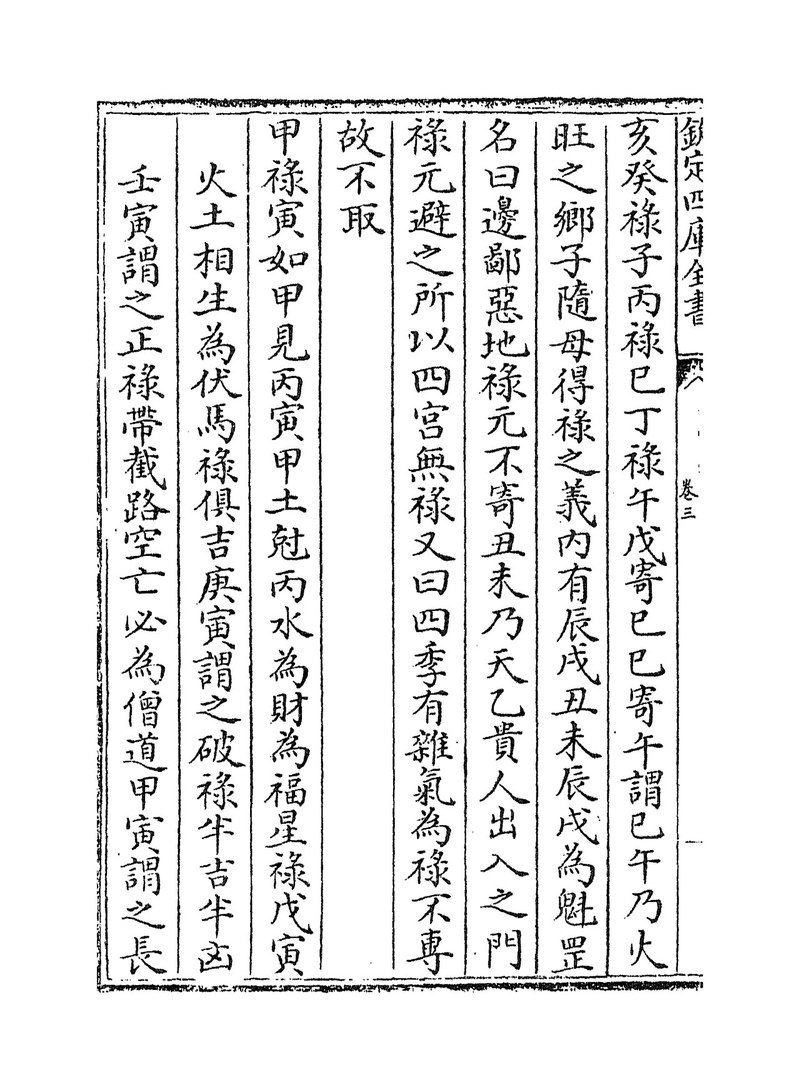
The first column on the right reads 「丙祿巳,丁祿午,戊寄巳,己寄午」: the lộc of Bính is at Tỵ, of Đinh at Ngọ, while Mậu is lodged at Tỵ and Kỷ at Ngọ. That line comes back in the example chart below.
When reading books to write articles, Nhật Nguyệt separates every sentence by the kind of knowledge it is:
- Calendar calculation: lunar dates, solar terms, stems and branches. Anyone can check them.
- One school's rule: such as "Mậu lodges its lộc at Tỵ". True within that school; another school may differ, and no school has been empirically tested.
- Folk belief: what many people believe.
- Unsettled: where the books disagree.
How the labels work is explained on the knowledge types page.
Layer 2: how does knowledge become a formula?
By coding each step exactly as the books describe it, then checking the calendar part against astronomical data. For someone born at 14:30 on 2 February 1990, the engine takes four steps:
- The year pillar turns at Lập Xuân, not at Tết. In 1990 Tết fell on 27 January, but Lập Xuân only came at 09:11 on 4 February. Someone born on 2 February therefore has the year pillar Kỷ Tỵ.
- The month pillar follows the solar terms, not the lunar month. The birth month opens at Tiểu Hàn (21:31 on 5 January), so the month pillar is Đinh Sửu, even though the lunar calendar calls that day the 7th of month 1.
- The day pillar turns at 23:00: Mậu Tuất. The day stem is the day master, "the person themself" in Bát Tự's reading.
- The hour pillar follows from the day stem by the Five Rats rule: the Mùi hour of a Mậu day is Kỷ Mùi.
The calendar part (solar terms) is checked against 4,824 solar-term instants from the Paris Observatory (IMCCE) and 804 equinoxes and solstices from the US Naval Observatory (USNO), from 1900 to 2100. A school's rules have no data to check against, so Nhật Nguyệt checks them another way: the engine must apply the stated rule exactly, and when a rule has several versions, all of them are stated.
One example of several versions: people born between 23:00 and midnight. The engine turns the day at 23:00, the start of the Tý hour, but some masters keep the old day until midnight. The result says so instead of quietly picking a side.
Layer 3: what does a tool result tell you?
It tells you the result, and what the result rests on. The example chart has eight characters:
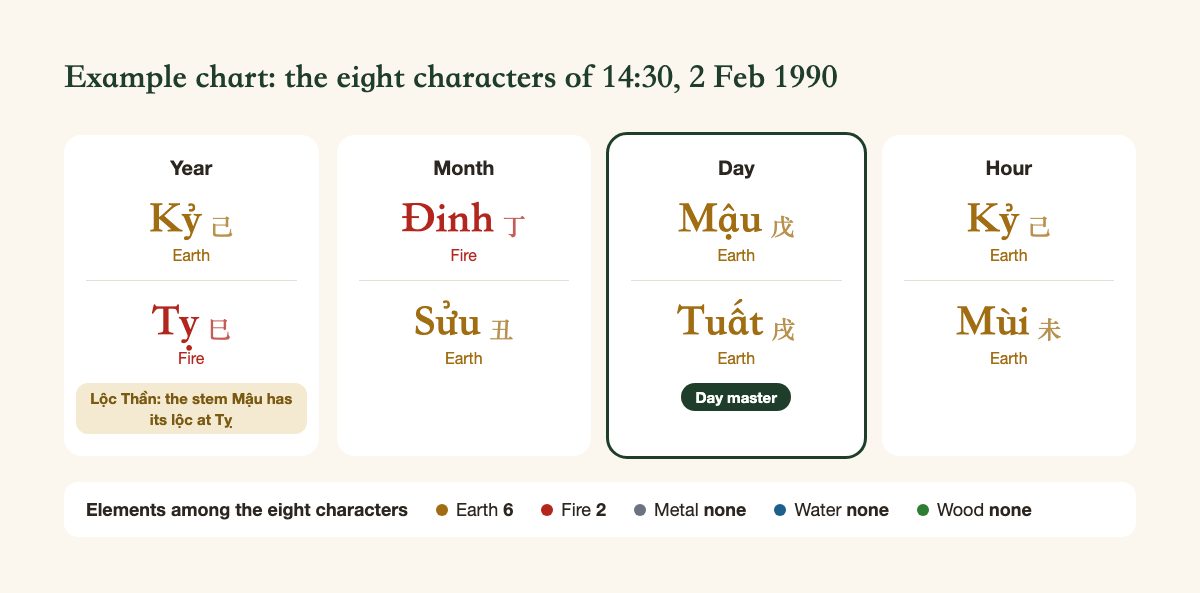
- Day master: Mậu, Earth.
- Element count: six Earth, two Fire; no Metal, Water or Wood.
- Lộc Thần in the year pillar: because the day master is Mậu, and the line 「戊寄巳」 in the book places Mậu's lộc at Tỵ.
That is the whole path from a line in a book to a cell in the chart.
Right above the result, the tool states its knowledge type: "One school's rules, not empirically tested." Below it, a "Where the schools differ" block shows Nhật Nguyệt's choice next to the other way:
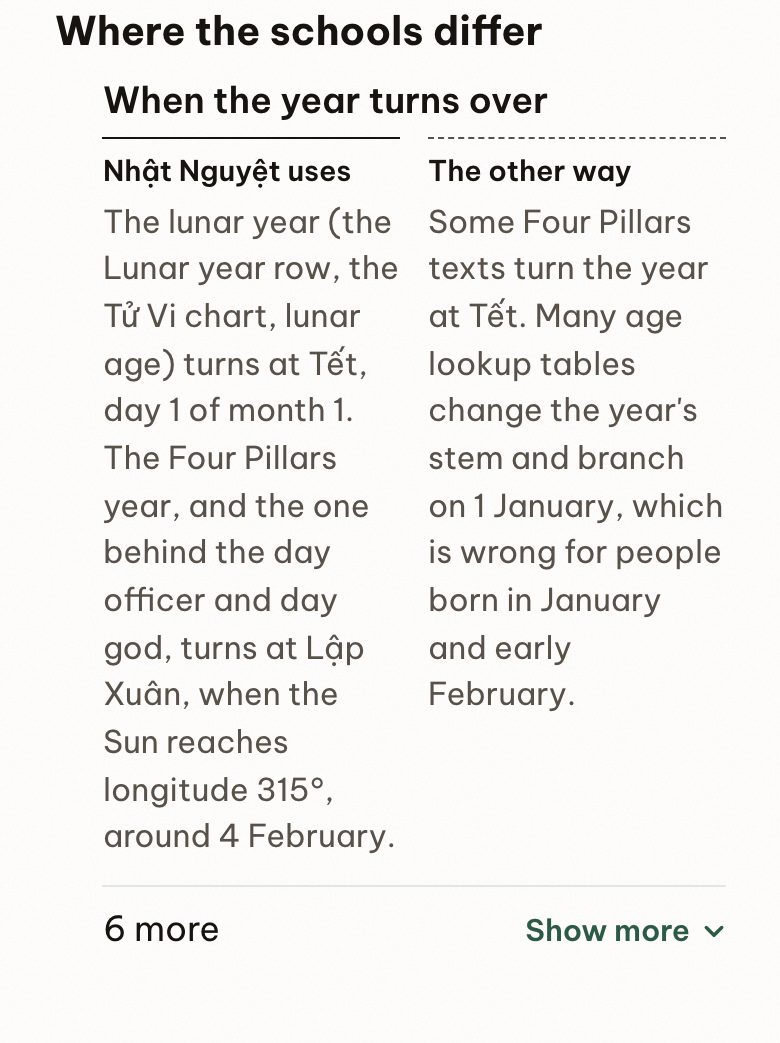
And one sentence is never dropped: no study has shown that the eight characters of a birth date and hour correspond to a person's character or life; the engine only guarantees that the four pillars are set up correctly and the stated rules are applied correctly.
The readings also keep the books as the subject. The tool doesn't write "you are steady", it writes "Bát Tự books liken Mậu to a mountain, thick earth: steady, trustworthy, slow but sure". The reader knows it is one school's reading, not a verdict.
Layer 4: where does personalization stop?
Personalization means calculating correctly for each person, not saying what they want to hear. Once your birth date and hour are saved in your profile, search answers with your own result instead of asking you to type it again. The in-depth reading goes further and reads the whole chart through the books, with three deliberate limits:
- The AI model only receives computed data: the eight characters, their roles, the luck periods. Your name and birth date are never sent.
- Every book quote must appear word for word in the book, with the title and author listed at the end.
- No year or month is ever called "bad", and no remedies are sold.
Try it with your own birth date
Enter your birth date and hour to see the four pillars, the calculation steps and where the schools differ, as in the example above.