


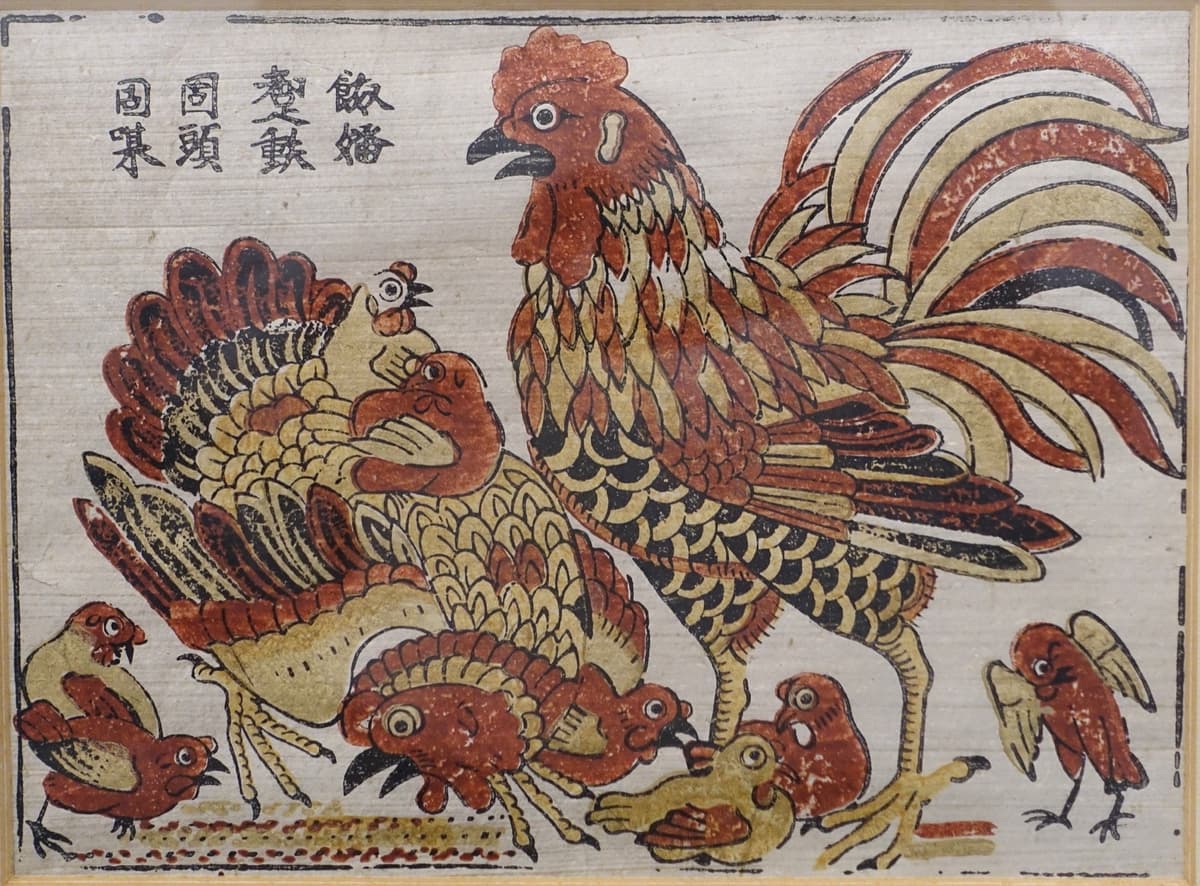
Image: Wikimedia Commons (Public Domain / CC0)
TL;DR: The year-end offering tray (Mâm cúng Tất Niên) is a cultural tradition of giving thanks to ancestors and deities at the close of the year. This article walks through preparing the offerings, arranging the tray, and the prayer text so the household can perform the rite properly and with sincerity. Reference works describing the custom (Toan Ánh 2001, Bùi Xuân Mỹ 2001, Song Mai and Quỳnh Trang eds. 2006) indicate that the year-end feast and the ancestor rite on the evening of the 30th of Tet are two separate matters, and that no fixed time slot is the best one.
How to Arrange the Year-End Offering Tray for the Tất Niên Ceremony: A Detailed Step-by-Step Guide
What is the meaning of the Tất Niên ceremony, and when does it take place?
The Tất Niên ceremony is a widespread custom among Vietnamese people in the final days of the lunar year, usually on the 28th, 29th or 30th day of the twelfth lunar month. It is an occasion for families to express gratitude to their ancestors and the deities, and to wish for a peaceful and prosperous new year. The ceremony is usually performed before the moment of Giao thừa (the lunar new year's eve transition), carrying the meaning of summing up the old year and welcoming the new one.
Depending on work schedules and regional customs, families may choose to hold the ceremony earlier (on the 28th or 29th of Tết) as suits them. Reference books describing the customs of the Kinh people, mainly in the North, do not set any fixed hour as the best time for the year-end ceremony; the choice of time depends on each family's circumstances and traditions.
Toan Ánh (2001) records that in the North, on the afternoon of the thirtieth of Tết, after returning from visiting the ancestral graves, people tidy up the ancestral offering and from then on keep the lamp and incense (especially the incense) burning continuously throughout the Tết days until the votive paper is burned. According to the author, during those days the ancestors are always present at the altar; and so that the incense does not go out, from the afternoon of the thirtieth of Tết people often use coil incense or tall incense sticks. Toan Ánh (2001) also writes that because the ancestral offering has already been made on the afternoon of the thirtieth of Tết, at the Giao thừa ceremony the ancestors are not offered to again, and the ancestral offering must of course include an offering to Thổ Công (the Earth Deity).
Bùi Xuân Mỹ (2001) writes that the ancestors sometimes still reside at the place of worship and are collectively called ông Vải; the year-end farewell ceremony for ông Vải is meant to let the descendants clean up, replace the incense stubs and rearrange the altar so that it is clean and new. Bùi Xuân Mỹ (2001) also notes that holding the farewell ceremony for ông Vải too early risks incurring blame from the ancestors. Song Mai and Quỳnh Trang, compilers (2006), additionally record the practice of going to the graves on the afternoon of the thirtieth of Tết to burn incense and invite the ancestors home to enjoy Tết.
A distinction should be made between the Tất Niên feast and the ancestral offering on the afternoon of the thirtieth of Tết. Toan Ánh (2001) classifies the Tất Niên feast among the pre-Tết customs, while the ancestral offering on the afternoon of the thirtieth of Tết is a separate rite on the last day of the year. The two may take place close together but are not the same.
A summary table of offerings, placement and the steps of the Tất Niên ceremony according to the guide.
| Offerings | Placement |
|---|---|
| Five-fruit tray | Centre, highest position |
| Bánh chưng/bánh tét (glutinous rice cakes) | On either side or in front |
| Boiled chicken, glutinous rice, savoury dishes | Arranged generously |
| Fresh flowers | On either side of the offering tray |
| Incense, candles, betel and areca, wine and tea | In front or on the tray |
| Votive paper | Neatly arranged to one side |
What offerings should be prepared for the Tất Niên offering tray?
The Tất Niên offering tray is usually prepared carefully and properly. Below is the list of basic offerings:
- Five-fruit tray: five kinds of fruit symbolising the five elements (usually banana, pomelo, apple, mandarin, orange, or depending on the region).
- Bánh chưng (in the North) or bánh tét (in the South): symbolising heaven and earth and completeness.
- Incense, candles.
- Wine, tea.
- Fresh flowers (usually gladiolus, chrysanthemums or peach blossom).
- Votive paper (joss paper money, paper clothes).
- Betel and areca.
- A tray of savoury or vegetarian dishes with traditional items such as boiled chicken, glutinous rice, roast pork, giò chả (Vietnamese sausage), bamboo shoot soup, fried spring rolls, and so on.
- In addition, sweet soup or candied fruit may be added depending on circumstances and family custom.
Note: the offerings need not be overly elaborate; the most important thing is the sincerity and solemnity of the household head.
How should the Tất Niên offering tray be arranged?
Step 1: Clean and arrange the altar
Before the ceremony, the family should wipe the altar clean, replace the incense stubs, and arrange the five-fruit tray, fresh flowers and candles. The worship space should be tidied and kept solemn.
On cleaning the altar at year-end, Bùi Xuân Mỹ (2001) states that the purpose is to remove the old incense stubs in order to replace the incense bowl on the occasion of welcoming the new year; those incense stubs together with the ash must be burned in a clean place or taken and poured into a river or lake. After wiping the incense bowl clean, fresh ash is put in. Song Mai and Quỳnh Trang, compilers (2006), also record the replacement of incense stubs and of the ash in the incense bowl at year-end.
Step 2: Arrange the offerings on the tray
The Tất Niên offering tray is usually placed in the most honoured position in the house or in front of the altar. The offerings are arranged as follows:
- The five-fruit tray is placed in the centre, at the highest position.
- Bánh chưng/bánh tét are placed on either side or in front.
- Boiled chicken, glutinous rice and savoury dishes are arranged attractively and generously.
- Fresh flowers are put in a vase and placed on either side of the offering tray.
- Incense, candles, betel and areca, wine and tea are placed in front or on the tray.
- Votive paper is arranged neatly to one side.
Step 3: Light incense and pray
After the arrangements are complete, the household head lights incense (usually three sticks), lights the candles and reads the prayer text. The household head should dress neatly, stand before the altar and pray sincerely.
Step 4: Conclude the ceremony
After the incense has burned down about two thirds (or after about 30 to 45 minutes), the household head may burn the votive paper and share the offerings. Note: when burning votive paper, choose a safe place, keep away from flammable objects, and have someone watch until the fire is completely out.
What are the main points of the Tất Niên prayer text?
According to the reference sources, the Tất Niên prayer text for the household usually has the following structure:
- Opening section: Nam mô A Di Đà Phật (three times), reverently bowing to the Emperor of Heaven and the Earth Goddess, the venerable deities, Ngài Kim Niên Đương cai Thái Tuế, Ngài Bản cảnh Thành Hoàng, Ngài Bản xứ Thần linh Thổ địa, Ngài Định Phúc Táo Quân, and so on.
- Body section: Stating the household head's full name, address and the reason for the ceremony (on the occasion of year-end, preparing the Tất Niên offerings to present to Heaven and Earth and the venerable deities, and to honour the ancestors).
- Prayer section: Asking the venerable deities and the ancestral spirits to descend and bear witness, to accept the offerings, and to bless the whole family with peace, prosperity, smooth work and all good things.
- Closing section: Thus we express our sincere heart, bowing to ask for witness. Nam mô A Di Đà Phật (three times).
In addition, for companies and shops holding the Tất Niên ceremony outdoors, the prayer focuses on thanking the deities for protecting the business over the past year and asking for continued good fortune and favourable conditions in the new year.
Should the Tất Niên ceremony or the ancestral offering on the afternoon of the thirtieth of Tết come first?
There is no mandatory rule about which should be done first; it is up to each family to arrange. According to the recorded documents, on the afternoon of the thirtieth of Tết, after returning from tending the ancestral graves, people adjust the ancestral offering and keep the lamps and incense burning throughout the Tết days until the votive paper is burned (Toan Ánh, 2001). The Tất Niên feast is classified by Toan Ánh (2001) among the pre-Tết customs, while the ancestral offering on the afternoon of the thirtieth of Tết is a separate rite on the last day of the year. Bùi Xuân Mỹ (2001) notes that holding the farewell ceremony for ông Vải too early risks incurring blame from the ancestors, so the choice of timing should be considered in line with family custom.
What important notes are there for the Tất Niên ceremony?
- This is a reference guide based on widespread custom. Depending on region and family tradition, the arrangement may differ. There is no single model that is "absolutely correct".
- When burning incense, candles and votive paper, take the utmost care regarding fire safety. Do not burn too much votive paper, do not burn near flammable objects, and always have someone watching.
- The offering tray must be hygienic; the food must be prepared cleanly and be fresh and appetising.
- The most important thing in the ceremony is sincerity and solemnity; do not be overly bound by form or worry about absolute right and wrong.
Topic overview article: What Festivals and Tet Occasions Are There in Vietnam Throughout the Year?


