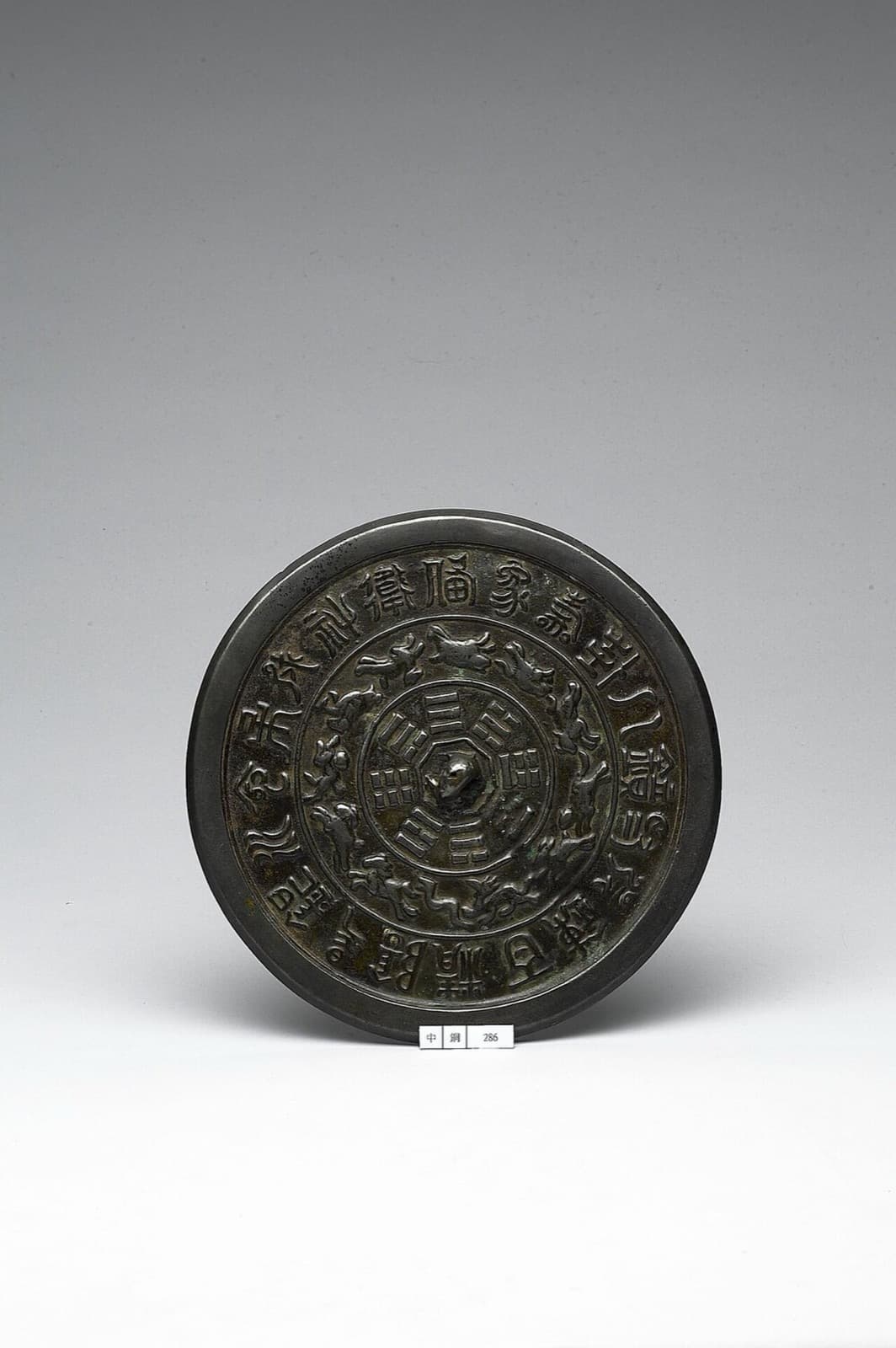
Who Was Yang Junsong?
Yang Junsong is a figure whom traditional feng shui circles regard as a Tang era master, linked to the form based geography lineage and honored by many books as the head of the Jiangxi school. Most of his biography, however, is legend rather than verified historical record. English Wikipedia has exactly one sentence about him: a Tang era Daoist writer, recorded as the author of the Qing Nang Jing (Green Satchel Classic), a book devoted to feng shui. Phong Thuy Co Dai Trung Quoc by Vu Hy Hien and Vu Dung states he headed the Jiangxi school and places him between 874 and 888.
The name Yang Jiupin, literally Yang who saves the poor, is a folk nickname tied to the image of him using geography arts to help the destitute. To be clear: this is an oral tradition, with no contemporary document confirming it.
Why Is He Called Yang Jiupin?
The nickname Yang Jiupin reflects the role assigned to him in folk tales: a geography master who used his eye for dragon veins and water courses to find good burial sites for the poor, helping them change their fate. The name took such root that many later feng shui documents use Yang Junsong and Yang Jiupin interchangeably as the same person.
A distinction is needed: this is legend about character and the use of the art, not historical evidence of deeds. No reliable source confirms how many people he actually helped, where, or in what year.
A Short Timeline: From Guo Pu to Jiang Dahong
To place Yang Junsong, he must be set within a longer current of ancient Chinese geography.
- Guo Pu (276 to 324), Jin dynasty, is regarded as the founder of Zhai Xiang arts and is linked to the name Qing Nang. According to Phong Thuy Co Dai Trung Quoc, later works such as the Qing Nang Jing or Jiu Tian Xuan Nu Qing Nang Hai Jiao Jing likely borrowed Guo Pu's name to boost prestige, and may not have been written by him.
- Yang Junsong, placed by Phong Thuy Co Dai Trung Quoc around 874 to 888, is traditionally held to head the Jiangxi school, linked to a group of form texts and some li qi texts.
- Jiang Dahong, Ming dynasty, is mentioned in Shen Zhureng's Zhai Yun Xin An as the one who added to and removed from the Yi pan created by Yang Junsong, leading later generations to call that compass the Jiang pan.
Lien Tri tien sinh's Dia Ly Nguyen Khong Phap Giam also mentions Jiang's Bian Zheng, saying the work did service to Master Yang but did not state the problem outright, leaving students to guess.
Where Does He Stand in the Loan Dau and Jiangxi Schools?
Phong Thuy Co Dai Trung Quoc distinguishes two major currents: the Hinh Phap school, also called the Loan Dau school or the Jiangxi method, which advocates fieldwork observing mountain and river forms, and the Ly Khi school, also called the positional school, using the Five Stars and Eight Trigrams, stems and branches, and the luopan. This book records the origin and spread of the Hinh Phap school mainly in Jiangxi, hence the name Jiangxi method, and states Yang Junsong headed this school.
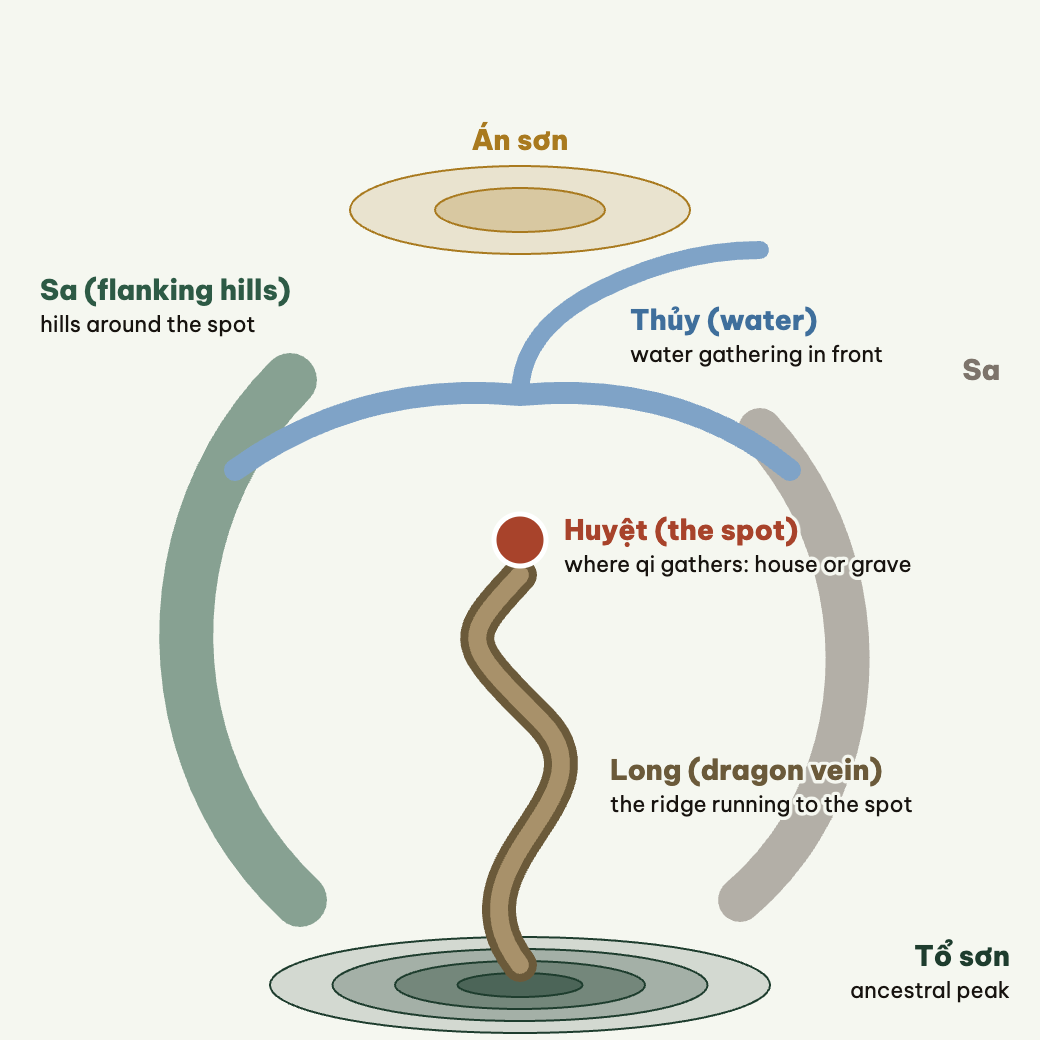
The point to note: the same Yang Junsong is claimed by both sides. Phong Thuy Co Dai Trung Quoc places him in the Hinh Phap school, but Shen Zhureng's Zhai Yun Xin An records the Qing Nang Ao Yu as belonging to the Ly Khi school, and cites a line from the Qing Nang Ao Yu on Kun, Ren, Yi belonging to Ju Men, Gen, Bing, Xin to Po Jun, Xun, Chen, Hai to Wu Qu, Jia, Gui, Shen to Tan Lang. This is a star classification by the Nine Stars, heavily li qi. So saying he is purely form or purely li qi is forced. If a convention is needed for this article, I follow the common usage: Yang Junsong is tightly linked to the Loan Dau and Jiangxi schools in form terms, but his name also appears in the li qi current through the Qing Nang Ao Yu.
Which Books Are Attributed to Him?
| Book title | Main content | Leans form or li qi | Doubts about authorship |
|---|---|---|---|
| Qing Nang Jing | Feng shui book tied to Yang Junsong's name, Wikipedia records him as the believed author | Has form elements, linked to the Qing Nang tradition from Guo Pu | Wikipedia gives only one sentence, no detailed citation; Guo Pu's name was also borrowed by many later books |
| Qing Nang Ao Yu | Discusses dragon veins, water qi, yin yang of water flow, star classification by the Nine Stars | Zhai Yun Xin An places it in the Ly Khi school | Same Yang Junsong name but heavily li qi content, unlike the purely form group |
| Han Long Jing | Form text, part of the group reintroduced in recent Vietnamese editions | Form | Dia Ly Nguyen Khong Phap Giam mentions it as a printed book but does not firmly assert the author |
| Yi Long Jing | Form text, same group as the Han Long Jing | Form | Same situation: attributed to Master Yang but no contemporary evidence |
| Tian Yu Jing | Mentioned by Dia Ly Nguyen Khong Phap Giam as a key text for understanding the Prenatal Nine Stars diagram | Li qi, heavily diagram and Nine Stars | No contemporary source confirms the author |
The table shows one thing: the group of books bearing Yang Junsong's name spans from form to li qi, not purely one school. Attribution in ancient feng shui is usually lineage attribution, not copyright in the modern sense.
Were the Tam Hop Compass and the Feng Zhen Made by Him?
According to records in Shen Zhureng's Zhai Yun Xin An, the luopan is divided into two types: the Tam Hop pan, or Vi pan, traditionally said to be made by Yang Junsong; and the Quai pan, or Yi pan, also originally made by Yang Junsong, later added to and removed from in the Ming dynasty by Jiang Dahong, hence the name Jiang pan. On the feng zhen, this book also records it as traditionally made by Yang Junsong.
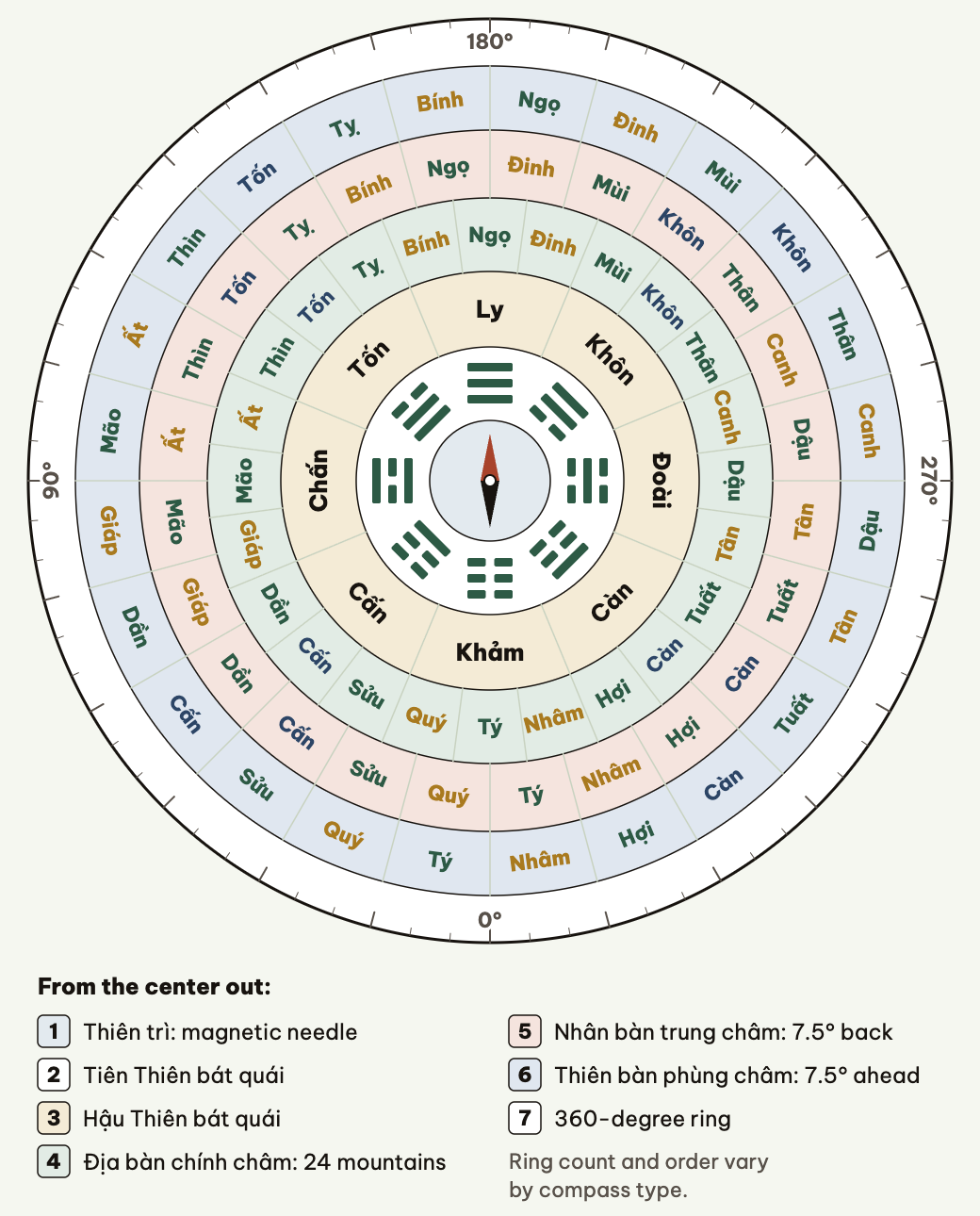
The word traditionally must be read carefully. This is how later books record lineage, not contemporary production records. Lien Tri tien sinh's Dia Ly Nguyen Khong Phap Giam has a different view: it says the ancestors long taught that the luopan has no red and black characters, because yin yang is used skillfully and cannot be fixed by position, and since Fan Yixin made red and black characters many people have erred. That is, even within the tradition there is opposition to coloring characters on the luopan.
Why Is the Same Person Claimed by Two Schools?
Several reasons are commonly given. First, ancient feng shui did not separate form and li qi into two isolated systems as modern classification does; Dia Ly Nguyen Khong Phap Giam states clearly that geography takes form as body and li qi as function, and neither is discarded. Second, great names are often borrowed by later generations to boost a book's prestige, as with Guo Pu and Qing Nang. Third, Jiangxi lineages were interwoven, so one figure could be claimed as founder by both the form and li qi branches.
This also means: if anyone asserts firmly that Yang Junsong belongs to only one school, that is a conventional statement, not verified historical fact.
How Should Yang Junsong Be Read Correctly?
Three layers must be separated: the legendary layer about the man and the Yang Jiupin nickname, the textual layer bearing his name, and the technical lineage layer that later generations attribute to him such as the Tam Hop compass and the feng zhen. The first layer is nearly unverifiable. The second can be compared across books, and that comparison itself shows content spanning form to li qi. The third is professional convention, not event.
For feng shui students today, Yang Junsong's value lies in being a marker by which lineages position themselves, not in a certain biography. To go deeper into the school systems, see the overview article on feng shui schools in the same knowledge base, which this article does not repeat.