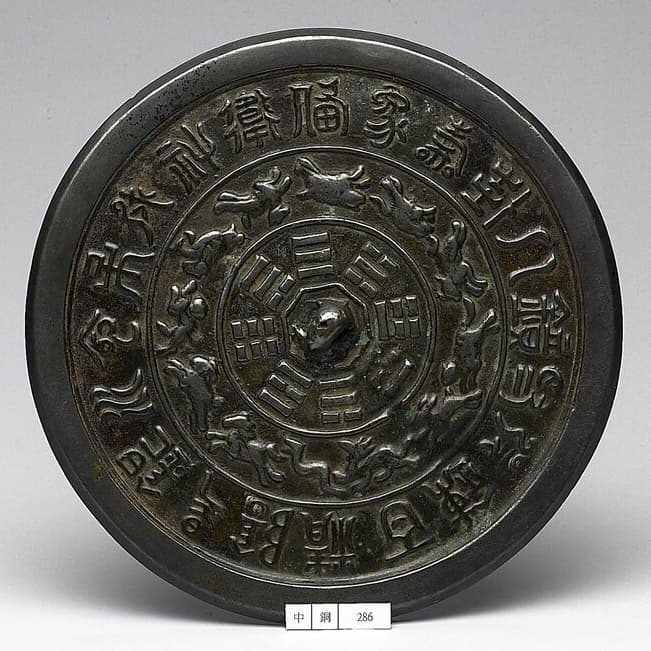
Introduction to Hexagram Guan
Hexagram 20 in the I Ching, Guan (Wind over Earth), is formed by the trigram Sun (Wind) above and Kun (Earth) below. This structure symbolizes a gentle yet persistent wind sweeping across the vast earth, clearing away obscuring clouds to reveal the true nature of all things. It evokes the image of standing on a high vantage point to observe the entire landscape below.
The Chinese character Guan (觀) means to observe, contemplate, or view. In the I Ching, this is not a superficial glance but a profound and quiet observation. It involves seeing with the mind, not just the eyes, to perceive underlying patterns and truths.
Structural and Philosophical Layers
The Dance of Inner Earth and Outer Wind
The combination of Earth (Kun) and Wind (Sun) creates deep meaning. Kun represents receptivity, gentleness, vastness, and a solid foundation. Sun represents the wind, characterized by penetration, subtlety, and persistence.
When wind blows over the earth, it can seep into every crack and crevice, uncovering what is hidden. This symbolizes a process of thorough observation that gradually and systematically leads to understanding. The inner trigram Kun advises that to observe correctly, one must maintain a humble, open-minded, and non-judgmental attitude. The outer trigram Sun suggests that such observation must be carried out flexibly, subtly, and persistently, much like the wind itself.
The Judgment on Purification and Observation
The Judgment of Guan says: "Contemplation. The ablution has been made, but not yet the offering. Full of trust, they look up to him." This is a profound metaphor. It emphasizes the state of purifying the mind, making it clean and reverent before any great undertaking. The lesson lies not in the act of offering (the result) but in the preparatory state of mind (the process). A correct observation cannot stem from a chaotic mind filled with prejudice or desire. It requires stillness, clarity, and sincerity. The ritual of washing hands symbolizes cleansing away distracting thoughts to see the true essence of a problem.
Lessons from the Six Lines
A detailed analysis of each line reveals different stages of the observation process:
- Initial Six: A weak line at the bottom symbolizes a young or lowly observer. The advice is that one in a low position with limited vision should not make significant decisions but should humbly observe and learn.
- Second Six: A weak line in the central position of the inner trigram, correct and centered. It symbolizes someone with a modest but clear vision. The lesson is that observing from a stable, unambitious position brings safety and correctness.
- Third Six: A weak line in a high position of the inner trigram, but incorrect. It advises that after observing life and understanding its ups and downs, one should decide on their own path forward rather than remaining an eternal bystander.
- Fourth Six: A weak line close to the ruler (Fifth Nine). It symbolizes a capable minister or advisor who can clearly perceive the light of a wise ruler to serve them effectively. This is a position of keen observation leading to timely support.
- Fifth Nine: The strong central line and ruler of the hexagram. It advises a leader to observe the conduct of the people to understand the way of governance. The leader should possess a broad vision and understanding to guide others, rather than doing everything themselves.
- Top Nine: A strong line at the highest position, having withdrawn from power. It symbolizes a sage who observes the entire world and understands the laws of heaven and earth, free from worldly concerns and possessing a comprehensive, penetrating view.
Practical Lessons for Modern Life
Self-Observation for Deeper Understanding
In our fast-paced modern society, the tendency is to act first and think later. Hexagram Guan offers a counter-intuitive reminder: take time to observe and listen to yourself. Before making significant decisions in career or relationships, we should find moments of stillness to reflect on our true motivations, desires, and capabilities. This self-observation helps us avoid impulsive and erroneous decisions driven by fleeting emotions.
Visionary Leadership and Management
For leaders, Guan is a lesson in vision. A good leader is not just someone who participates in every detail but someone who stands above to observe the whole picture, identifying trends, opportunities, and potential risks. They must observe and understand their team, sensing the atmosphere, morale, and silent difficulties of each member. Observation here is not just about looking at data but also about feeling the unspoken dynamics.
Calm Amidst Turmoil
The image of wind over earth is also a metaphor for facing life's upheavals. When encountering difficulties, instead of panicking and reacting thoughtlessly, the hexagram advises maintaining a calm, observant stance. The tranquility and receptiveness of Earth help us see clearly through the storm, allowing us to find the safest path forward.
Hexagram Guan is not a prediction of fate but a mirror reflecting ancient wisdom. It teaches us that deep understanding, whether of the world or of ourselves, always begins with a still, open-minded, and insightful gaze.
Quick-Reference Table: Hexagram Contemplation
| Aspect | Content |
|---|---|
| King Wen number | 20 |
| Chinese name | 觀 |
| Symbol | ䷓ |
| Vietnamese name | Phong Địa Quán |
| Upper trigram | Xun (Wind), Wood element, Southeast |
| Lower trigram | Kun (Earth), Earth element, Southwest |
| Six lines, first line at the bottom | 1st yin, 2nd yin, 3rd yin, 4th yin, 5th yang, 6th yang |
| Image | Wind travels over the earth, reaching everywhere. |
| Reading | About observing, and about being observed. The emphasis is on seeing widely before deciding. For those in a visible position, conduct already speaks. |
*Số liệu trong bảng khớp với kết quả các công cụ tra cứu trên Nhật Nguyệt.*