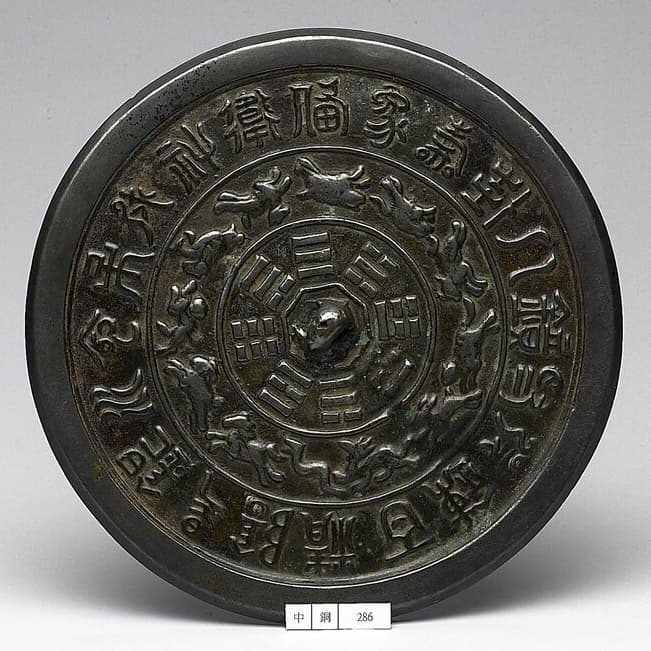
Introduction to the Water Heaven Xu Hexagram (需)
In the system of 64 I Ching hexagrams, the Water Heaven Xu (需) hexagram is the 5th, placed after the Meng (蒙) hexagram and before the Song (讼) hexagram. The name "Xu" means waiting, necessity, need, or nourishment. In Chinese, the character "需" is composed of the "Yu" (rain) radical on top and "Er" (and/but) below, evoking the image of rain falling from the sky, symbolizing waiting for something to arrive, like clouds gathering before rain. This hexagram describes a phase where energy must be accumulated and willpower maintained before undertaking significant action.
Historically and in terms of origin, the I Ching is considered one of humanity's oldest books, rooted in Eastern civilization. According to researcher Nguyễn Vũ Tuấn Anh in his book "Finding the Origin of the I Ching" (Hong Duc Publishing House, 2020), the Yin-Yang and Five Elements theory and the I Ching belong to an ancient civilization predating our recorded history, inherited by Vietnamese culture for nearly 5,000 years. Nevertheless, from a universal perspective, the Xu hexagram was systematized by ancient Chinese philosophers such as King Wen and Duke Zhou in the Canon part, and annotated by Confucius and his disciples in the Commentaries (Tuan Zhuan, Xiang Zhuan). This hexagram reflects a natural principle: no success comes without a period of waiting and preparation.
Structure and Operating Mechanism of the Hexagram
Diagram and Meaning of the Lines
The Water Heaven Xu hexagram has the lower trigram Qian (☰) representing Heaven, and the upper trigram Kan (☵) representing Water (clouds). Water above Heaven creates the image of clouds rising but not yet forming rain, or rain about to fall but awaiting enough cloud accumulation. This is a state of strong yang (Qian) below, encountering danger (Kan) above, thus requiring waiting to overcome.
Table of Line Analysis:
| Line | Name | Meaning | Lesson |
|---|---|---|---|
| Line 6 (top) | Shang Liu | In the extreme danger of water, but now it is time for rain to fall and success to arrive. | Waiting will ultimately be rewarded if one maintains integrity. |
| Line 5 | Jiu Wu | At the highest position of waiting, calm, maintaining centrality and correctness, with support from within. | Need composure and self-confidence, not being swayed. |
| Line 4 | Liu Si | In a dangerous place, need to wait wisely, avoiding reckless action. | In danger, one must step back to avoid risk. |
| Line 3 | Jiu San | Close to the Kan (danger) trigram; hasty action will bring disaster. | Beware of impulsiveness; reflect on oneself. |
| Line 2 | Jiu Er | In the middle of Qian, steady but stuck at the edge of danger. | Wait calmly, avoid direct confrontation. |
| Line 1 | Chu Jiu | At the initial position, facing obstacles but not yet danger; need persistent patience. | Difficult beginnings; hold firm to purpose, do not lose heart. |
The Principle of "Using Strength to Advance Through Danger" (以刚进行险)
The Tuan Zhuan explains: "Xu, waiting. Danger is ahead, but with strength and health one does not get trapped; its meaning is not exhausted." This means the Xu hexagram is about waiting; there is danger ahead (Kan), but below is the strong and healthy virtue of Heaven (Qian), so one does not fall into danger, and its meaning is limitless. This is a special operating mechanism: instead of rushing into danger ahead, the hexagram advises using one's strength and integrity to wait for the right moment, turning danger into opportunity.
Philosophical Meaning and Cultural Symbolism
Waiting Does Not Mean Passivity
One of the biggest misconceptions when reading the Xu hexagram is that it advises sitting still and giving up. In reality, the waiting here is an active and positive state. The line text of Xu says: "Xu: having trust, brilliant and smooth, perseverance brings good fortune. Favorable to cross the great river." This means the Xu hexagram has trust, is bright and smooth, maintaining righteousness brings good fortune, and it is favorable to cross the great river. "Favorable to cross the great river" shows that the ultimate goal is action, but one must wait until the water is deep enough and the boat is strong enough. In Eastern culture, this is reflected in proverbs like "Haste makes waste" or "Wait until the tide goes out to see the hidden rocks," emphasizing the need for observation and strategic waiting.
The Interaction Between the Inner Qian and Outer Kan Trigram
The inner Qian (Heaven) trigram symbolizes strength, creativity, and human proactivity. The outer Kan (Water) trigram symbolizes danger, challenges, and external objective factors. This combination conveys a message: when facing dangerous circumstances, the noble person should not use brute force to crush challenges but should use wisdom and virtue to "nourish" that strength. Line 5 (Jiu Wu) is the only line that is central and correct, at the highest position, showing that the most appropriate waiting is that of the middle way: calm, at ease, and holding firm to faith in what is right.
Analysis of Specific Cases and Examples
In Work and Career
When casting the Water Heaven Xu hexagram during a startup phase or a major project, it advises not to rush into expansion or risky investment. This is a time to refine the product, research the market, and build the team. For example, an entrepreneur may have a good idea, but the market is not ready; launching immediately could lead to failure. Instead, one should "wait for rain," meaning wait for market demand to mature, while continuously improving internally. This is like a farmer sowing seeds and waiting for favorable weather, not pulling the plant to make it grow faster.
In Relationships and Love
In love, the Xu hexagram indicates that if you are pursuing someone, do not be too hasty. The waiting here is an opportunity for both to understand each other better and build trust. If the other person is not ready, forcing the issue will lead to danger (Kan). Conversely, if you maintain sincerity and patience, the relationship will naturally develop sustainably. The hexagram also reminds that in marriage, there are difficult periods (rising water), when both need to wait and nurture rather than seek quick solutions through rash decisions.
In Health and Spiritual Life
When consulting about illness, the Xu hexagram advises patience in treatment. Illness is like an underground stream; the body needs time to heal. Being impatient with high-dose medications or constantly changing doctors (acting without waiting) can cause dangerous side effects. Spiritually, the hexagram teaches the art of "living slowly": in a turbulent world, keeping the mind as still as the surface of an autumn lake is the way to see the essence of problems and make right decisions.
Comparison of Views and Other Layers of Meaning
The Perspective of the Image Commentary
The Image Commentary says: "Clouds rise to heaven, the Xu hexagram. The noble person uses this to eat, drink, and rejoice." This means: Clouds rise to the sky, the image of Xu. The noble person follows this by eating, drinking, being joyful, and resting. This is a profound layer of meaning: when waiting, instead of worrying or being restless, the noble person should take time to care for oneself, nurture the spirit, and enjoy life healthily. "Eating, drinking, and rejoicing" is not indulgence but a way to keep body and mind healthy, ready with energy for the upcoming action phase. This contrasts with modern Western views on "progress" and "productivity" that often see waiting as a waste of time.
Comparison with the Adjacent Song (讼) Hexagram
The Xu (需) and Song (讼) hexagrams are consecutive, forming a contrasting pair. While Xu teaches waiting and forbearance to resolve conflict, Song deals with litigation, disputes, and open confrontation. The I Ching indicates that if one does not know how to wait properly (Xu), one will fall into arguments and lawsuits (Song). This is a strong warning: impatience and lack of patience are the root of all conflict. Conversely, if one waits wisely, many contradictions will dissolve on their own, without needing legal arbitration or a third party. This lesson is invaluable in modern society, where commercial and personal disputes are increasing due to a lack of patience.
Practical Lessons for Modern Life
The Art of Waiting in the Age of Speed
In the digital era, where everything demands immediacy (fast food, fast fashion, 24/7 news), the Water Heaven Xu hexagram serves as an antidote to rush. It teaches us that acting quickly does not always yield good results. In financial investment, holding stocks long-term (buy and hold) after thorough research is a form of "active waiting" from Xu. In human resources management, a good leader who knows how to wait for employees to grow, rather than forcing immediate KPIs, builds a more loyal and creative team.
Distinguishing Rightful Waiting from Negative Procrastination
An important point is that Xu does not encourage laziness or procrastination. The waiting in Xu always comes with "trust" and "righteousness." It requires alertness to recognize when to act and when to pause. If you wait without clear goals or preparation, that is unhealthy procrastination. Conversely, if you wait with a detailed plan, continuously learning and improving skills during the wait, that is the spirit of Xu. The key question to distinguish is: "What am I waiting for? Is it righteous? What have I done to prepare for it?"
Conclusion
The Water Heaven Xu hexagram is one of the most philosophically profound among the 64 I Ching hexagrams. From the image of clouds in the sky waiting for rain, it conveys a timeless message: life does not always require rushing forward. Sometimes, the greatest strength lies in the ability to stand still, hold firm to trust, and prepare thoroughly. The hexagram teaches that patience is not weakness but a form of hidden strength, a smart strategy to navigate the dangerous currents of fate. In the context of Eastern culture, where harmony between humans and nature is valued, Xu is a clear testament to ancestral wisdom: knowing when to wait and when to act is the key to crossing any great river of life.