



TL;DR: Tùng Bách Mộc is the na am for the years Canh Dần and Tân Mão, symbolizing pine and cypress trees, evergreen, hardy, and resilient. In the Five Elements, its Wood element signifies longevity, firm will, and overcoming adversity, with a generating relationship to Fire and a controlling relationship to Earth.
What is Tùng Bách Mộc Nạp Âm in the Sixty Jiazi Cycle?
Nạp âm (sound element) is an important concept in the Lục Thập Hoa Giáp (Sixty Jiazi Cycle), a system that combines the 10 Heavenly Stems (Giáp, Ất, Bính, Đinh, Mậu, Kỷ, Canh, Tân, Nhâm, Quý) with the 12 Earthly Branches (Tý, Sửu, Dần, Mão, Thìn, Tỵ, Ngọ, Mùi, Thân, Dậu, Tuất, Hợi) to create 60 stem-branch combinations. Each combination not only carries its own element according to the stem (mệnh can) but is also assigned a "nạp âm," a name symbolizing a natural object or phenomenon that reflects the deeper essence of the element's energy.
Tùng Bách Mộc is the nạp âm of the two years Canh Dần (1950, 2010) and Tân Mão (1951, 2011). The name "Tùng Bách Mộc" is composed of: "Tùng" (pine tree), "Bách" (cypress tree), "Mộc" (the Wood element). Pine and cypress are long-lived woody trees of the conifer family that stay green year-round, even through harsh winters or on dry, rocky soil.
In the nạp âm system, each element is divided into 6 different nạp âm types based on the state and characteristics of that element. For the Wood element, besides Tùng Bách Mộc, there are:
| Nạp âm type | Meaning | Stem-Branch |
|---|---|---|
| Đại Lâm Mộc | great forest wood | Mậu Thìn, Kỷ Tỵ |
| Dương Liễu Mộc | willow tree | Nhâm Ngọ, Quý Mùi |
| Tang Đố Mộc | mulberry tree | Nhâm Tý, Quý Sửu |
| Thạch Lựu Mộc | pomegranate tree growing on rock | Canh Thân, Tân Dậu |
| Bình Địa Mộc | plains wood | Mậu Tuất, Kỷ Hợi |
Each type carries its own nuance: Đại Lâm Mộc is the majestic old forest, Dương Liễu Mộc is soft and graceful, while Tùng Bách Mộc is the symbol of endurance and resilience.
What is the Five Elements meaning of Tùng Bách Mộc?
What does the Wood element mean in feng shui?
According to feng shui belief, the five elements (Kim, Mộc, Thủy, Hỏa, Thổ, meaning Metal, Wood, Water, Fire, Earth) are the five fundamental elements that make up all things. Wood represents trees, growth, proliferation, and creativity. In a Dân trí newspaper article about the five elements in residential feng shui, Wood is described as generating "the power of creativity and development," representing flexibility and sensitivity. When balanced, Wood brings a feeling of relaxation and comfort; when there is too much, it causes stuffiness and rigidity; when there is too little, it leads to stagnation and loss of direction.
What characteristics does Tùng Bách Mộc have compared to other Wood nạp âm?
Unlike Dương Liễu Mộc (soft and weak, bending with the wind), Tùng Bách Mộc carries the spirit of a tree that stands upright and proud beneath the sky. Pine and cypress are often compared to the noble person: able to withstand frost and snow while keeping their green color, never withering. People with the Tùng Bách Mộc nạp âm often have these traits:
| Aspect | Characteristics |
|---|---|
| Personality | Resolute, steadfast, with firm convictions, not easily swayed. They handle pressure well and overcome difficulties through strong willpower. However, if they overuse their toughness, they can become conservative and struggle to adapt to change. |
| Destiny | Their career often has ups and downs but ultimately yields lasting success, like an old pine tree. They tend toward late success, but once successful, it is very stable. |
| Health | The Wood element relates to the liver, gallbladder, and tendons. People with Tùng Bách Mộc should pay attention to their health and avoid prolonged stress, because suppressed emotions can affect the liver. |
Which elements does Tùng Bách Mộc generate or overcome?
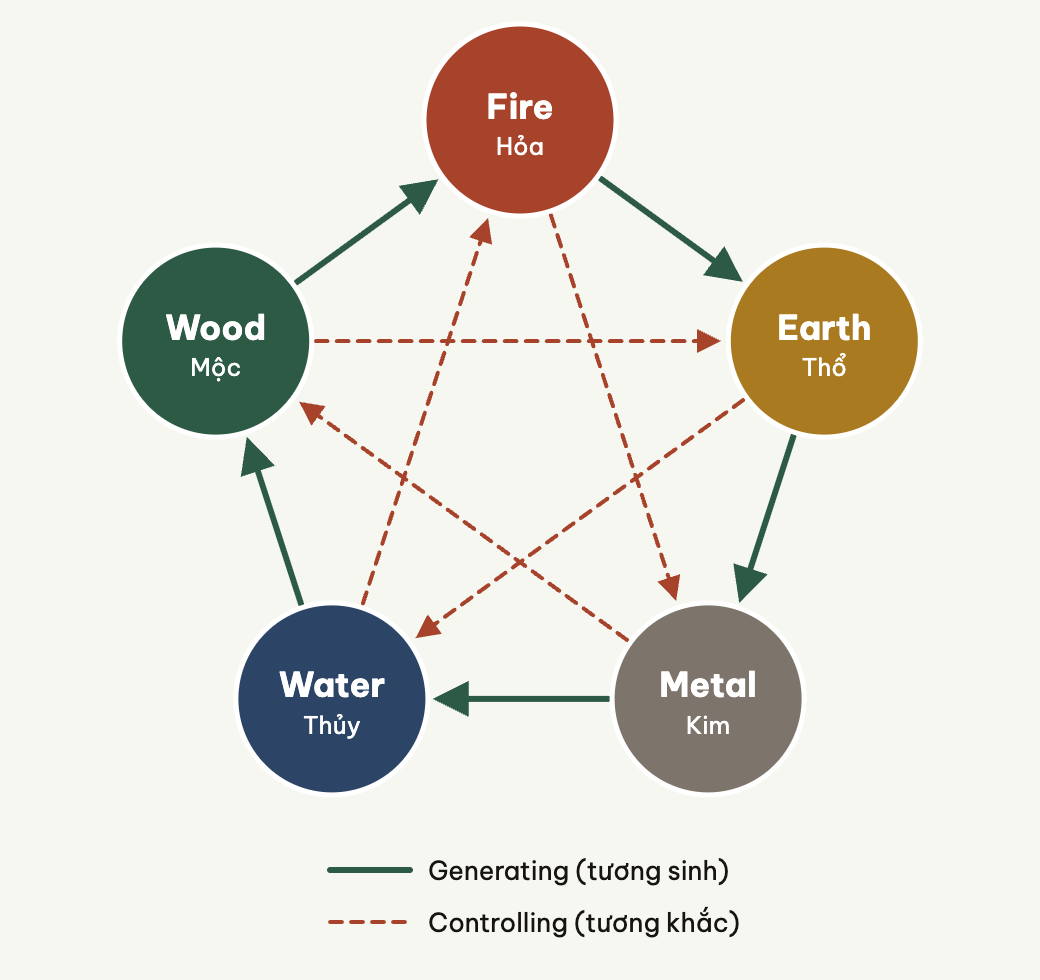
In the generating cycle, "Water generates Wood" and "Wood generates Fire." This means:
- Water generates Wood: People with Tùng Bách Mộc receive support from the Water element. Black, blue, or living near rivers, lakes, or fish tanks will help enhance Wood energy.
- Wood generates Fire: People with the Wood element can "generate" for the Fire element, meaning they create conditions for Fire to develop. In feng shui, this shows through Wood-element people benefiting from red, pink, and purple (belonging to Fire) to create balance.
In the overcoming cycle, "Metal overcomes Wood" and "Wood overcomes Earth":
- Metal overcomes Wood: Metal (knives, scissors, white and silver colors) can cut down trees. Therefore, people with Tùng Bách Mộc should limit the use of too many sharp metal objects or white colors in their living space to avoid draining energy.
- Wood overcomes Earth: Trees draw nutrients from the soil. The Earth element (yellow, earth-brown colors) can weaken Wood if it becomes too dominant, but in some cases, Wood-element people use Earth colors to keep something in check.
Applications in feng shui and Tử Vi
Which colors are suitable for people with Tùng Bách Mộc?
According to VnExpress, green belongs to Wood, black and gray belong to Water, white and silver belong to Metal, red and pink belong to Fire, and yellow and brown belong to Earth. People with the Tùng Bách Mộc nạp âm (Wood element) should:
| Color type | Colors | Effect |
|---|---|---|
| Generating colors (Water) | Black, blue, gray | help supplement energy, boost confidence and creativity. |
| Harmonious colors (Wood) | Green, jade green | reinforce the native element, create a sense of peace. |
| Overcoming colors (Metal) | White, silver, gray | should be limited, as they can create pressure and disadvantage. |
House directions and feng shui items for people with Tùng Bách Mộc?
People with Tùng Bách Mộc are often compatible with the East direction (Wood element) and the North direction (Water element, since Water generates Wood). Feng shui items such as ornamental plants (pine trees, money trees), forest landscape paintings, or natural wood materials will help enhance Wood energy. Avoid placing too many sharp metal objects in the West (Metal element) area of the house.
What is special about the Tử Vi chart of people born in Canh Dần and Tân Mão?
In Tử Vi (Vietnamese astrology), nạp âm is used to determine part of the five elements of the mệnh palace, combined with other factors such as cục and stars for interpretation. People born in Canh Dần and Tân Mão (Tùng Bách Mộc) are often assessed as:
- Having longevity and few illnesses if they maintain an optimistic spirit.
- Their career has a difficult period in youth, but becomes more solid toward mid-life.
- Family life is stable, with filial children and grandchildren.
However, it must be emphasized that nạp âm is only one factor among countless factors in a chart. Specific interpretation must combine much other information such as the nạp âm five elements of the palaces, stars, periods, and personal circumstances.


