The I Ching and the Body: A Holistic View
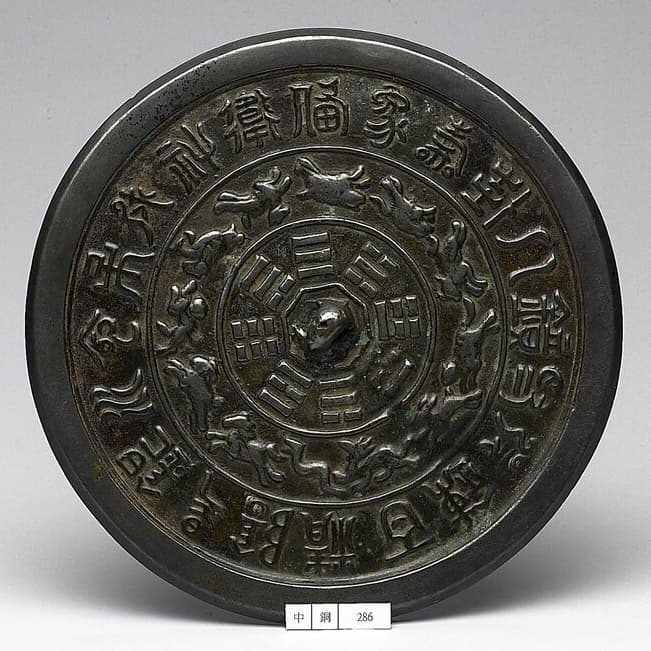
The I Ching, with its system of 64 hexagrams, is often seen as a mirror reflecting all the laws of motion in the universe. The two basic symbols, the broken yin line (- -) and the solid yang line (,), represent two opposing but complementary energies. This philosophy extends beyond natural phenomena to offer a profound perspective on health, viewing the human being as a microcosm.
Health, from this viewpoint, is not merely the absence of disease but a state of harmony and balance between opposing forces within the body. When this balance is disrupted, illness can manifest.
The Well Hexagram (Jing): The Spirit of Nourishing Life
A powerful image in the I Ching related to health is Hexagram 48, the Well (Jing). It depicts a well full of fresh water. The well does not move; it has an underground spring that never runs dry. Anyone can come and take water, and the more it is drawn, the clearer and cleaner it becomes.
This spirit is considered a metaphor for medical ethics and a nourishing lifestyle. Like the well, a healthy body needs an inner "underground spring",a source of vital energy (Qi) that is abundant and properly nurtured. Health is not about selfishly hoarding energy but about maintaining a smooth flow and exchange. When we give, help others, or engage in physical and mental activities, our inner energy becomes clearer and more abundant.
Synchronicity: The Mind-Body Connection
Psychologist Carl Gustav Jung coined the term "synchronicity" to explain the I Ching's principle. He suggested that events occurring at the same moment are not just coincidental but are meaningfully connected. A hexagram cast at a specific moment is not only temporally coincident but also identical in quality to that moment.
Applied to health, this suggests that symptoms are not isolated events. They are intimately linked to our psychological, emotional, and environmental states. A headache might reflect prolonged stress; a digestive issue might mirror anxiety in relationships. This approach encourages viewing the body as a unified whole, where mental and physical events are expressions of the same present situation.
The 64 Hexagrams: States of Body and Mind
Each hexagram symbolizes a specific situation or state. Physician Nguyen Chan Hung notes that the 64 hexagrams are "64 situations of life, teaching us the character of the noble person." This can be applied to the constant changes in our health.
- Qian and Kun: Represent states of abundance and nurturing. A healthy body requires a balance of activity (yang) and rest (yin).
- Ji Ji and Wei Ji: Meaning "Already Done" and "Not Yet Done," these final hexagrams remind us that health states are not permanent. Illness can end, but new issues may arise, teaching us humility and adaptability.
Practical Application: Cultivating Health
From these principles, we can derive practical lessons:
- Listen to your body: Like casting a hexagram to understand a situation, learn to read your body's signals of imbalance.
- Seek balance: Harmonize work and rest, activity and stillness, social engagement and solitude.
- Nurture your inner resources: Build a sustainable healthy lifestyle as a "spring" of well-being.
- View illness holistically: Look beyond symptoms to address the root causes in your lifestyle and mind.
The I Ching is not a medical manual and should not replace modern healthcare. However, as a profound philosophical system, it offers a framework for a balanced and healthy life.