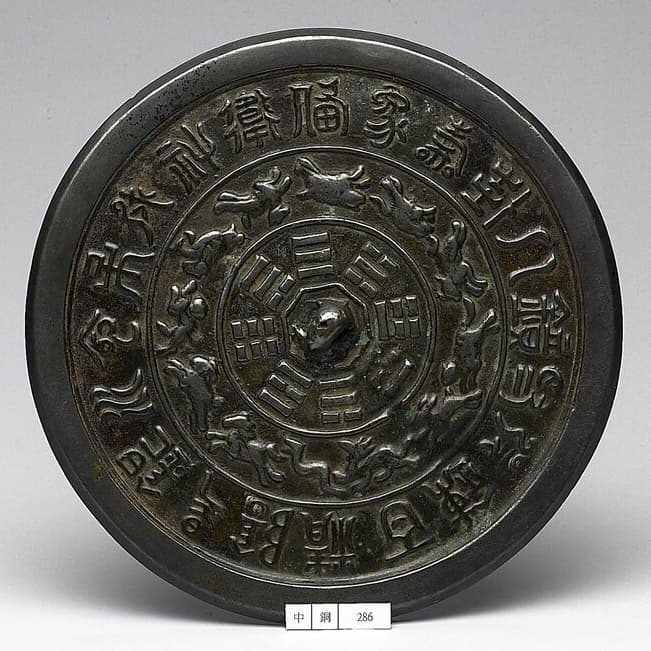
The I Ching: From Divination Book to a System for Career Strategy
The I Ching, or Book of Changes, is often misunderstood as a mere fortune-telling tool. However, a deeper look reveals it as a sophisticated system of situational analysis. Built from two basic lines , the solid yang line (-) and the broken yin line (--) , it forms 8 trigrams and 64 hexagrams. According to psychologist Carl Gustav Jung, these 64 hexagrams serve as a tool to define the meaning of 64 typical, archetypal situations.
Unlike linear cause-and-effect thinking, the I Ching operates on the principle of "synchronicity" , meaningful coincidences between events occurring at the same moment. The hexagram obtained is not about predicting the future but about revealing the "essential situation" governing the present moment.
Key Hexagrams for Professional Life
- Hexagram 1 (Qian/Creative): A period of initiation and strong ambition. The advice is to stay persistent and cultivate oneself continuously.
- Hexagram 2 (Kun/Receptive): A time to support, learn, and follow. Great leaders also know when to be the foundation for others.
- Hexagram 48 (Ting/The Well): As Dr. Nguyen Chan Hung shared about the spirit of the well: it never moves, its water is full but never overflows, and the more it is drawn, the clearer it becomes. In a career, this represents a professional with deep, stable expertise who generously shares knowledge without fear of depletion.
- Hexagram 63 (Ji Ji/After Completion): A goal is achieved, but warns against complacency.
- Hexagram 64 (Wei Ji/Before Completion): The final hexagram symbolizes incompletion but carries hope. As one interpretation notes: "When things reach an end, a new beginning follows. The I Ching gives us hope for the future, encouraging us to embrace change and find novelty."
The Way of the Noble Person in Business
Beyond analysis, the I Ching is a moral system. It teaches the conduct of a "junzi" (noble person) in various life situations. This translates to integrity, humility, and continuous self-improvement. In times of difficulty (Hexagram 3, Zhun), the key is to stay true to one's principles rather than taking shortcuts.
Synchronicity: Reading the Times in Your Career
Applying the I Ching to work means paying attention to meaningful connections between seemingly random events. It teaches flexibility: not being overly pessimistic in hardship (as hardship will eventually turn to ease) and not being arrogant in success (as glory fades).
Ultimately, the I Ching is a tool for self-understanding and contextual awareness. When you understand yourself and the times, making sound career decisions becomes a natural, flowing process.