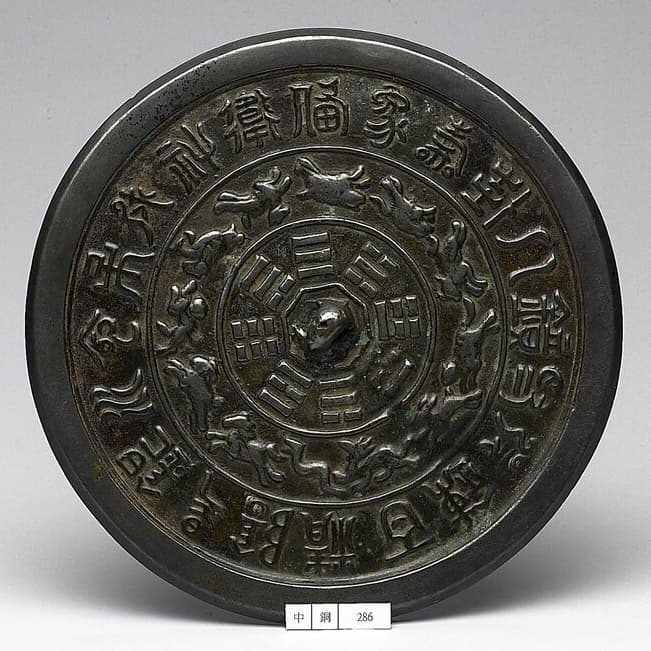
The I Ching: Not Just Divination, but a Philosophy of Life
Many people often think of the I Ching as a book of divination. However, from a philosophical and cultural perspective, the I Ching is a system of thought about the movement and transformation of the universe. As Dr. Nguyen Chan Hung shared in an interview with Tuoi Tre newspaper, the 64 hexagrams in the I Ching are 64 life situations, teaching us the character and conduct of a noble person. Its language consists of only two symbols: the solid yin line and the broken yang line, but from these two symbols, the ancients created a symbolic system to explain all phenomena.
Applying the I Ching to family life does not mean casting lots to predict auspicious days. Instead, it means using ancient wisdom to reflect on relationships, understand the operational rules of a home, and thereby make correct decisions to build a harmonious and happy family.
The Well Hexagram (Jing): The Spirit of Service and Nurturing in the Family
One of the most profound hexagrams for family life is the Well Hexagram (Jing). It describes a well that stays in place, has an underground source so it never runs dry, and is full without overflowing. Anyone who needs water can come and take it, and the more it is drawn, the clearer the water becomes.
Parents as the Underground Source
- Parents can learn the spirit of the well: steadfastness and perseverance. Like the well that does not move, parents are the pillar and anchor for their children. Their steadiness is a great source of comfort.
- The underground source symbolizes continuous nurturing. Parents must nourish their children not only physically but also spiritually and morally. Their self-improvement is like keeping the underground spring clean to provide good water for the next generation.
Sharing Does Not Make Us Poorer
- The well's spirit is one of tireless giving. In a family, sharing knowledge, experience, and love does not deplete us; the more we give, the more we receive. When parents teach their children, they deepen their own understanding.
- Like the well, the more we serve and help family members, the more refined and compassionate we become. A happy family is one where everyone wants to contribute, not just receive.
The Ký Tế and Vị Tế Hexagrams: The Unceasing Rhythm of Family Life
The final two hexagrams offer a deep philosophy of change. Ký Tế (Already Done) and Vị Tế (Not Yet Done) show that nothing is ever truly finished. Every completion immediately leads to a new beginning.
Continuous Cultivation
- In family life, no state of happiness is permanent. A family may be peaceful (Ký Tế), but if members become complacent, cracks will appear, leading to a state of 'not yet done' (Vị Tế), where problems need solving.
- This teaches us to never stop making an effort. Building a home is an ongoing process. We must constantly observe, listen, and adjust our behavior to maintain harmony.
Embracing Change
- When family faces difficulties (Vị Tế), this hexagram gives hope for the future. It reminds us that hardship is not the end but part of a natural cycle. We must accept change and calmly find solutions.
- Conversely, when things are good (Ký Tế), we must remain humble and vigilant, for when something reaches its peak, it can only descend. This awareness helps prevent unnecessary shocks.
Yin, Yang, and Harmony in the Family
The I Ching's system is based on yin and yang, two opposing yet complementary energies. Differences among family members are like the difference between yin and yang.
- No Absolute Opposition: Differences between spouses or parents and children are not sources of conflict but opportunities to complement each other. Strength needs gentleness to balance, and vice versa.
- Harmony from Difference: A happy family is not where everyone is the same, but where everyone appreciates and harmonizes their differences. Understanding this helps reduce imposition and conflict.
Conclusion
Applying the I Ching to family life is not about superstition, but about using an ancient philosophical system to live more mindfully and deeply. From the spirit of service in the Well hexagram, to the philosophy of constant change in Ký Tế and Vị Tế, and the harmony of yin-yang, the I Ching offers a valuable framework for building a sustainable home where everyone feels loved and understood.