
What is Van Xuong Quy Nhan in Bat Tu?
Van Xuong Quy Nhan is a spirit star in the Bat Tu (Four Pillars) system, determined by taking the day stem (some books take the year stem) and matching it against the earthly branches in the four pillars to find its position. When that branch appears in one of the four pillars, or in a luck period, the chart is said to have Van Xuong. This star governs study, letters, examinations, and literary talent, and is one of the signals indicating the native's intellectual foundation. However, it is only a secondary factor, not enough to confirm fortune or misfortune, or examination results.
Table of Van Xuong Quy Nhan by day stem
In the common method that takes the day stem as the subject, the ten heavenly stems yield ten corresponding earthly branches:
| Day stem | Van Xuong branch |
|---|---|
| Giap | Ty |
| At | Ngo |
| Binh, Mau | Than |
| Dinh, Ky | Dau |
| Canh | Hoi |
| Tan | Ty |
| Nham | Dan |
| Quy | Mao |
This table matches the placement table for Luu Nien Van Tinh in Tu Vi when looked up by the heavenly stem of the birth year. This overlap causes many people to mistake the two stars for one, but the placement mechanism and interpretive meaning differ.
Why does each stem correspond to only one branch?
The core of the table rests on the five-element relationships and the position of the stem in the Truong Sinh cycle. For example, Giap wood reaching Ty is where wood begins to decline, Binh fire reaching Than is where fire declines, Canh metal reaching Hoi is where metal declines, Nham water reaching Dan is where water declines. These branches are usually where the stem's element enters a phase of transformation, regarded as the place where the "literary star" gathers. This explanation is only one of many traditional interpretations, not a strict mathematical formula.
Do all books use the day stem?
No. This is one of the points where schools disagree. Most current Bat Tu materials take the day stem as the subject for looking up Van Xuong, because the day stem represents the native themselves. Some other books take the year stem, because the year stem represents ancestors, origins, and family education. When the two methods yield different branches, the interpreter needs to state clearly which convention they follow. This article follows the day-stem method while acknowledging the year-stem method as a variant.
How does Van Xuong govern study and letters?
According to classical Bat Tu materials, when Van Xuong Quy Nhan appears in the four pillars it is usually seen as a sign of a rich inner life, deep capacity for absorbing knowledge, and good memory. A person with this star is often described as eager to learn, with a gift for literature and letters. For men, this may manifest as intelligence, quickness of mind, and advancement through knowledge. Women with this star are often described as dignified, studious, and eager to rise.
However, note that this is a traditional description, not a scientific conclusion. A person's education also depends on environment, personal effort, social conditions, and many factors beyond the chart.
How does Van Xuong's weight compare with the thap than?
This is an important question. In the Bat Tu system, the thap than (Chinh An, Thien An, Chinh Quan, Thuc Than, Thuong Quan, and so on) are the main interpretive layer, with greater weight. Spirit stars like Van Xuong are only a secondary, supplementary layer. A chart with Van Xuong but unfavorable thap than (for example, An star being broken, Thuc Than meeting a Jue Di position) will find it hard for Van Xuong to manifest. Conversely, a chart without Van Xuong but with a favorable combination of An, Quan, Thuc, and Thuong can still study well and pass exams.
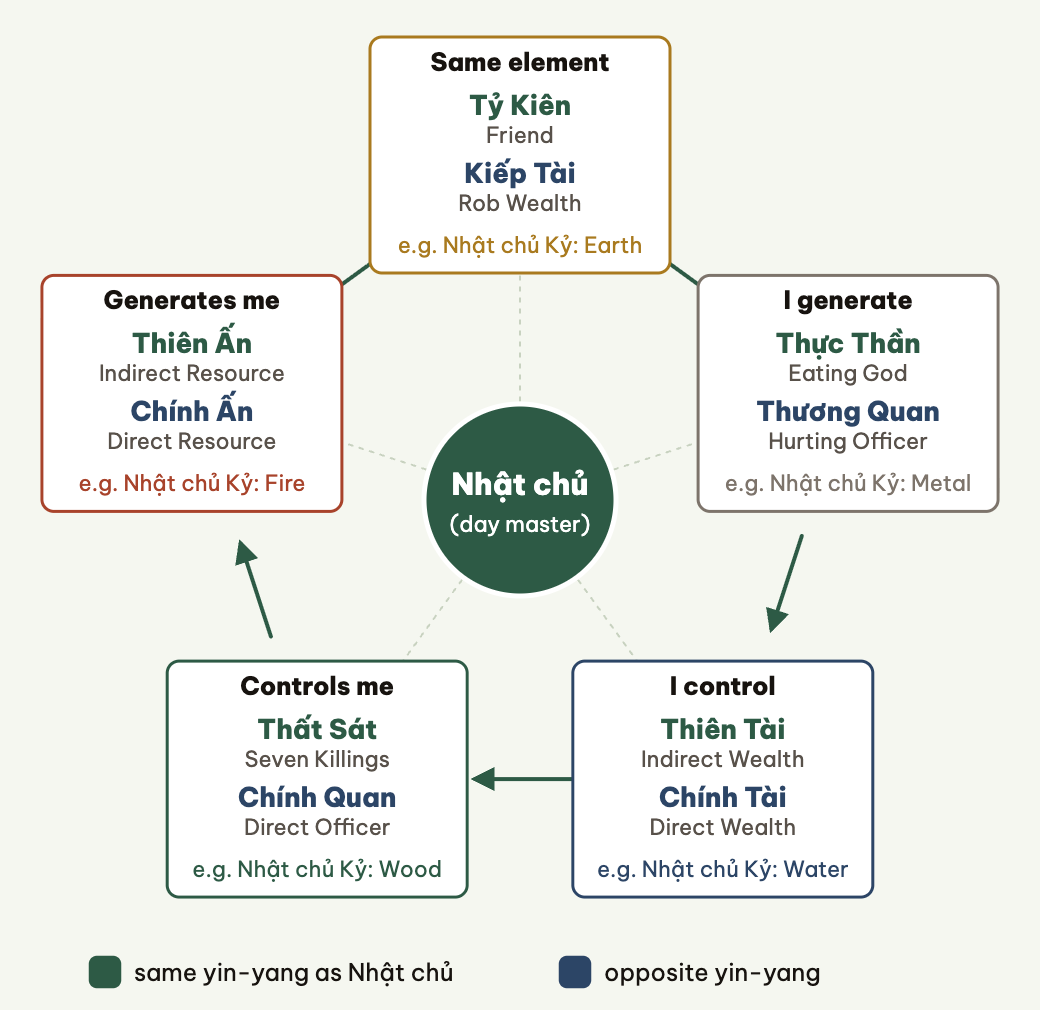
In other words, Van Xuong is a small signal, not a deciding factor. Experienced interpreters often treat Van Xuong as a side note, used to reinforce or clarify the picture drawn by the thap than.
Distinguishing Bat Tu Van Xuong, Luu Nien Van Tinh, and Tu Vi Van Xuong
These three concepts are very often confused. The table below summarizes the differences:
| Criterion | Bat Tu Van Xuong | Luu Nien Van Tinh (Tu Vi) | Van Xuong (Tu Vi) |
|---|---|---|---|
| System | Bat Tu (Four Pillars) | Tu Vi | Tu Vi |
| Placed by | Day stem (some books use year stem) | Heavenly stem of birth year | Birth hour |
| Lookup table | Giap Ty, At Ngo, Binh Mau Than, Dinh Ky Dau, Canh Hoi, Tan Ty, Nham Dan, Quy Mao | Same table as above | Separate table by hour |
| Main meaning | Study, letters, examinations | Study, academic honors, intelligence | Academic rank, literature, examinations |
Thus, Bat Tu Van Xuong and Tu Vi's Luu Nien Van Tinh share the same lookup table, but one uses the day stem and the other uses the birth year stem, and they belong to two different interpretive systems. Tu Vi's Van Xuong is placed by birth hour, entirely different.
Is Hoc Duong in Uyen Hai Tu Binh the same as Van Xuong?
No. Hoc Duong is a different star, looked up by the Truong Sinh position of the mandate element. According to Uyen Hai Tu Binh Toan Tap, a Kim mandate sees Ti (Tan Ti), a Moc mandate sees Hoi (Ky Hoi), a Thuy mandate sees Than (Giap Than), a Tho mandate sees Than (Mau Than), a Hoa mandate sees Dan (Binh Dan). A person with this star is said to be intelligent, perceptive, and successful in examinations. If it falls into Khong Vong, they usually only take up teaching.
Hoc Duong and Van Xuong are two independent stars, and may appear together or not. Classical books also distinguish Hoc Duong from Tu Quan: Hoc Duong symbolizes the process of learning, Tu Quan symbolizes success in academic career. Truong Sinh is the main position of Hoc Duong, Lam Quan is the main position of Tu Quan.
Is Van Xuong in feng shui the same method?
No. The Van Xuong direction in feng shui (placing a study desk, a Van Xuong pagoda) is a different method, based on feng shui principles such as bat trach, huyen khong, or the birth year stem. This method does not use the Bat Tu Van Xuong lookup table. Placing a study desk according to the Van Xuong direction is a feng shui application, not Bat Tu interpretation. They must be clearly distinguished to avoid confusion.
Should Van Xuong be trusted to decide exam success?
No. Van Xuong is only a secondary spirit star, not enough to confirm examination results. Classical materials also emphasize that Van Xuong needs to be born prosperous, not clashed or broken, and must combine with other factors to manifest. Relying only on Van Xuong to promise exam success is an interpretation lacking basis. Students should treat it as a reference signal, not a promise.
Conclusion
Van Xuong Quy Nhan in Bat Tu is a spirit star looked up by the day stem (or year stem depending on the book), governing study, letters, and examinations. It has its own lookup table, matching the Luu Nien Van Tinh table of Tu Vi but belonging to a different system. It must be distinguished from Tu Vi's Van Xuong (placed by hour) and Hoc Duong in Uyen Hai Tu Binh (looked up by the Truong Sinh of the mandate element). Van Xuong's weight is smaller than the thap than, and it should not be used to assert absolute fortune or misfortune.


