


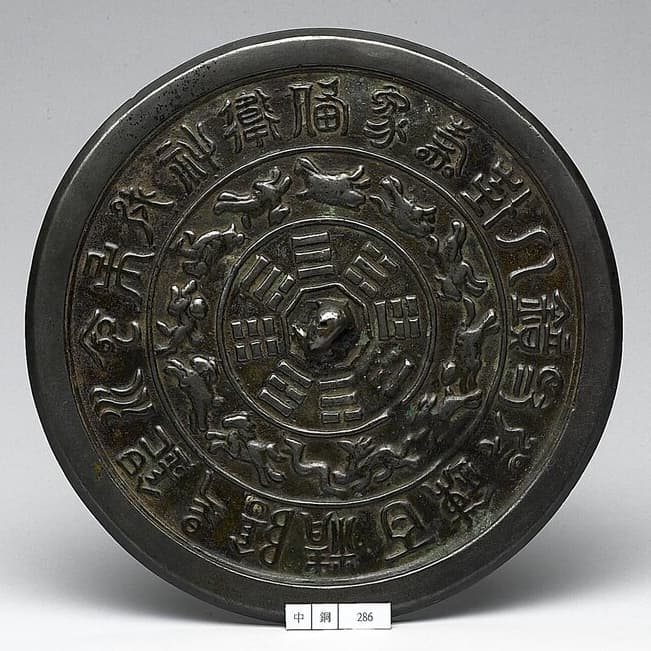
TL;DR: Hexagram Thủy Lôi Truân (屯) is the third of the 64 hexagrams in the Zhou Yi sequence, composed of Khảm (Water) above and Chấn (Thunder) below. The hexagram text says: 屯:元亨,利貞。勿用有攸往,利建侯, meaning great success, favorable to be steadfast, do not rush to advance, favorable to establish lords. Nhật Nguyệt suggests: when encountering Truân, view this as a stage when foundations are not yet solid, focus on strengthening internal matters and finding trustworthy companions rather than expanding hastily.
What number is the Thủy Lôi Truân hexagram, and which hexagrams make up its upper and lower trigrams?
The Thủy Lôi Truân (屯) hexagram is number 3 of the 64 hexagrams in the Chu Dịch (Zhouyi) sequence, after Thuần Càn and Thuần Khôn. It consists of the upper trigram Khảm (坎, Water) and the lower trigram Chấn (震, Thunder). The name Truân (屯) suggests hardship, the tribulation of beginnings, when all things have just come into being and are not yet settled.
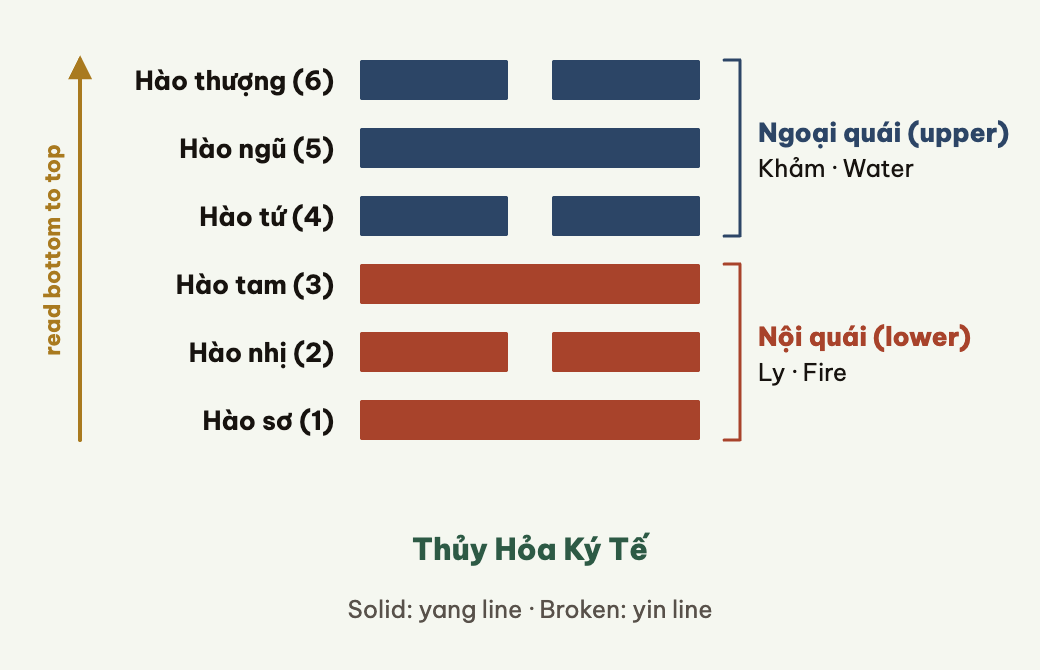
To whom does tradition attribute the origin of the Thủy Lôi Truân hexagram?
By tradition, the Kinh Dịch is built on the eight trigrams drawn by Phục Hy from observing natural phenomena; tradition further recounts that King Wen of Zhou interpreted the eight trigrams into 64 doubled hexagrams and wrote the judgments, that the Duke of Zhou wrote the line texts, and that Khổng Tử (Confucius) and his disciples composed the Thoán truyện, Tượng truyện and Hệ từ truyện as commentary. Modern scholarship does not regard these attributions as proven. Edward Shaughnessy places the core text of the Chu Dịch at the end of the 9th century BCE, in the Western Zhou era; ancient copies such as the Shanghai Museum bamboo-slip Chu Dịch (around 300 BCE) and the Mawangdui silk manuscript (buried in a tomb sealed in 168 BCE) show that the text was already in circulation before the Han dynasty; while the Thập Dực (Ten Wings) are commentary layers composed later, roughly between the 5th and 2nd centuries BCE (Redmond and Hon, Teaching the I Ching, 2014).
What do the original texts of the Thủy Lôi Truân hexagram say?
Below are the classic texts as recorded in the Chu Dịch version preserved on Wikisource, together with the Sino-Vietnamese readings given according to the exact Chinese characters and a close translation.
The Judgment (Quái từ): 屯:元亨,利貞。勿用有攸往,利建侯。
Translation: Truân: greatly successful, favorable to be steadfast and correct. Do not use it to set out anywhere; favorable to establish feudal lords.
Line Sơ cửu: 初九:磐桓,利居貞,利建侯。
Translation: First nine: lingering and winding like a boulder, favorable to remain steadfast and correct, favorable to establish feudal lords.
Line Lục nhị: 六二:屯如邅如,乘馬班如,匪寇婚媾,女子貞不字,十年乃字。
Translation: Six two: hardship and hesitation, riding a horse that halts and turns, it is not a robber but a suitor; the young woman keeps her chastity and does not marry, after ten years she then marries.
Line Lục tam: 六三:即鹿无虞,惟入于林中,君子幾不如舍,往吝。
Translation: Six three: chasing a deer without a game warden, one only enters the forest; the noble person, seeing the moment, does better to let it go; setting out brings regret.
Line Lục tứ: 六四:乘馬班如,求婚媾,往,吉无不利。
Translation: Six four: riding a horse that halts and turns, seeking a marriage union; setting out is auspicious, nothing is unfavorable.
Line Cửu ngũ: 九五:屯其膏;小貞吉,大貞凶。
Translation: Nine five: hoarding one's fat and favor; small steadfastness is auspicious, great steadfastness is inauspicious.
Line Thượng lục: 上六:乘馬班如,泣血漣如。
Translation: Top six: riding a horse that halts and turns, weeping blood in streaming tears.
The Thoán truyện (part of the Thập Dực, traditionally attributed to Khổng Tử; modern scholarship places it between the 5th and 2nd centuries BCE) says: 屯,剛柔始交而難生,動乎險中,大亨貞。雷雨之動滿盈,天造草昧,宜建侯而不寧。
Translation: Truân: the firm and the yielding first intermingle and hardship is born; movement within danger, greatly successful and correct. The movement of thunder and rain fills and overflows; heaven creates in the dark and obscure; it is fitting to establish feudal lords and yet not be at rest.
The Tượng truyện (Đại Tượng, also part of the Thập Dực) says: 雲雷,屯;君子以經綸。
Translation: Clouds and thunder: this is Truân; the noble person accordingly weaves and orders great affairs.
The Tiểu Tượng accompanying each line: 雖磐桓,志行正也。以貴下賤,大得民也。 / 六二之難,乘剛也。十年乃字,反常也。 / 即鹿无虞,以從禽也。君子舍之,往吝窮也。 / 求而往,明也。 / 屯其膏,施未光也。 / 泣血漣如,何可長也。
Commentary on the original texts of the Thủy Lôi Truân hexagram according to Wang Bi
Wang Bi's commentary (in the Chu Dịch chính nghĩa) explains the judgment: 剛柔始交,是以「屯」也。不交則否,故屯乃大亨也。大亨則無險,故「利貞」。 Translation: the firm and the yielding first intermingle, and so it is called Truân. If they did not intermingle there would be blockage, and so Truân is greatly successful. Being greatly successful, there is no danger, and so it is favorable to be correct and steadfast.
On the phrase 勿用有攸往,利建侯, Wang Bi comments: 往,益「屯」也。得王則定。 Translation: setting out only increases Truân; obtaining a king, one is settled.
On the phrase 雷雨之動滿盈, Wang Bi comments: 雷雨之動,乃得滿盈,皆剛柔始交之所為。 Translation: the movement of thunder and rain then fills and overflows; all of it is brought about by the firm and the yielding first intermingling.
On the phrase 天造草昧,宜建侯而不寧, Wang Bi comments: 「屯」體不寧,故利「建侯」也。「屯」者,天地造始之時也,造物之始,始於冥昧,故曰「草昧」也。處造始之時,所宜之善,莫善「建侯」也。 Translation: the substance of Truân is not at rest, and so it is favorable to establish feudal lords. Truân is the time when heaven and earth begin their creation; the beginning of creating things starts from darkness and obscurity, and so it is called the obscure and grassy. Being in the time of the beginning of creation, the best thing to do is nothing better than to establish feudal lords.
On the Sơ cửu line, Wang Bi comments: 處屯之初,動則難生,不可以進,故「磐桓」也。處此時也,其利安在?不唯居貞建侯乎?夫息亂以靜,守靜以侯,安民在正,弘正在謙。屯難之世,陰求於陽,弱求於強,民思其主之時也。初處其首而又下焉。爻備斯義,宜其得民也。 Translation: at the beginning of the Truân time, movement gives rise to hardship, one cannot advance, and so one lingers and winds like a boulder. In such a time, where lies the benefit? Is it not only in remaining steadfast and correct and establishing feudal lords? Now, to quell disorder one uses stillness, to keep stillness one uses a lord, to settle the people lies in correctness, to broaden correctness lies in humility. In an age of Truân hardship, the yin seeks the yang, the weak seeks the strong; it is the time when the people long for their ruler. The first line is at the head and yet is below. The line fully embodies this meaning, and so it is fitting that it wins the people.
On the Lục nhị line, Wang Bi comments: 志在乎「五」,不從於初。屯難之時,正道未行,與初相近而不相得,困於侵害,故屯邅。「屯」時方屯難,正道未通,涉遠而行,難可以進,故曰:「乘馬班如」也。寇謂初也。無「初」之難,則與「五」婚矣,故曰「匪寇婚媾」也。「志在於五」,不從於初,故曰「女子貞不字」也。屯難之世,勢不過十年者也。十年則反常,反常則本志斯獲矣。故曰「十年乃字」。 Translation: its will is on the fifth line, it does not follow the first. In the time of Truân hardship, the correct way is not yet practiced; it is near the first line yet does not get along with it, and is oppressed by encroachment, and so it hesitates. When the Truân time is at its hardship, the correct way is not yet open; to wade far and set out, it is hard to advance, and so it says riding a horse that halts and turns. The robber refers to the first line. Without the hardship of the first line, it would have married the fifth, and so it says it is not a robber but a suitor. Its will is on the fifth, it does not follow the first, and so it says the young woman keeps her chastity and does not marry. In an age of Truân hardship, the circumstances do not exceed ten years. After ten years things return to normal, and returning to normal, its original will is then attained. And so it says after ten years she then marries.
On the Lục tam line, Wang Bi comments: 三既近五而無寇難,四雖比五,其志在初,不妨已路,可以進而無屯邅也。見路之易,不揆其志,五應在二,往必不納,何異無虞以從禽乎?雖見其禽而無其虞,徒入于林中,其可獲乎?幾,辭也。夫君子之動,豈取恨辱哉!故不如舍,「往吝」,窮也。 Translation: the third line is already near the fifth and has no hardship from a robber; the fourth, though adjacent to the fifth, has its will on the first and does not block one's path, so one may advance without hesitation. To see the path as easy, without weighing another's will, while the fifth's response lies with the second, setting out will surely not be accepted: how is that different from chasing game without a warden? Though one sees the game but has no warden, one merely enters the forest; can one catch it? Cơ is a word of stopping. Now, when the noble person acts, would he invite resentment and disgrace? And so one does better to let it go; setting out brings regret, which is exhaustion.
On the Lục tứ line, Wang Bi comments: 二雖比初,執貞不從,不害巳志者也。求與合好,往必見納矣。故曰「往吉,無不利」。 Translation: the second line, though adjacent to the first, holds to correctness and does not follow, and is one who does not harm one's own will. To seek union and good accord, setting out will surely be accepted. And so it says setting out is auspicious, nothing is unfavorable.
On the Cửu ngũ line, Wang Bi comments: 處屯難之時,居尊位之上,不能恢弘博施,無物不與,拯濟微滯。亨於群小,而系應在二,屯難其膏,非能光其施者也。固志同好,不容他間,小貞之吉,大貞之凶。 Translation: being in a time of Truân hardship, seated above on the honored position, one cannot broaden and widely bestow, giving to nothing that is not granted, rescuing the small and the stalled. One is successful with the petty crowd, yet one's binding response lies with the second; one hoards one's fat and favor in the hardship, and is not one who can make his bestowal shine. Fixing one's will on the like-minded, not allowing others to come between, this is the auspiciousness of small steadfastness and the inauspiciousness of great steadfastness.
On the Thượng lục line, Wang Bi comments: 處險難之極,下無應援,進無所適,雖比於五,五屯其膏,不與相得,居不獲安,行無所適,窮困闉厄,無所委仰,故「泣血漣如」。 Translation: being at the extreme of danger and hardship, below there is no responding support, advancing there is nowhere to go; though adjacent to the fifth, the fifth hoards its fat and favor and does not get along with it; dwelling it obtains no peace, going there is nowhere to go, exhausted and blocked in hardship, with nothing to lean on, and so it weeps blood in streaming tears.
The fact table indicates that the Chu Dịch bản nghĩa does not separate out Chu Hy's commentary for this hexagram, so Chu Hy is not cited here.
In Nhật Nguyệt's understanding, what does the Thủy Lôi Truân hexagram speak of?
In Nhật Nguyệt's understanding, Truân is the hexagram of beginnings: heaven and earth have already given birth, but all things are still young and weak, still chaotic, still having to push through hard soil before they can rise. The hexagram promises no easy success, but describes a transitional state full of energy yet not yet formed. Reading Truân, what stands out is the image of clouds and thunder not yet dispersed, rain not yet fallen, everything still waiting for a new order. Within these layers of meaning, Truân is both hardship and a sign of coming into being.
When encountering the Thủy Lôi Truân hexagram in a question about work, how should it be understood?
Nhật Nguyệt's suggestion: when asking about work and encountering Truân, one should see this as a stage when the foundation is not yet firm, many things are still tangled, and partners and resources are not yet clear. The judgment says 勿用有攸往, 利建侯, that is, do not rush to set out far, it is favorable to establish feudal lords; this can be understood as: one should consolidate internally and find trustworthy companions rather than expand hastily. This is a suggestion for reflection, not a statement about the work or financial outcome of any specific person.
When encountering the Thủy Lôi Truân hexagram in a question about love, how should it be understood?
Nhật Nguyệt's suggestion: the Lục nhị line carries the image of two sides hesitating, of someone coming not to rob but to propose, of the young woman keeping her chastity and not marrying, and marrying only after ten years. This is the social context of ancient times, with the marriage norms and gender roles of that era, and should not be turned into a prescriptive piece of advice for today. As a suggestion, Truân can be read as a reminder that a budding feeling often needs time and clarity, and that haste easily breeds misunderstanding; but any conclusion about a specific relationship still belongs to those involved.
When encountering the Thủy Lôi Truân hexagram in a question about health, how should it be understood?
Nhật Nguyệt's suggestion: Truân describes a state of beginning that is still young and weak, not yet settled, so it may suggest that this is a time to monitor closely and seek someone with expertise when there are unusual signs. The hexagram says nothing in place of a medical diagnosis; decisions about health should rest on examination and the advice of a physician.
When encountering the Thủy Lôi Truân hexagram in a question about leadership, how should it be understood?
Nhật Nguyệt's suggestion: the Cửu ngũ line speaks of the position of leadership in a time of hardship, with the image of hoarding one's fat and favor, small steadfastness being auspicious and great steadfastness inauspicious. Wang Bi's commentary explains that in a time of Truân hardship, seated on the honored position yet not broadening and bestowing, with one's binding response on the second line, it is hard to make one's bestowal shine. From this one may suggest that a leader in a tangled period should focus on sharing resources and listening to those below, rather than clutching all the great affairs to himself. This is a suggestion for reflection, not a statement about the fate or success or failure of any individual.
What do the six lines of the Thủy Lôi Truân hexagram say?
Each line in a Dịch hexagram describes a stage or an aspect of a situation. The Thủy Lôi Truân hexagram has six lines, read from the bottom line up to the top line.
Line Sơ cửu: lingering and winding like a boulder
Line Sơ cửu is a yang line in the lowest position. The line text says 磐桓,利居貞,利建侯, meaning lingering and winding like a boulder, favorable to remain steadfast and correct, favorable to establish feudal lords. The Tiểu Tượng says 雖磐桓,志行正也。以貴下賤,大得民也, meaning though lingering and winding like a boulder, one's will practices correctness; placing the noble below the lowly, one greatly wins the people. Wang Bi's commentary explains that at the beginning of the Truân time, movement gives rise to hardship, one cannot advance, and so one lingers and winds like a boulder; an age of Truân hardship is the time when the yin seeks the yang, the weak seeks the strong, and the people long for their ruler.
Line Lục nhị: hesitating while holding to correctness
Line Lục nhị is a yin line at the central position of the inner trigram. The line text says 屯如邅如,乘馬班如,匪寇婚媾,女子貞不字,十年乃字. The Tiểu Tượng says 六二之難,乘剛也。十年乃字,反常也, meaning the hardship of six two is because it rides upon the firm; marrying only after ten years is a return to normal. Wang Bi's commentary explains that this line has its will on the fifth line and does not follow the first; being near the first yet not getting along with it, oppressed by encroachment, it therefore hesitates; without the hardship of the first line, it would have married the fifth. The marriage imagery here belongs to the social context of ancient times and should not be read as prescriptive advice for today.
Line Lục tam: chasing a deer without a game warden
Line Lục tam is a yin line at the end of the inner trigram. The line text says 即鹿无虞,惟入于林中,君子幾不如舍,往吝. The Tiểu Tượng says 即鹿无虞,以從禽也。君子舍之,往吝窮也, meaning chasing a deer without a game warden is to pursue game; the noble person lets it go, and setting out brings regret and exhaustion. Wang Bi's commentary explains that to see the path as easy without weighing another's will, while the fifth's response lies with the second, setting out will surely not be accepted, no different from chasing game without a warden.
Line Lục tứ: seeking a marriage union
Line Lục tứ is a yin line at the start of the outer trigram. The line text says 乘馬班如,求婚媾,往,吉无不利. The Tiểu Tượng says 求而往,明也, meaning to seek and then set out is clarity. Wang Bi's commentary explains that the second line, though adjacent to the first, holds to correctness and does not follow, and does not harm one's will; to seek good accord, setting out will surely be accepted.
Line Cửu ngũ: hoarding one's fat and favor
Line Cửu ngũ is a yang line in the leadership position. The line text says 屯其膏;小貞吉,大貞凶. The Tiểu Tượng says 屯其膏,施未光也, meaning hoarding one's fat and favor, one's bestowal is not yet shining. Wang Bi's commentary explains that in a time of Truân hardship, seated on the honored position yet not broadening and bestowing, with one's binding response on the second line, small steadfastness is therefore auspicious and great steadfastness inauspicious.
Line Thượng lục: weeping blood in streaming tears
Line Thượng lục is a yin line at the very top. The line text says 乘馬班如,泣血漣如. The Tiểu Tượng says 泣血漣如,何可長也, meaning weeping blood in streaming tears, how can it last long. Wang Bi's commentary explains that at the extreme of danger and hardship, below there is no responding support, advancing there is nowhere to go; though adjacent to the fifth, the fifth hoards its fat and favor and does not get along with it, and so it weeps blood in streaming tears.
Quick reference table: the Thủy Lôi Truân hexagram
| Aspect | Content |
|---|---|
| Position among the 64 hexagrams | 3 |
| Chinese character name | 屯 |
| Symbol | ䷂ |
| English name | Difficulty at the Beginning |
| Upper trigram (outer trigram) | Khảm (Water), element Water, direction North |
| Lower trigram (inner trigram) | Chấn (Thunder), element Wood, direction East |
| Six lines, bottom line first | first yang, second yin, third yin, fourth yin, fifth yang, top yin |
| Image | Clouds above, thunder below; all things newly born and still entangled. |
| Interpretation | Indicates a beginning stage full of tangles, with everything not yet formed. Tradition advises not to advance far yet, but to find companions and rearrange the foundation. The hardship here is understood as a sign of coming into being. |
The figures in the table match the results of the reference tools on Nhật Nguyệt.


