


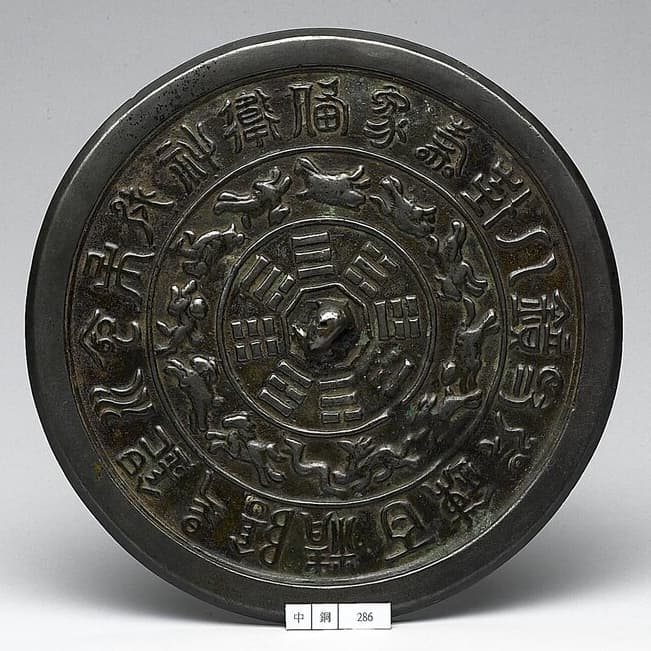
TL;DR: The Thủy Địa Tỷ (比) hexagram is the 8th of the 64 hexagrams in the Chu Dịch sequence, with Khảm (Nước) above and Khôn (Đất) below. The quái từ reads: "Tỷ: Cát. Nguyên phệ nguyên vĩnh trinh, vô cữu. Bất ninh phương lai, hậu phu hung." Nhật Nguyệt's suggestion: when encountering this hexagram, one may reflect on close relationships and sincerity, hold to what is upright and enduring, and avoid bonding with the wrong people; this is a prompt for reflection, not a fixed outcome.
What is the Thủy Địa Tỷ hexagram?
The Thủy Địa Tỷ hexagram (水地比), called Tỷ for short, is the 8th hexagram in the 64 hexagrams according to the Zhou Yi sequence. The hexagram consists of the upper trigram Khảm (Water) and the lower trigram Khôn (Earth). The name 比 (tỷ) carries the meaning of closeness, intimacy, leaning on one another.
What are the origins and structure of the Tỷ hexagram?
Textual origins
Modern scholarship (Edward Shaughnessy; Redmond and Hon, Teaching the I Ching, 2014) places the earliest layer of the Zhou Yi in the Western Zhou period, around the late 9th century BCE. Tradition attributes the drawing of the trigrams to Fu Xi, the setting down of the hexagram statements to King Wen, the line statements to the Duke of Zhou, and the Ten Wings to Confucius; modern scholarship does not regard these attributions as proven, and generally places the Ten Wings between the 5th and 2nd centuries BCE.
The researcher Nguyễn Vũ Tuấn Anh puts forward the hypothesis that the I Ching belongs to a most ancient civilization predating known history, which he calls "Atlantic civilization". This is one person's hypothesis; mainstream scholarship does not accept it.
Structure of the hexagram
The Thủy Địa Tỷ hexagram consists of two parts:
- Outer trigram (upper trigram): Khảm (☵) symbolizes Water, the deep abyss, and is also a symbol of flow and movement.
- Inner trigram (lower trigram): Khôn (☷) symbolizes Earth, harmonious compliance, tolerance, and the nurturing of all things.
The image of water above the surface of the earth is a symbol of attachment and mutual reliance.
How is the Zhou Yi text of the Tỷ hexagram recorded?
Hexagram statement (the judgment)
比:吉。原筮元永貞,无咎。不寧方來,後夫凶。
Sino-Vietnamese reading: Tỷ: Cát. Nguyên phệ nguyên vĩnh trinh, vô cữu. Bất ninh phương lai, hậu phu hung.
Translation: Tỷ: Auspicious. Divining at the outset (nguyên phệ) and attaining the great way, lasting and uprightly firm, then there is no fault. The uneasy are now coming; the one who comes after is inauspicious.
Line statements
初六:有孚,比之,无咎。有孚盈缶,終來有它,吉。
Sơ lục: Hữu phu, tỷ chi, vô cữu. Hữu phu doanh phẫu, chung lai hữu tha, cát.
Translation: Having trust, attaching to others, no fault. Trust full as a jar filled to the brim, in the end something else comes, auspicious.
六二:比之自內,貞吉。
Lục nhị: Tỷ chi tự nội, trinh cát.
Translation: Attaching from within, holding uprightness brings good fortune.
六三:比之匪人。
Lục tam: Tỷ chi phỉ nhân.
Translation: Attaching to one who is not a (worthy) person.
六四:外比之,貞吉。
Lục tứ: Ngoại tỷ chi, trinh cát.
Translation: Attaching to one outside, holding uprightness brings good fortune.
九五:顯比。王用三敺,失前禽,邑人不誡,吉。
Cửu ngũ: Hiển tỷ. Vương dụng tam khu, thất tiền cầm, ấp nhân bất giới, cát.
Translation: Manifest attachment. The king uses the three-sided drive, lets the game ahead escape, the people of the settlement need no warning, auspicious.
上六:比之无首,凶。
Thượng lục: Tỷ chi vô thủ, hung.
Translation: Attaching without a head, inauspicious.
Commentaries (the Ten Wings)
Thoán truyện (Treatise on the Judgments): 比,吉也。比,輔也,下順從也。原筮,元永貞,无咎,以剛中也。不寧方來,上下應也。後夫凶,其道窮也。
Translation: Tỷ is auspicious. Tỷ is assistance, the lower comply and follow. Nguyên phệ, nguyên vĩnh trinh, vô cữu, is because of firmness in the center. Bất ninh phương lai, is because above and below respond to each other. Hậu phu hung, is because its way has come to an end.
Đại Tượng (Treatise on the Images): 地上有水,比;先王以建萬國,親諸侯。
Translation: Water above the earth, this is Tỷ; the former kings accordingly established the myriad states and befriended the feudal lords.
Tiểu Tượng (Small Images):
- 比之初六,有它吉也。
- 比之自內,不自失也。
- 比之匪人,不亦傷乎!
- 外比於賢,以從上也。
- 顯比之吉,位正中也。舍逆取順,失前禽也。邑人不誡,上使中也。
- 比之无首,无所終也。
How is the commentary on the Tỷ hexagram according to Wang Bi to be understood?
Wang Bi's commentary (in the Zhou Yi zhengyi):
- On the Thoán truyện passage "Bất ninh phương lai, thượng hạ ứng dã": Above and below there is no yang line to divide the people; the Fifth line alone occupies the honored position, and there is no one who does not return to it; above and below respond to the Fifth. Being already close and at peace, when at peace the uneasy entrust themselves to it. Therefore the uneasy are now coming, because above and below respond to each other. The one who has no need does not seek the one who has; the one who has does not seek the one of the same party; the one in danger seeks peace, the one at peace does not seek the one who is preserved. Fire has heat, and the cold cling to it. Therefore if one is already at peace, then the uneasy are now coming.
- On "Hậu phu hung, kỳ đạo cùng dã": About to join in close harmony yet keeping oneself behind, when the closeness has been achieved one is punished for it, and therefore it is inauspicious.
- On the Sơ lục line: At the beginning of the time of Tỷ, one acts as the head of attachment. To lead attachment with a lack of trust brings no calamity greater, and therefore one must have trust full as a jar filled to the brim, and only then escape the fault of attachment. At the beginning of the time of Tỷ, if one's response is not fixed in one place, and one's heart holds no partiality, then there is no one who does not attach to one. Making trust clear, establishing it, brimming within a plain vessel, then things in the end come and are not exhausted. Befriending all under heaven, making trust clear and filling the jar, would the one who responds come by only one path? Therefore there must be other good fortune.
- On the Lục nhị line: In the time of Tỷ, holding the center and its position, and bound in response to the Fifth line, one cannot go elsewhere, and therefore one gains only the good fortune of attachment from within.
- On the Lục tam line: The Fourth line attaches to the outside, the Second line holds uprightness on account of the Fifth line; near, one is not attained, far, one finds no response; those to whom one attaches are all not one's own kin, and therefore it says "attaching to one who is not a person".
- On the Lục tứ line: Attaching to the Fifth line on the outside, and gaining one's own position, one attaches without losing the worthy, and occupies without losing one's position, and therefore uprightness brings good fortune.
- On the Cửu ngũ line: Being the master of attachment and having a response in the Second line, one is one who "attaches manifestly". To attach and make it manifest means those one befriends are but few. Not being partial toward things, only forming ties with the worthy, then those who leave and those who come are both not lost. In the rite of the three-sided drive, game that faces one and comes is released, game that turns its back and flees is shot; loving those who come and hating those who leave, therefore in the place of practice one often lets the game ahead escape. Occupying the king's position with "manifest attachment", employing the way of the three-sided drive, and therefore it says "the king uses the three-sided drive, lets the game ahead escape". Employing central uprightness, punitive expeditions have their regularity, attacking does not extend to the settlement, moving one inevitably strikes at the rebellious, the people of the settlement have no worry, and therefore "they need no warning"; though one does not gain the good fortune of the great person, it is the good fortune of "manifest attachment". That may be the work of a superior's command, not the way of a superior.
- On the Thượng lục line: Having no head means being behind, being at the end of the hexagram, being the one who comes after. When the way of closeness has already been achieved, there is no place to end, one is abandoned by the time, and so inauspiciousness is fitting.
According to Nhật Nguyệt's understanding, what does the Tỷ hexagram speak of?
According to Nhật Nguyệt's understanding, the Tỷ hexagram places its focus on the bonds of attachment between people. The hexagram statement sets out the condition "nguyên vĩnh trinh" for there to be no fault, and warns that the one who comes after is inauspicious. The image of water on earth suggests soaking in and mutual reliance.
The line statements show many shades of meaning: attaching at the outset requires trust (Sơ lục), attaching from within (Lục nhị), attaching to the wrong person (Lục tam), attaching to one outside (Lục tứ), the manifest attachment of one in a high position (Cửu ngũ), attaching without a head (Thượng lục). These are situations for reflection, not advice imposed on every circumstance.
When encountering the Tỷ hexagram in asking about work, how should it be understood?
Nhật Nguyệt's suggestion: when asking about work and encountering the Tỷ hexagram, one may review one's relationships with colleagues, superiors and partners to see whom one is attached to and for what reason. The hexagram statement says "nguyên vĩnh trinh", suggesting the keeping of lasting uprightness; the Lục tam line reminds one of attachment to the wrong person. The hexagram should not be seen as dictating the outcome of work, but as a suggestion for weighing sincerity and the choice of companions.
If one is in a leadership position, the Cửu ngũ line with its image of the king using the three-sided drive, not warning the people of the settlement, may suggest a generous and fair style. This is a suggestion for reflection, not a formula guaranteeing success.
When encountering the Tỷ hexagram in asking about love, how should it be understood?
Nhật Nguyệt's suggestion: the Tỷ hexagram suggests attachment, understanding and sharing. The hexagram statement speaks of "nguyên vĩnh trinh" as a condition for lastingness; the Lục tam line warns of attachment to the wrong person. These ideas can be used to look again at a present relationship: whether sincerity is its foundation, whether one is attached to someone unsuitable. The hexagram should not be seen as a verdict on the future of a relationship.
When encountering the Tỷ hexagram in asking about money, how should it be understood?
Nhật Nguyệt's suggestion: the Tỷ hexagram gives no specific guidance on investment or finance. The line statements speak of attachment between people. If one is considering a business partnership, one may refer to the idea of "hữu phu" (trust) in the Sơ lục line and "trinh" (uprightness) in the hexagram statement. Every money decision should still rest on real information and one's own capacity to bear risk.
When encountering the Tỷ hexagram in asking about health, how should it be understood?
Nhật Nguyệt's suggestion: the Tỷ hexagram is not a tool for diagnosis or prognosis of health. The ideas of reliance and attachment may suggest seeking support from family, friends and doctors when needed. Health matters should be examined and advised upon by those with professional expertise.
How does the Tỷ hexagram differ from the Sư hexagram and the Đồng Nhân hexagram?
The Tỷ hexagram and the Sư hexagram (Địa Thủy Sư)
The Tỷ hexagram (Thủy Địa Tỷ) and the Sư hexagram (Địa Thủy Sư) have structures that are reversed relative to each other. The Sư hexagram symbolizes armies, war, conflict. The Tỷ hexagram symbolizes harmony and cohesion. The two hexagrams show two faces of relations between people.
The Tỷ hexagram and the Đồng Nhân hexagram (Thiên Hỏa Đồng Nhân)
The Đồng Nhân hexagram also speaks of cooperation, but emphasizes cooperation among those who share the same aspiration. The Tỷ hexagram speaks of the cohesion of a collective under the leadership of one person at its head.
Quick reference table: the Thủy Địa Tỷ hexagram
| Aspect | Content |
|---|---|
| Position among the 64 hexagrams | 8 |
| Chinese character name | 比 |
| Symbol | ䷇ |
| English name | Holding Together |
| Upper trigram (outer trigram) | Khảm (Water), element Water, direction North |
| Lower trigram (inner trigram) | Khôn (Earth), element Earth, direction Southwest |
| Six lines, the first line at the bottom | first yin, second yin, third yin, fourth yin, fifth yang, top yin |
| Image | Water on the surface of the earth, soaking into one another and forming a single stretch. |
| Interpretation | An image of cohesion, closeness and mutual reliance. The ancients regarded the choice of whom to attach to as a matter to be weighed early. A lasting relationship lies in sincerity rather than in calculation. |
The figures in the table match the results of the lookup tools on Nhật Nguyệt.
Overview article on the topic: The 64 hexagrams of the I Ching


