


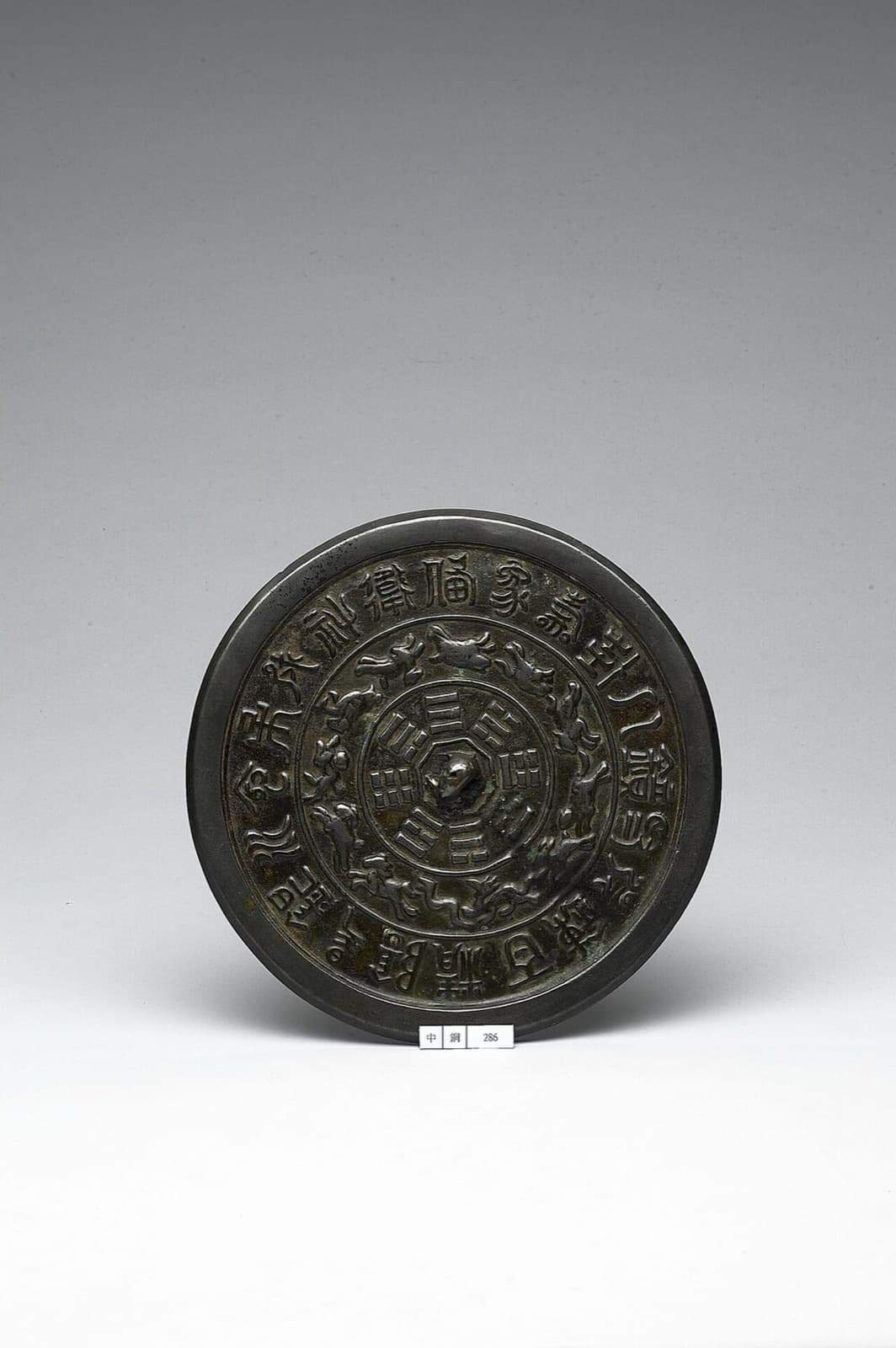
Image: Wikimedia Commons (Public Domain / CC0)
TL;DR: Zhen House is one of the four East Group houses, associated with the Zhen trigram (Wood), suitable for people with Zhen or Xun gua numbers. Favorable directions include North, East, Southeast, South; avoid West, Southwest, Northwest, Northeast. This article provides in-depth analysis of its traits and applications.
Trạch Chấn (East Four Houses) in Bát Trạch feng shui: Characteristics and directions that suit the destiny
What is Trạch Chấn in Bát Trạch?
Bát Trạch (BaZi, Eight Houses) is a classical feng shui system that divides dwellings into eight types based on the house direction and the destiny of the householder, commonly known as East Four Houses and West Four Houses. Trạch Chấn, belonging to the East Four Houses, corresponds to the Chấn trigram in the Bagua, element Wood, representing beginnings, positive energy and growth.
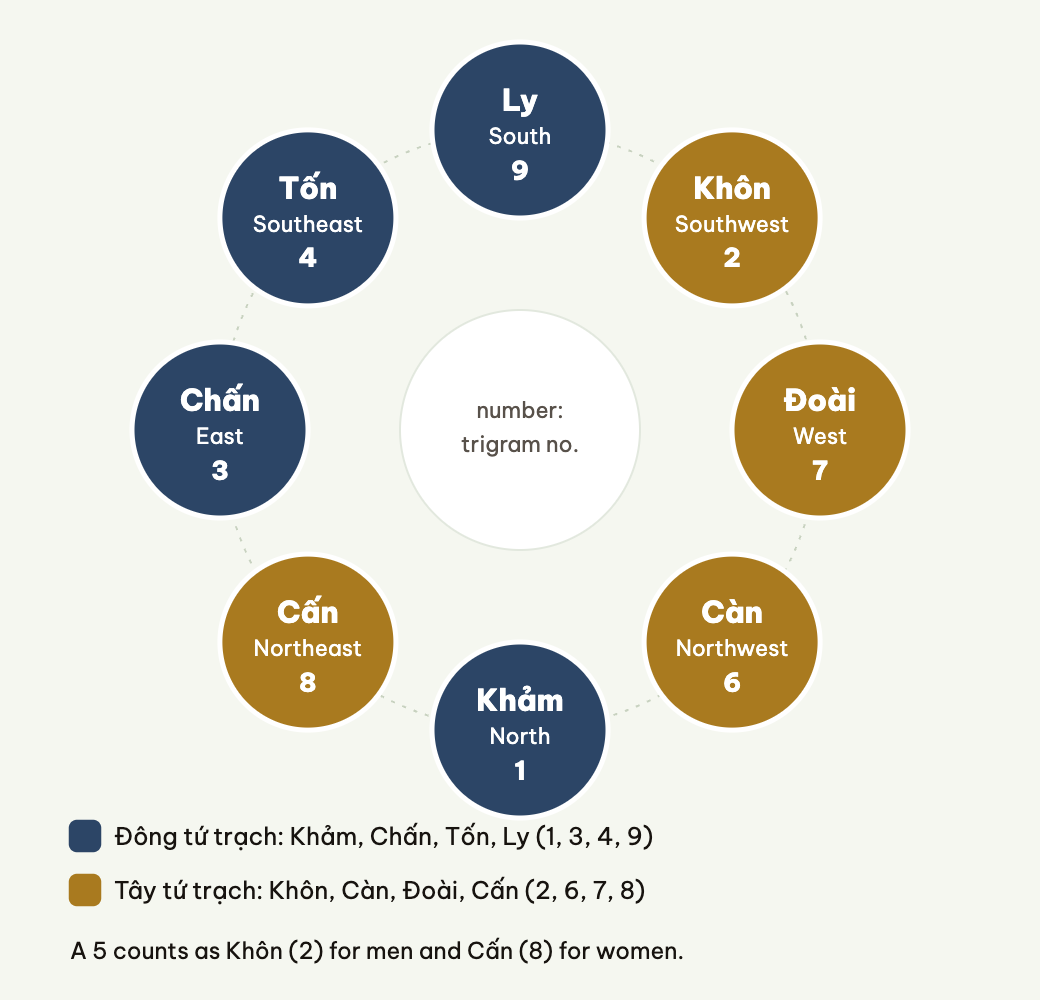
The East/West Four Houses division comes from combining two factors: the house direction (trạch) and the person's destiny (mệnh). Each person is born with their own destiny trigram, calculated from the lunar birth year and gender. The eight destiny trigrams are divided into two groups: the East Four Houses comprising Chấn, Tốn, Khảm, Ly; the West Four Houses comprising Càn, Khôn, Cấn, Đoài. The basic principle is that people belonging to the East Four Houses should live in a house whose direction belongs to the East Four Houses, and vice versa, to create harmony with the earth energy and the surrounding energy field.
What are the characteristics of Trạch Chấn?
The Five Elements and direction of Trạch Chấn
Trạch Chấn belongs to the Wood element, its direction is due East. In nature, Wood symbolizes trees, growth, flexibility but also strong resilience. Chấn is also associated with the phenomenon of thunder, expressing awakening, rousing after a long sleep, carrying the meaning of a new beginning, of creativity. The ancients held that a Trạch Chấn house often stimulates dynamism, a love of learning and a spirit of striving forward.
Which destiny trigrams correspond to Trạch Chấn?
According to Bát Trạch, the Chấn trigram in the East Four Houses group comprises:
- Chấn trigram: for men born in years whose trigram number is 8, women 8? In reality, the calculation is quite complex, but it is usually applied to people with the Chấn destiny trigram, including certain specific birth years. For example, a man born in 1950 and a woman born in 1950 have different trigrams.
- Tốn trigram: also belonging to the East Four Houses, element Wood, usually regarded as a supporting house for people with the Chấn destiny.
So Trạch Chấn is in fact the house for those with the Chấn destiny trigram, that is, those whose birth year and gender fall into this trigram group. To determine precisely, one needs to rely on a Bát Trạch lookup table or have a feng shui expert calculate it.
What is the symbolic meaning of Trạch Chấn?
Chấn is the Thunder trigram, belonging to the Wood element, corresponding to the eldest son in the family. Therefore, Trạch Chấn is often said to be good for promoting the role of the eldest son, supporting career, studies and political career, official rank. The energy of Chấn helps the householder have a decisive spirit, daring to think and dare to act, but it also needs to be controlled to avoid haste and impetuosity.
Which house directions are good for Trạch Chấn?
In Bát Trạch, each destiny trigram has four good directions and four bad directions, determined based on the interaction between the element of the destiny and the element of the direction. For people with the Chấn destiny (Wood), the good directions include:
What does the North direction (Sinh Khí) mean?
The North direction belongs to the Water element. Water generates Wood, so this is the Sinh Khí direction, bringing luck, wealth and good health. Placing the main door, living room or main bedroom facing North helps the householder meet many favorable conditions in work and life.
Is the East direction (Thiên Y) good?
The East direction is also of the Wood element, creating compatibility, and is called Thiên Y, meaning the shelter and protection of heaven. This direction is good for health, helping the householder avoid illness and feel at ease. If the house faces East, the householder will feel peaceful and comfortable.
What does the Southeast direction (Diên Niên) mean?
The Southeast direction belongs to the Wood element (since it is also part of the East Four Houses), creating Diên Niên, meaning durability and harmony in relationships. This direction is especially good for family affection, harmony between husband and wife, and filial children. If a bedroom or common living room is placed in this direction, family bonds will be close.
Is the South direction (Phục Vị) good?
The South direction belongs to the Fire element, Wood generates Fire, so it is the Phục Vị direction, meaning stable energy, helping the householder consolidate their position and strengthen confidence and decisiveness. This direction is suitable for a study or a place of worship.
Which bad house directions should be avoided with Trạch Chấn?
Conversely, the four bad directions for people with the Chấn destiny include:
- West direction (Tuyệt Mệnh): very bad, causing harm to health, loss of wealth, accidents.
- Southwest direction (Ngũ Quỷ): causing gossip, loss of property, misfortune.
- Northwest direction (Lục Sát): causing disputes, lawsuits, affecting career.
- Northeast direction (Họa Hại): causing obstacles, misfortune in life.
Householders with the Chấn destiny should avoid placing the main door, kitchen, or bed facing these directions to minimize negative energy.
How is Trạch Chấn applied in practice?
How to determine the direction of a Trạch Chấn house
The house direction in Bát Trạch is usually the direction of the main door or the direction that receives the house's main energy. To determine it precisely, the householder uses a compass measured at the main door position, standing inside the house looking out. The direction is counted as the direction the main door faces.
How to arrange rooms for a Trạch Chấn house?
- Main door: Should be placed in a good direction (North, East, Southeast, South) to receive life energy.
- Living room: In the central area or near the main door, possibly combined with green plants to strengthen the Wood element.
- Kitchen: In Bát Trạch, the kitchen belongs to the Fire element and should be placed in a bad direction but look toward a good direction (the principle of sitting in misfortune and facing auspiciousness). For example, the kitchen can be located in the Southwest (bad) but the kitchen door turns toward the Southeast (good).
- Bedroom: Should be placed in the Sinh Khí or Diên Niên direction to strengthen health and affection.
- Worship room: The Phục Vị or Sinh Khí direction is ideal.
How to combine the five elements in Trạch Chấn house design?
Since Trạch Chấn is of the Wood element, the householder should use colors belonging to the Wood element (leaf green, green) or the Water element (black, sea blue; ancient books group blue into the green hue of Wood) to strengthen energy. Avoid using too much of the Metal element colors (white, gray) because Metal overcomes Wood, or the Fire element (red, orange) because Wood generates Fire, which will drain life energy.
What should be noted when applying Trạch Chấn?
Bát Trạch is one of many feng shui schools, not the only tool for evaluating a house. Good or bad results also depend on many other factors such as land direction, surrounding environment, overall layout and the ages of other family members. Therefore, when building or renovating a house, the householder should consult multiple sources and ask experienced experts for advice to make the optimal choice.
In addition, feng shui is not an absolute determinant of success or happiness. A positive spirit, effort and a healthy lifestyle still play a key role. Feng shui should only be seen as a supporting tool that helps improve the quality of life.
Quick lookup table: Chấn house
| Star and direction | Compass direction |
|---|---|
| Kua number | 3 |
| Destiny group | East Four Destinies |
| Sinh Khí (good) | South |
| Thiên Y (good) | North |
| Diên Niên (good) | Southeast |
| Phục Vị (good) | East |
| Họa Hại (bad) | Southwest |
| Lục Sát (bad) | Northeast |
| Ngũ Quỷ (bad) | Northwest |
| Tuyệt Mệnh (bad) | West |
The figures in the table match the results of the lookup tools on Nhật Nguyệt.


