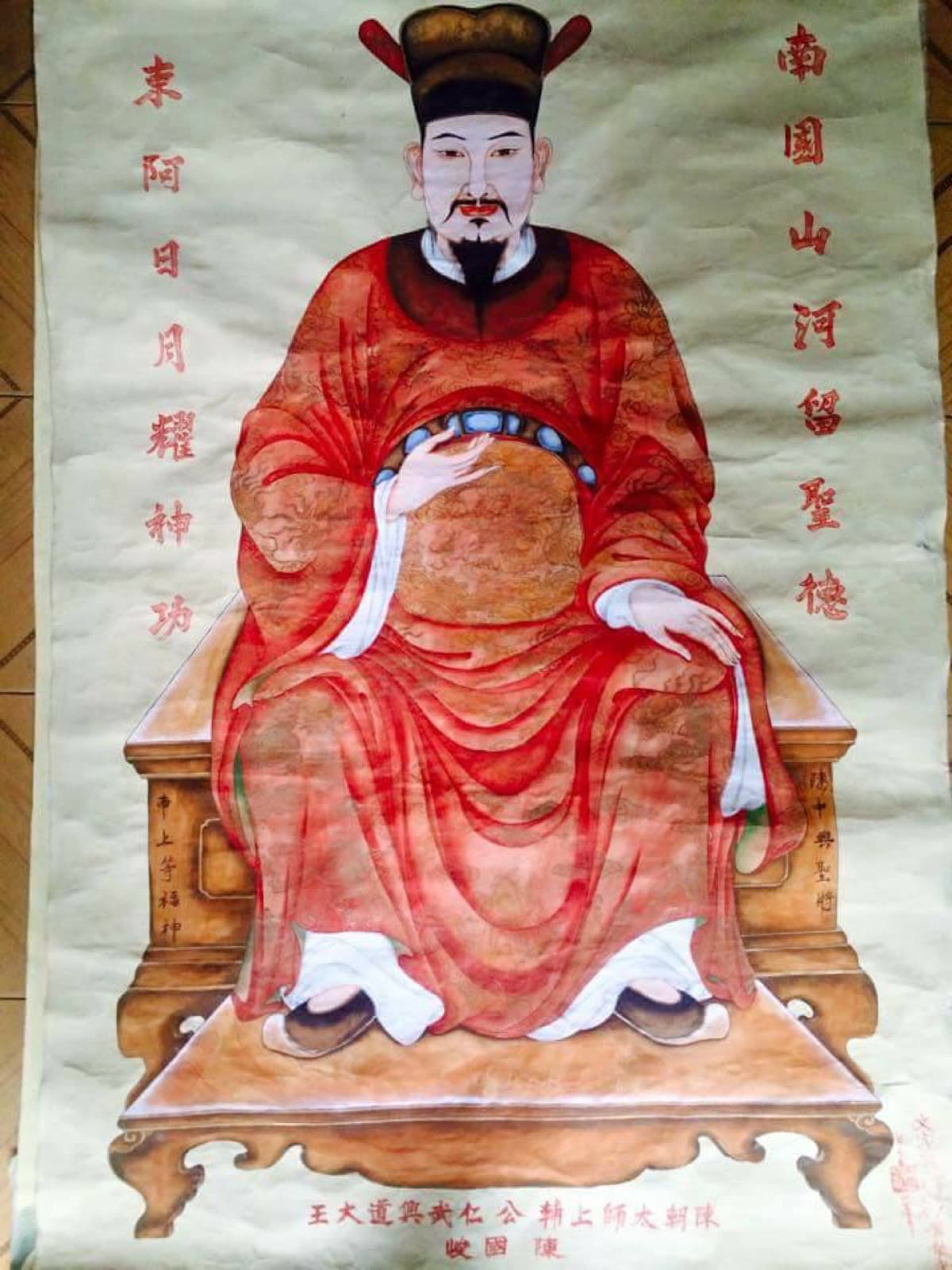
Nguyen Binh Khiem: Life and Historical Context
Nguyen Binh Khiem (1491-1585), courtesy name Hanh Phu, pen name Bach Van am cu si, was born in Trung Am village, Vinh Lai district, now Ly Hoc commune, Vinh Bao district, Hai Phong city. He was born into a family with a Confucian tradition. His father, Nguyen Van Dinh, was a learned Confucian scholar who did not pursue a mandarin career, while his mother, Nhu Thi Thuc, was renowned for her intelligence, capability, and significant role in educating her children.
Living in the turbulent social context of Dai Viet in the early 16th century, feudal factions of Le, Mac, Trinh, and Nguyen continuously vied for power. The early Le dynasty regime was in deep crisis, with peasant uprisings erupting everywhere. In 1527, Mac Dang Dung deposed King Le Cung Hoang and established the Mac dynasty. Nguyen Binh Khiem passed the Trang Nguyen examination under the Mac dynasty in the At Mui year (1535) at age 45, after several unsuccessful attempts at the Hoi and Dinh examinations due to chaotic times.
Although serving the Mac dynasty, he held important positions such as Left Vice Minister of Personnel, then rose to Minister, with the title Trinh Tuyen Marquis, later promoted to Trinh Quoc Cong. Hence, later generations often called him Trang Trinh. In 1542, he submitted a memorial requesting the Mac king to execute 18 treacherous courtiers, but it was not approved. Disillusioned with court life, he resigned and returned to his hometown in 1543, opening a school and composing poetry.
Philosophical and Educational Career
Nguyen Binh Khiem was a great thinker and an influential educator in national history. After retiring from office, he devoted himself wholeheartedly to education at home. His school attracted many students from all over, including later outstanding figures such as Nguyen Du (author of Truyen ky man luc), Phung Khac Khoan (famous diplomat and poet), Luong Huu Khanh, and Nguyen Quyen. Many of his students became renowned mandarins and cultural figures, contributing significantly to the country's development.
Philosophically, he was deeply influenced by yin-yang theory, the Book of Changes, and Confucianism, but creatively Vietnamized these ideas. He emphasized the inherent goodness in human nature, advocated living in harmony with nature, and pursued the natural Way. His philosophy is evident in famous sayings like "Giu chua tho Phat thi an oan" (meaning in any position, one should fulfill one's duties), and his prophecies and predictions about the times.
Notably, he was famous for his prophetic abilities, accurately predicting many historical events. Legends recount that during the Trinh-Nguyen conflict, he advised Trinh Kiem to appoint his second son Trinh Tung as successor, and advised Nguyen Hoang to govern Thuan Hoa to build a lasting legacy. These advices helped shape Dai Viet's political landscape for centuries. Though these tales carry mystical elements, they reflect his far-sighted vision and deep understanding of his era.
Vast Literary Heritage
Nguyen Binh Khiem was a major poet, leaving a vast body of literature in Chinese and Nom script. His most representative works include the Nom poetry collection "Bach Van am thi tap" (about 700 Chinese poems) and "Bach Van quoc ngu thi" (about 170 Nom poems). His poetry is deeply philosophical and didactic, reflecting a humane, noble, and nature-harmonious outlook on life.
His Nom poetry is considered the pinnacle of 16th-century Vietnamese Nom poetry, significantly affirming and developing the Nom script in national literature. Many of his poems became profound lessons on ethics and character, widely circulated among the people, such as:
- "O dau thi hay, o thi dai" (reflecting a humble, contented philosophy of life)
- "Ta dai, ta tim noi vang ve, Nguoi khon, nguoi den chon lao xao" (expressing a reclusive, noble lifestyle)
- "Duoc mat duong duong nguoi thai thuong, Khen che phoi phoi ngon dong phong" (showing an unruffled, detached attitude toward life's gossip and judgment)
Temple Relic Complex in Vinh Bao
The Trang Trinh Nguyen Binh Khiem temple relic site is located in Trung Am village, Ly Hoc commune, Vinh Bao district, Hai Phong city. This site marks the entire life and career of the celebrity, from birth, upbringing, and studies to his retirement and death. The relic was recognized as a historical relic by the Ministry of Culture, Sports and Tourism in 1991.
On December 24, 2015, the Deputy Prime Minister signed a decision recognizing the Trang Trinh Nguyen Binh Khiem temple relic complex as a special national relic. This is the second special national relic in Hai Phong, after the Cat Ba archipelago scenic area recognized in 2013. This event affirms the great historical and cultural value of the relic complex associated with cultural celebrity Nguyen Binh Khiem.
Main Components of the Relic Complex
The relic complex includes several important architectural components, each carrying distinct historical and cultural values:
- Temple of Nguyen Binh Khiem: The main architectural structure, built in traditional style, housing the altar and statue of the celebrity. It stands on the foundation of his former house where he lived and taught.
- Temple of his parents: Located within the complex, reflecting the virtue of "remembering the source when drinking water," honoring the birth and upbringing contributions of the celebrity's parents.
- Tomb of his father: The resting place of Nguyen Van Dinh, cared for and tended with incense year-round by descendants and locals.
- Bach Van Hermitage: Where Nguyen Binh Khiem retreated to live in seclusion, reading, composing poetry, and teaching after resigning. This space is associated with his pen name Bach Van am cu si, reflecting his noble, otherworldly spirit.
Additionally, the area includes individual relics related to Nguyen Binh Khiem, such as Trung Tan Quan, Song Mai Pagoda, and Kinh Thien Pen Tower. Each relic is linked to stories and legends about his life and career, forming a rich, diverse relic ensemble.
Architectural and Landscape Value
The relic site is surrounded by peaceful natural scenery with ancient trees providing shade, creating a serene spiritual space. The architecture of the structures bears strong marks of traditional Vietnamese architecture from the Le-Mac period, with intricate wood and stone carvings.
The grounds also feature a statue garden with statues depicting the celebrity and his notable students. This offers an educational visit for students and tourists. The relic complex is not only a place of remembrance and worship but also an open-air museum preserving precious cultural and historical values of the nation.
Traditional Festival and Commemorative Activities
Annually, the Trang Trinh Nguyen Binh Khiem temple festival is solemnly held on the anniversary of his death (28th day of the 11th lunar month). The festival attracts many locals, pilgrims, and generations of students to offer incense in remembrance.
In 2016, on the 430th anniversary of the cultural celebrity's death, the festival ran from January 6 to 8, 2016 (i.e., from the 27th to 29th of the 11th lunar month in the At Mui year). The ceremony marking the 430th death anniversary and receiving the special national relic recognition was held grandly on the evening of January 7, 2016, at the Nguyen Binh Khiem statue square within the relic site.
Festival activities typically include incense offerings, traditional rituals, cultural performances, and folk sports. This occasion allows people to express reverence and gratitude to the celebrity, and also promotes the cultural and historical values of Vinh Bao to domestic and international visitors.
Educational Value and Contemporary Significance
The Trang Trinh Nguyen Binh Khiem temple relic site is not only a marker of a historical celebrity but also an important traditional education address. The ideological and ethical values Nguyen Binh Khiem left behind remain relevant today:
- Spirit of learning: His example of overcoming difficulties and perseverance in the path of examinations is a valuable lesson for today's students.
- Noble ethics: His pure lifestyle, disregard for fame and profit, and knowing when to stop are profound lessons in a modern society full of temptations.
- Quiet patriotism: Despite living in turbulent times, he remained devoted to the nation's fate, using his wisdom and knowledge to help stabilize society.
- Cultural value: Preserving and promoting the relic site contributes to safeguarding national cultural identity and educating youth in patriotic traditions.
The recognition of the relic site as a special national relic facilitates conservation, restoration, and heritage promotion. It also offers opportunities for spiritual cultural tourism in Hai Phong, boosting local socio-economic development and turning cultural heritage into an important resource for sustainable development.
Conclusion
Nguyen Binh Khiem is one of the most typical cultural celebrities of 16th-century Vietnam. As a thinker, educator, and great poet, he left precious legacies in thought, culture, and education for later generations. The relic complex of his temple in Vinh Bao, Hai Phong, being recognized as a special national relic, is a deserving acknowledgment of his immense contributions to the nation. Preserving and promoting the value of the relic site is not only the responsibility of Hai Phong's people but also a common duty of the entire nation, so that the noble cultural values of our ancestors may be continued and spread forever.