Introduction to Type 7 - The Enthusiast
In the Enneagram system, Type 7 (also known as The Enthusiast) represents people full of energy, who love novelty, freedom, and always seek positive experiences. They live with the belief that life is a series of opportunities to explore, learn, and enjoy. With rich imagination and unique idea-connection skills, Type 7 often serves as an endless source of inspiration for those around them.
The core motivation of Type 7 is the fear of being trapped in pain, boredom, or limitation. To avoid this fear, they constantly plan new activities, seek pleasure, and keep their minds busy with bright possibilities. This creates an outgoing, optimistic personality, but also makes it hard for them to stay still, face negative emotions, and prone to superficiality when handling deep issues.
The Enneagram Map: Type 7's Position
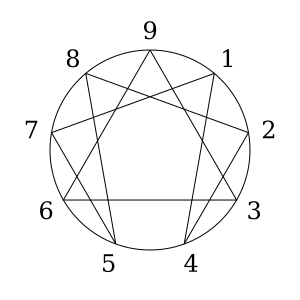
The Enneagram map is a circular diagram with nine points, each representing a personality type. Points are connected by lines forming arrows. Each type has two special arrows: one points to the type they move toward when integrating (healthy development), and one points to the type they move toward when disintegrating (stress, unhealthiness).
For Type 7, the integration arrow points to Type 5 - The Investigator, and the disintegration arrow points to Type 1 - The Perfectionist. This means:
- When Type 7 is balanced and growing, they begin to show positive traits of Type 5.
- When Type 7 is under pressure, exhausted, or unbalanced, they fall into negative behaviors of Type 1.
Integration Arrow: Type 7 Moving Toward Type 5
How It Works
The integration arrow represents the growth path where a person learns and adopts healthy qualities from another type. For Type 7, integration with Type 5 occurs when they realize that running from pain and emptiness is only a temporary solution. Instead of constantly seeking external stimulation, they start to pause, observe their inner world, and accept difficult experiences.
Type 5 is known for deep focus, analytical thinking, emotional restraint, and love of learning. When Type 7 integrates, they learn to:
- Accept stillness: Instead of feeling restless without activity, they find value in quiet moments, using that time to reflect and listen to themselves.
- Go deep into a subject: Type 7 often has broad but shallow knowledge across many fields. When integrating, they learn to choose one area of genuine interest and study it systematically.
- Control impulsiveness: They become more cautious in decision-making, not rushing into new experiences without considering consequences.
- Face difficult emotions: Instead of avoiding boredom, anxiety, or hurt, they allow themselves to feel and process them healthily.
Specific Expressions
An integrating Type 7 may show:
- Spending time reading, researching, or meditating instead of constantly seeking parties, travel, or entertainment.
- In work, patiently completing a long-term project rather than abandoning it for a more exciting new idea.
- Beginning to value deep relationships, listening to others without always turning conversations into games or jokes.
- Learning to say "no" to unnecessary opportunities, reducing overload, and focusing on what truly matters.
This integration does not diminish Type 7's enthusiasm; rather, it helps them use that energy more wisely and sustainably. They become people who can both enjoy life and possess remarkable intellectual depth and calmness.
Disintegration Arrow: Type 7 Falling into Type 1
How It Works
The disintegration arrow describes a state when a person falls into stress, anxiety, or exhaustion to the point of losing their natural balance. Type 7 often uses optimism and future plans as a shield to avoid negative emotions. However, when life's pressures exceed their capacity, this defense collapses, and they shift to behaviors characteristic of unhealthy Type 1.
Unhealthy Type 1 appears with excessive perfectionism, criticism, rigidity, and irritability. When Type 7 disintegrates, they become:
- Irritable and frustrated: They lose their usual cheerfulness, easily agitated by small things, feeling everything is not as desired.
- Critical of self and others: They become harsh, nitpicking others' mistakes, especially when they feel others are hindering their plans or reducing their experience quality.
- Impatient: They want everything to happen quickly and perfectly, becoming hot-tempered when encountering problems.
- Self-blaming: Internally, guilt and severe self-criticism arise for not controlling the situation.
Specific Expressions
A disintegrating Type 7 may show:
- During a trip, if the schedule is delayed, instead of being flexible and enjoying, they become tense, snap at companions, and constantly complain about inconvenience.
- When facing failure at work, they are not only disappointed but also torment themselves for not planning better, and can become extremely hard on colleagues.
- They may fall into emotional "freezing," but inside seethe with inner criticism.
- Some Type 7s when disintegrating may try to rigidly control their environment, forcing everything into a certain order to reduce anxiety.
Comparison of the Two States
| Aspect | Integration (toward Type 5) | Disintegration (toward Type 1) |
|---|---|---|
| Dominant emotion | Calm, curious, accepting | Irritable, frustrated, critical |
| Typical behavior | Pausing, observing, going deep | Controlling, complaining, rigid |
| Relationship with others | Listening, empathetic | Nitpicking, annoyed, blaming |
| Problem-solving | Thorough analysis, long-term solutions | Hasty, imposing, wanting immediate perfection |
| Energy | Calm, focused | Agitated, tense |
Significance in Personal Growth
Understanding these two arrows not only helps Type 7 recognize their current state but also opens a concrete development path.
Early Signs of Disintegration
Type 7 should learn to recognize early signs of disintegration, such as:
- Feeling unusually restless, losing interest in previously enjoyed activities.
- Easily irritated by minor obstacles, losing patience with others.
- Having repetitive negative thoughts about self or others.
- A pervasive sense of guilt without clear cause.
When noticing these signs, they can proactively apply strategies to return to balance.
Practices Toward Integration
To develop toward integration with Type 5, Type 7 can practice:
- Daily quiet time: Start with 10-15 minutes of meditation or simply sitting still doing nothing, observing breath and thoughts.
- Choose one area to deepen: Instead of learning a bit of everything, pick a truly passionate topic and commit to studying it systematically for several months.
- Practice accepting emotions: When bored or uncomfortable, instead of immediately seeking entertainment, sit with the feeling and ask: "What is really happening inside me?"
- Learn to say "no": Decline invitations or opportunities that are not truly necessary to save energy for important priorities.
- Seek deep relationships: Spend time in one-on-one conversations with close friends, listening without needing to fill silence with words.
Advice for Loved Ones of Type 7
If you have a loved one who is Type 7, understand that their disintegration is not their true nature, but a reaction to stress. Instead of criticizing their irritability, you can:
- Gently help them recognize their state without judgment.
- Encourage them to rest, but without imposing.
- Create a safe space for them to express worries without being laughed at.
- Remind them of their positive qualities, helping them reconnect with genuine joy.
Conclusion
The integration and disintegration arrows are among the most powerful tools of the Enneagram, helping each person understand their potential and pitfalls. For Type 7, the journey of integrating toward Type 5 is not about giving up joy and enthusiasm, but learning to enjoy life more deeply and sustainably. Conversely, early recognition of disintegration toward Type 1 helps them avoid unnecessary harm to themselves and relationships.
By applying these insights in daily life, Type 7 can transform their abundant energy into deep creativity, meaningful joy, and lasting happiness.