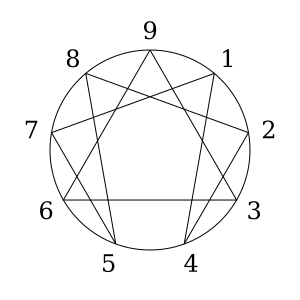
Integration and Disintegration Arrows of Type 8: A Journey from Power to Connection and Detachment
In the Enneagram system, each personality type does not exist in isolation but constantly moves through two important dimensions represented by the arrows on the diagram: the integration direction and the disintegration direction. For Type 8, the Challenger, understanding these two arrows not only helps them recognize their psychological states but also opens a path for conscious and deep personal development.
Core Characteristics of Type 8: Foundation for Movement
Before delving into the mechanics of the arrows, it is essential to understand the nature of Type 8. Type 8 individuals are driven by the need for autonomy, control, and not being controlled. They hold a core belief that the world is harsh, and only the strong can survive and protect the vulnerable around them. Therefore, they build a tough "armor," expressed through assertiveness, directness, sometimes aggression, and readiness to confront. Their main weakness lies in denying their own vulnerability and difficulty showing vulnerability to others.
However, the deeper purpose of Type 8 is not selfish power. Their energy often aims at protecting justice and shielding the oppressed. They have a warm heart but hide it behind a cold, tough exterior. This contradiction between a strong exterior and a sensitive interior is the key to understanding their integration and disintegration journey.
Integration Arrow: Type 8 toward Type 2 (The Helper)
The integration arrow of Type 8 always points toward Type 2, the Helper. This is the healthy, positive state that a Type 8 achieves when they feel safe, balanced, and psychologically developed. When integrated, Type 8 does not lose their core strength but learns to use it more subtly and lovingly.
Transformation from "I protect" to "I care"
In this state, Type 8 begins to allow themselves to feel and express softness. Their care for others is no longer just protective and imposing ("I know what is best for you") but becomes empathetic and genuine care ("I listen and understand your needs"). They become warmer, more generous, and approachable. The heart that was buried opens up, allowing them to connect with others on a deep emotional level.
Specific manifestations of integrated Type 8
- Inspirational leadership: An integrated Type 8 leader does not only give orders but also knows how to inspire, encourage, and develop the potential of each team member. They listen openly to feedback and are willing to change their viewpoint if reasonable.
- Equal relationships: In personal relationships, they learn to share power, compromise, and express need for others. They no longer see needing someone as a weakness but as connection.
- Generosity with wisdom: Their generosity is no longer about "bestowing favors" but stems from true compassion. They give without expecting return or control.
- Managing anger: Instead of exploding in anger, they learn to use their powerful energy to resolve conflicts peacefully and constructively.
This integration helps Type 8 reach a higher form of power: the power of service. They realize that true strength lies not in controlling others but in the ability to love and connect.
Disintegration Arrow: Type 8 toward Type 5 (The Investigator)
Conversely, when Type 8 falls into stress, pressure, or feels threatened, they disintegrate toward Type 5, the Investigator. This is an unhealthy state, reflecting negative behaviors and maladaptive coping mechanisms.
Strategic withdrawal instead of confrontation
Interestingly and paradoxically, Type 8, known for direct confrontation, disintegrates to a personality type that tends to withdraw from the world. However, this has its own logic. When a Type 8 feels overwhelmed, out of control, or hurt, instead of charging into battle, they may choose to withdraw to observe, analyze, and find ways to re-establish control from a safer position. This is a strategy to protect resources and consolidate inner strength.
Specific manifestations of disintegrated Type 8
- Self-isolation: They tend to detach from friends, colleagues, and family. They become quiet, withdrawn, and unwilling to share what is happening in their lives.
- Controlling information: Instead of directly controlling people, they shift to controlling information. They may become extremely secretive, gathering data and analyzing everything in detail to ensure no surprises.
- Becoming cold and emotionally detached: They stop expressing emotions and may appear indifferent or distant. The inherent warmth (though suppressed) disappears, replaced by excessive rationalization.
- Hoarding and indecisiveness: In some cases, they may become stingy with time, energy, and resources. They tend to delay decisions because they want more analysis, leading to action paralysis.
- Conspiratorial thinking: At unhealthy levels, they may develop suspicious thoughts, believing others are against them and that they must be vigilant.
This disintegration is a defensive reaction. Type 8 feels that if they continue to confront while out of control, they could become dangerous. Thus, they withdraw to protect themselves and others from their latent anger.
Mechanism and Cycle of the Arrows
It is important to emphasize that these arrows are not fixed states but a dynamic cycle. No one is fully integrated or disintegrated. In daily life, a Type 8 may oscillate between these two states depending on circumstances and their perceived safety.
For example, in a stressful meeting, a Type 8 might begin to disintegrate to Type 5, sitting silently and observing instead of engaging in debate. But when they return home, where they feel safe, they may shift to the integrated state of Type 2, caring for their children attentively.
Early recognition of signs
Early recognition of disintegration signs is crucial for Type 8 to intervene promptly. When a Type 8 starts feeling the need to withdraw, become secretive, or overly focus on analysis without action, it may signal stress. At this point, instead of letting disintegration continue, they should consciously seek activities that help them reconnect with their heart and openness.
Practical Significance and Development Lessons
Understanding the arrows offers valuable practical lessons for personal development of a Type 8.
Enhancing leadership skills: A Type 8 leader who understands that integrating to Type 2 makes them more effective will learn to build loyalty and dedication from their team through respect and trust, not fear.
Improving relationships: In romantic and family relationships, allowing oneself to be "weak" and need others (integration to Type 2) is key to building intimacy and deep connection. They learn that vulnerability is a form of strength, not weakness.
Effective stress management: Recognizing disintegration signs toward Type 5 helps Type 8 avoid negative behaviors like isolation and information control. Instead, they can find healthier ways to cope with stress, such as exercise, meditation, or seeking support from close friends.
In summary, the integration and disintegration arrows of Type 8 are not labels to attach to oneself or others. They are guides on the psychological map, helping us understand where our energy flows. For Type 8, the development journey is about learning to balance the warrior's strength (Type 8) with the caregiver's compassion (Type 2), while recognizing and overcoming the observer's tendency to isolate (Type 5) when facing stress. This balance will help them become the most fulfilled and happy leaders, protectors, and partners.
