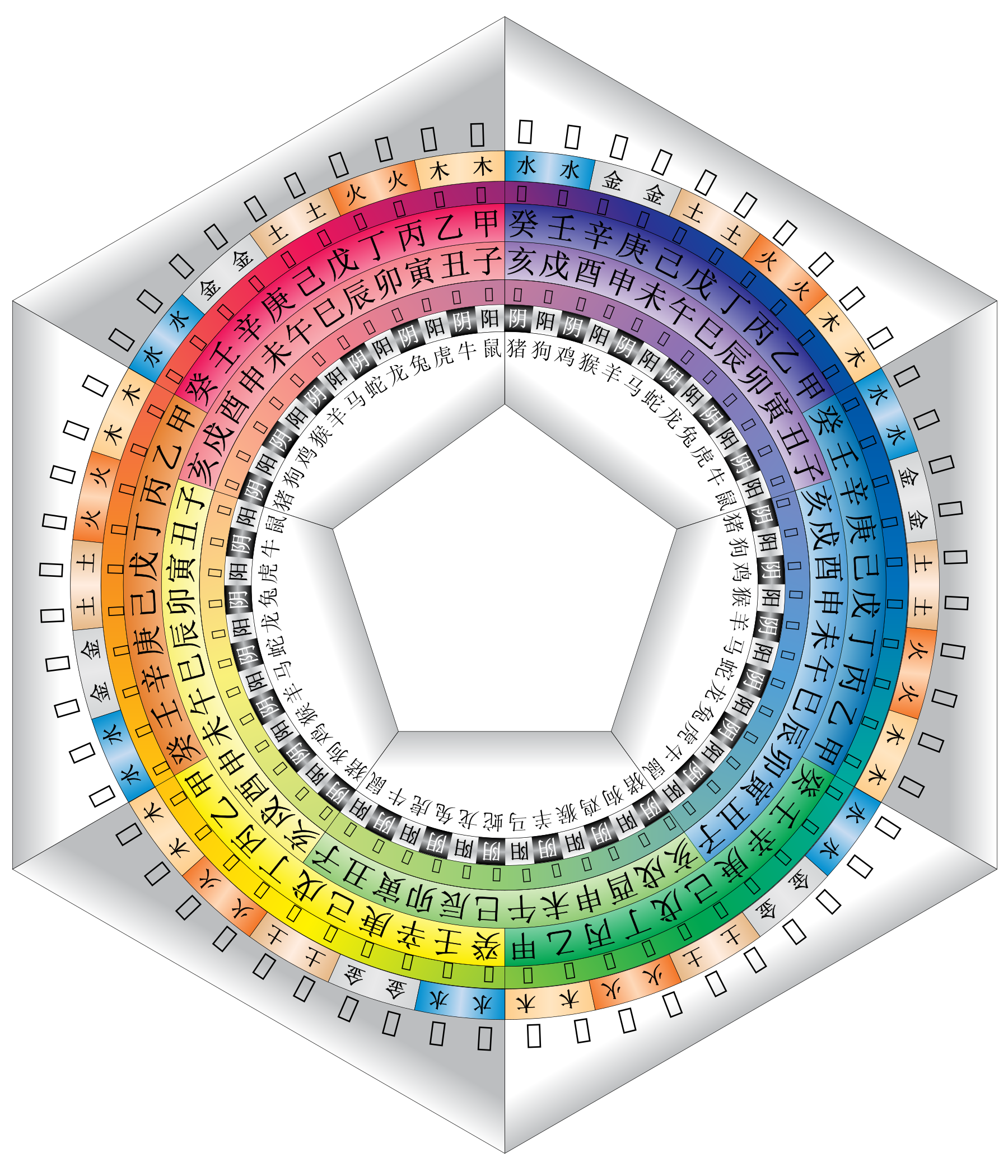
Introduction to the Ten Gods and the Position of Bi Jian
The Ten Gods are a system for classifying the interactive relationships between the stems and branches in BaZi (Four Pillars), a core tool of Eastern destiny analysis. The Ten Gods consist of ten types: Bi Jian (Friend), Jie Cai (Rob Wealth), Shi Shen (Eating God), Shang Guan (Hurting Officer), Zheng Cai (Direct Wealth), Pian Cai (Indirect Wealth), Zheng Guan (Direct Officer), Qi Sha (Seven Killings), Zheng Yin (Direct Resource), and Pian Yin (Indirect Resource). Each Ten God represents a specific aspect of life, personality, and destiny.
Bi Jian is one of these Ten Gods, identified based on a relationship of the same element (same Five Element) but same polarity (Yin or Yang) with the Day Master, which is the day stem of the person whose chart is being read. The Day Master represents the person themselves and serves as the central reference point for determining all relationships of other stems and branches.
To understand Bi Jian clearly, one must first grasp how to identify it. If the Day Master is Jia (Yang Wood), then Bi Jian includes stems and branches with Wood and Yang element, namely: the stem Jia appearing in other pillars (Year, Month, Hour), or the branch Yin (which contains Jia as its main qi). If the Day Master is Yi (Yin Wood), then Bi Jian is the stem Yi in other pillars or the branch Mao (which contains Yi as its main qi). In other words, Bi Jian is essentially a "copy" of oneself appearing in other positions of the chart.
Basic Characteristics and Meaning of Bi Jian
Core Nature
Bi Jian carries the meaning of sameness, equality, and mutual support. It symbolizes the self, biological siblings, close friends, colleagues, and like-minded people. Essentially, Bi Jian reflects independence, self-reliance, personal will, and a competitive spirit.
People with strong Bi Jian often have traits such as confidence, decisiveness, strong opinions, and resistance to being influenced by others. They tend to prefer self-reliance, dislike depending on others, possess a strong drive for achievement, and have a high sense of responsibility. However, if Bi Jian is too strong and not well controlled, the person may become stubborn, obstinate, difficult to cooperate with, and prone to conflict with those around them.
Bi Jian and Social Relationships
In fortune telling, Bi Jian is used to analyze relationships with siblings, friends, and colleagues. Where Bi Jian appears in a pillar indicates the nature of these relationships during the period or domain that pillar represents.
- Bi Jian in the Year Pillar: reflects relationships with siblings, relatives, childhood friends, or same-generation family members. Strong Bi Jian here often suggests many siblings or close childhood friendships.
- Bi Jian in the Month Pillar: this is the most important position, as the Month Pillar represents the growth period and career. Bi Jian here indicates a competitive work environment, equally skilled colleagues, or possibly siblings cooperating in business.
- Bi Jian in the Hour Pillar: relates to children, students, or partners in later life. If Bi Jian is an unfavorable god, children may be disobedient or there may be rivalry with them.
Bi Jian in Relation to Strong and Weak Self
Bi Jian When the Self is Weak
One of the most important principles in BaZi analysis is determining whether the self (Day Master) is strong or weak. Bi Jian and Jie Cai are factors that strengthen the self because they share the same element as the Day Master.
When the self is weak (Day Master weak), Bi Jian acts as a favorable god or useful god, providing support to the person. Those with weak self who receive Bi Jian's help often have good friends, siblings, and colleagues who are willing to assist in times of difficulty. They know how to cooperate, rely on the group, and possess a spirit of unity. With this support, they can overcome many life challenges that would be very hard to face alone.
Example: A person with Day Master Ren Water (Yang Water), born in a month where Water is weak, and other elements attacking or draining too much, leading to a weak self. If the chart has many stems or branches of Ren or Zi (same Water, Yang), i.e., strong Bi Jian, this person will have good support from friends and siblings, helping them stand firm in life.
Bi Jian When the Self is Strong
Conversely, when the self is strong (Day Master strong), Bi Jian becomes an unfavorable god if too abundant. At this point, Bi Jian no longer provides support but becomes a source of competition and rivalry. People with a strong self who encounter excessive Bi Jian often have stubborn personalities, resist advice, and tend to argue with others, especially over money and work.
In fortune telling, when Bi Jian is strong, it is called "Bi Jian seizes wealth," meaning rivalry over financial gain. Such individuals may earn money but struggle to keep it, or experience friends, siblings, or partners competing for benefits. They are prone to isolation due to arrogance and unwillingness to compromise, leading to loss of friendships and collaboration opportunities.
Interactions of Bi Jian with Other Ten Gods
Bi Jian and Wealth Stars (Direct Wealth, Indirect Wealth)
Wealth Stars represent money, assets, spouse (for men), or father (in some schools). The relationship between Bi Jian and Wealth Stars is one of control: Bi Jian controls Wealth Stars, because Bi Jian has the same element as the Day Master, and Wealth Stars are the element that the Day Master controls.
When Bi Jian is too strong, it suppresses Wealth Stars, leading to difficulty in keeping money, uncontrolled spending, or losses due to theft or fraud. In marriage, men with strong Bi Jian may face marital issues because Wealth Stars (representing wife) are controlled by Bi Jian.
However, when the self is weak, Bi Jian helps to "carry" the Wealth Stars. In this case, Bi Jian gives the person enough strength to earn money and manage assets better. It is crucial to distinguish between Bi Jian as a useful god (when self is weak) and as an unfavorable god (when self is strong) for accurate judgment.
Bi Jian and Officer Stars (Direct Officer, Seven Killings)
Officer Stars represent power, position, career, and also discipline and regulation. The relationship between Bi Jian and Officer Stars is complex: Bi Jian generates Eating/Hurting Officers, which control Officer Stars. Additionally, Officer Stars control Bi Jian (since Officer Stars are the element that controls the Day Master's element).
When Bi Jian is strong and Officer Stars come to regulate it, this is a favorable configuration called "Bi Jian meets Officer Stars to transform into power." Such a person can combine their willpower and decisiveness (Bi Jian) with discipline and principles (Officer Stars) to achieve career success. They often become authoritative leaders skilled in organization and management.
Conversely, if Officer Stars are too weak or absent, strong Bi Jian without regulation makes the person rebellious, difficult to discipline, prone to legal trouble, or conflict with superiors.
Bi Jian and Resource Stars (Direct Resource, Indirect Resource)
Resource Stars represent knowledge, education, protection, and mother. The relationship between Bi Jian and Resource Stars is generative: Resource Stars generate Bi Jian. Thus, Resource Stars are the source or foundation of Bi Jian.
When both Resource Stars and Bi Jian are strong, the person typically has good health, receives protection and support, has a solid knowledge base, and benefits from a supportive mother or relatives. However, if both are too strong without Wealth or Officer Stars to balance, the person may become overly dependent, lack motivation, or be too rigid in their thinking.
Bi Jian and Output Stars (Eating God, Hurting Officer)
Output Stars represent talent, self-expression, language, and creativity. Bi Jian generates Output Stars, so Bi Jian is the energy that nurtures and drives the expression of talent.
People with a good combination of Bi Jian and Output Stars often have genuine talent, know how to express themselves, and possess creative and communicative abilities. They can succeed in artistic, creative, media, or independent and innovative fields.
Conversely, if Bi Jian is strong but Output Stars are weak or absent, the person may have talent but struggle to express it, or have ability but not know how to showcase it, leading to wasted potential.
Bi Jian and Jie Cai: Subtle Differences
Bi Jian and Jie Cai are often confused because both are Ten Gods with the same element as the Day Master. However, there is an important difference in polarity:
- Bi Jian: same element and same polarity as the Day Master. Example: Day Master Jia Yang Wood, Bi Jian is another Jia Yang Wood or the branch Yin.
- Jie Cai: same element but different polarity from the Day Master. Example: Day Master Jia Yang Wood, Jie Cai is Yi Yin Wood or the branch Mao.
In meaning, Bi Jian carries a sense of "consensus" and equal support, while Jie Cai has a stronger "seizing" nature, often associated with direct competition and confrontation. In practice, Jie Cai is often considered more harmful to wealth than Bi Jian. Bi Jian can be seen as full siblings who support each other; Jie Cai is like half-siblings or friends with rivalry who may compete for benefits.
Practical Application of Bi Jian in Fortune Telling
Personality Analysis
When analyzing personality through Bi Jian, consider its strength or weakness within the overall chart. Bi Jian appearing prominently in pillars often indicates a person with a strong, independent personality that is hard to influence. They tend to make their own decisions and dislike being imposed upon. In work, they suit independent or leadership roles rather than passively working under others.
If Bi Jian appears in the Hour Pillar, the person may build their career in later life through their own efforts. If Bi Jian is in the Month Pillar, they often have a career marked by competition in the workplace.
Predicting Fortune Periods
In each major luck cycle (10-year period) or annual luck (each year), when Bi Jian appears or becomes stronger, one can predict the following events:
- New friends, partners, or expansion of social networks may appear.
- If Bi Jian is an unfavorable god, that year may bring disputes, financial losses due to friends, or intense competition at work.
- If Bi Jian is a favorable god, that year may bring helpful friends or siblings as benefactors in times of difficulty.
- For business people, when encountering Bi Jian as an unfavorable god, be cautious in partnerships to avoid being overshadowed or losing market share.
- In marriage, men with strong Bi Jian in a major luck cycle or annual luck may face marital issues or interference from friends in family matters.
Bi Jian in Special Configurations
Some special configurations involve Bi Jian:
- Bi Jian Configuration: when the Day Master is extremely strong, almost the entire chart consists of Bi Jian or Jie Cai, with no other elements to balance. Such individuals are extremely independent, can achieve great success if directed properly, but are also prone to failure if they do not listen to others.
- Strong Bi Jian Meeting Officer Stars Transforming into Power: when Bi Jian is abundant but Officer Stars are strong enough to regulate it, creating a configuration of an authoritative leader with excellent organizational and management skills.
- Bi Jian Seizing Wealth: when Bi Jian is too strong and Wealth Stars are weak, the person works hard but money often leaks away, making accumulation difficult. They need to learn financial management and guard against competition from others.
Critical Perspective and Notes for Interpretation
Although Bi Jian is a useful tool in fortune telling, one should avoid mechanical interpretations. Whether Bi Jian is good or bad depends entirely on the overall chart, the balance of elements, the position of Bi Jian, and its interactions with other Ten Gods. A Bi Jian that is unfavorable in one chart may be favorable in another.
Moreover, different BaZi schools may interpret the influence of Bi Jian differently. Some emphasize its role in determining the useful god, while others focus on its interaction with other factors like spirits or Na Yin. Learners should approach flexibly, cross-reference multiple sources, and observe real cases for the most accurate judgment.
BaZi in general and Bi Jian in particular are not tools for absolute prophecy. They are an empirical knowledge system that helps people understand themselves, their strengths and weaknesses, and thus guide appropriate development. Using Bi Jian in fortune telling should be seen as a reference for self-improvement, not for blind divination or fatalistic resignation.

