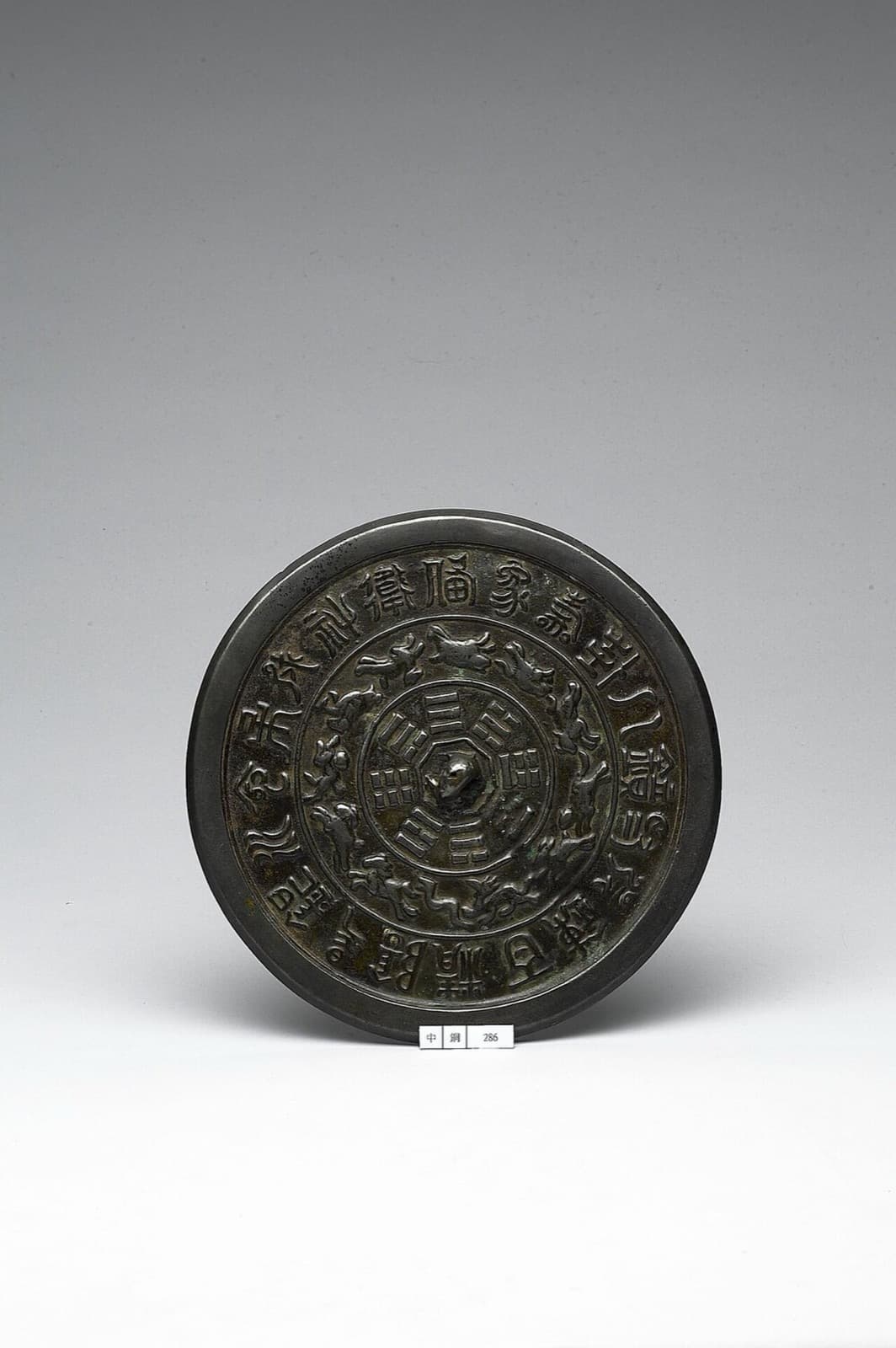
Introduction to the 24 Mountain Directions and the Position of Ty Mountain
In Eastern feng shui, the 24 mountain directions form the foundation for determining the orientation of houses, graves, and kitchens. These 24 mountains are evenly spaced over 360 degrees, each covering 15 degrees. They derive from 12 Earthly Branches, 8 Heavenly Stems, and 4 Trigrams (Qian, Kun, Gen, Xun). Ty Mountain sits due North, belongs to the Water element, and corresponds to the Kan trigram. It is among the most important mountains because it represents the direction of water, winter, and beginnings.
Ty is located at 0 degrees (or 360 degrees) on the compass, i.e., true North. In the 24-mountain system, Ty lies between Quy (Northeast) and Nham (Northwest). When people say "Ty mountain" or "Ty direction," they usually mean a house or grave that sits facing Ty (i.e., looking due North) or has Ty as its mountain (behind). In practice, the mountain is the back, and the direction is the front.
Five Elements, Trigram, and Related Factors for Ty Mountain
Five Elements: Ty belongs to Water. Water symbolizes flexibility, wisdom, communication, and flow. Positively, Water brings intelligence, adaptability, and wealth (as money is linked to Water in feng shui). Negatively, excessive Water can cause instability, emotional turmoil, or loss of assets if uncontrolled.
I Ching Trigram: Ty corresponds to the Kan trigram (☵) in the Bagua. Kan represents water, the moon, danger, but also wisdom. In the Later Heaven Bagua, Kan is in the North, associated with the number 1. Thus, Ty is often linked to the number 1 in Xuan Kong Feng Shui, symbolizing beginnings and potential.
Yin-Yang: Among the 24 mountains, Ty is a Yang mountain (Yang Water). This means it is more active and assertive than passive, unlike the neighboring Quy mountain (Yin Water).
Three Harmonies Group: Ty belongs to the Water group, which includes Than (Shen), Ty (Zi), and Thin (Chen). In San He Feng Shui, Ty is one of the three mountains of the Water group, closely related to Than (Southwest) and Thin (Southeast). If the dragon enters from Than or Thin and combines with Ty, it can create a very favorable Three Harmonies pattern.
Determining the Ty Mountain on the Compass
To accurately identify Ty, use a feng shui compass (luo pan) with the 24-mountain ring. Steps:
- Stand at the center of the house or in front of the main door, keeping the compass level.
- Rotate the compass so the magnetic needle points to 0 degrees (or 180 degrees if measuring the opposite direction).
- Read the position on the 24-mountain ring: If the reading falls between 352.5 and 7.5 degrees, it is Ty. Each mountain spans 15 degrees, with Ty centered at 0 degrees.
- Note the difference between mountain and direction: If a house faces due North, its direction is Ty, and its mountain is Ngo (South behind it). If a house sits at Ty, its back is North, and its direction is Ngo. In feng shui, "Ty mountain Ngo direction" means the house sits North and faces South. Conversely, "Ngo mountain Ty direction" means it sits South and faces North. Be consistent in terminology.
Meaning of Ty Mountain in Different Feng Shui Schools
Ba Zhai (Eight Mansions): In Ba Zhai, Ty belongs to the Kan trigram, which is an East group house. A house sitting or facing Ty is an East group house, compatible with Kan, Ly, Chan, and Ton directions. Thus, people with East group ming (e.g., Kan, Ly, Chan, Ton) will benefit from a Ty-facing house. In contrast, West group people (Qian, Kun, Gen, Doai) should avoid Ty as it is incompatible.
Xuan Kong (Flying Stars): In Xuan Kong, Ty belongs to the Kan palace, corresponding to the One White star (Tham Lang). One White is favorable for reputation, wisdom, and exams, especially for intellectual work. When the current or future period (van) brings auspicious energy to Ty, or when Ty receives the life force of One White, the homeowner may enjoy luck in studies and career. However, it must be combined with the direction and other stars for a specific judgment.
San He (Three Harmonies): In San He, Ty belongs to the Water group, often used to analyze the dragon vein and water outlet. If the dragon comes from Ty and the water outlet (where water flows away) is in Water-group mountains like Thin or Than, it creates a Three Harmonies pattern, considered very auspicious. Conversely, if the water outlet falls in Wood, Fire, or Metal group mountains, it may cause conflicts.
Luan Tou (Forms): Geographically, Ty is in the North, associated with winter and cold qi. Northern land may be high or low depending on the terrain. In Luan Tou, if there is a high mountain in the North, the rear support is solid, which is good. If there is a large body of water or a river in the North, it can enhance the Water nature of Ty.
Specific Cases: Sitting Ty Facing Ngo and Sitting Ngo Facing Ty
Sitting Ty Facing Ngo: This house sits North and faces South. The Ngo direction belongs to Fire and the Ly trigram. Ty (Water) and Ngo (Fire) are in a controlling relationship (Water controls Fire), but in feng shui, mountain and direction must be harmonized, not merely by elements. In practice, sitting Ty facing Ngo is a North-South axis, very common in Vietnam, considered favorable if it matches the owner's ming because it receives warm qi from the South. However, avoid degree errors such as over-kiem into Quy or Nham mountains.
Sitting Ngo Facing Ty: This house sits South and faces North. The Ty direction belongs to Water; if there is a lake, river, or winding road in front, it can enhance Water's meaning. But since the North is cold and less sunny, additional light is needed. In Xuan Kong, if the Ty direction receives prosperous qi, the owner may have wealth luck, but if it encounters harmful qi, it may cause losses.
Kiem Direction: Ty can kiem (lean) toward Quy (right) or Nham (left) within its 15-degree span. Kiem must follow the "kiem phan kim" rules to avoid Da Khong Vong or Tieu Khong Vong. For example, if the compass reads 2 degrees, it is Ty kiem Quy 2 degrees; check if it falls in a favorable phan kim line.
Practical Interpretation of Ty Mountain
To interpret Ty accurately, follow these steps:
- Determine the sitting/direction: Measure the exact degrees with a compass to know if the house sits at Ty or faces Ty.
- Check the owner's ming: Determine the homeowner's trigram (by birth year) to see if they belong to the East or West group. If East group, Ty direction is good; if West group, reconsider.
- Analyze Xuan Kong: Cast the period chart to see which stars fly to the mountain and direction. One White at Ty is good, but if Five Yellow (disease) or Two Black (illness) arrive, it is bad.
- Assess Luan Tou: Observe the surrounding terrain, especially to the North and South. If the North has a mountain or tall buildings, it provides solid support. If the South has open space or water, it is favorable.
- Coordinate with the water outlet: In San He, check if the water outlet falls in the Water group. If it is in Thin or Than, it is very good for Ty.
Good and Bad Combinations with Ty Mountain
Good:
- Ty combined with One White star (Xuan Kong) brings luck in wisdom and exams.
- The Water Three Harmonies group (Than, Ty, Thin) if all three, or at least two, are present, creates a solid structure.
- Facing Ty with water (river, lake, pond) in front is good, provided the water is clean and gently flowing, not polluted.
- Sitting Ty facing Ngo with a wide bright hall (minh duong) to the South enhances positive effects.
Bad:
- If Ty is in conflict with Earth-element mountains (e.g., Mui, Suu) in some cases, because Earth controls Water.
- If the Ty direction faces a straight road, utility pole, or sharp object, it creates harmful qi.
- If the North has polluted or rushing water, it may cause asset loss.
- If sitting Ty facing Ngo but the South is blocked by a mountain too close, creating a closed bright hall, it is not good.
Comparison of Views Among Schools
There are differences among schools when interpreting Ty. Ba Zhai focuses on the owner's ming and East/West group, Xuan Kong emphasizes time periods and flying stars, while San He prioritizes the dragon vein and water outlet. Some modern practitioners combine all three for a comprehensive conclusion. It is important not to absolutize any single school but to consider all factors holistically.
Conclusion
Ty is one of the most important mountains in the 24-mountain system, carrying multiple layers of meaning from the five elements, I Ching trigram, to various feng shui schools. When interpreting Ty, one must integrate many methods, from precise degree measurement, checking the owner's ming, analyzing flying stars, to observing terrain and water outlets. There is no single formula, and accuracy depends on the practitioner's experience. Readers should treat feng shui as an art of observation, combined with environmental science, to make reasonable adjustments to their living space.
Quick-Reference Table: the Tý mountain
| Aspect | Content |
|---|---|
| Position among the 24 mountains | 1 |
| Type | Địa Chi |
| Direction | North |
| Governing trigram | Khảm |
| Compass range | 352.5° tới 7.5° |
| Dragon cycle | Thiên |
*Số liệu trong bảng khớp với kết quả các công cụ tra cứu trên Nhật Nguyệt.*