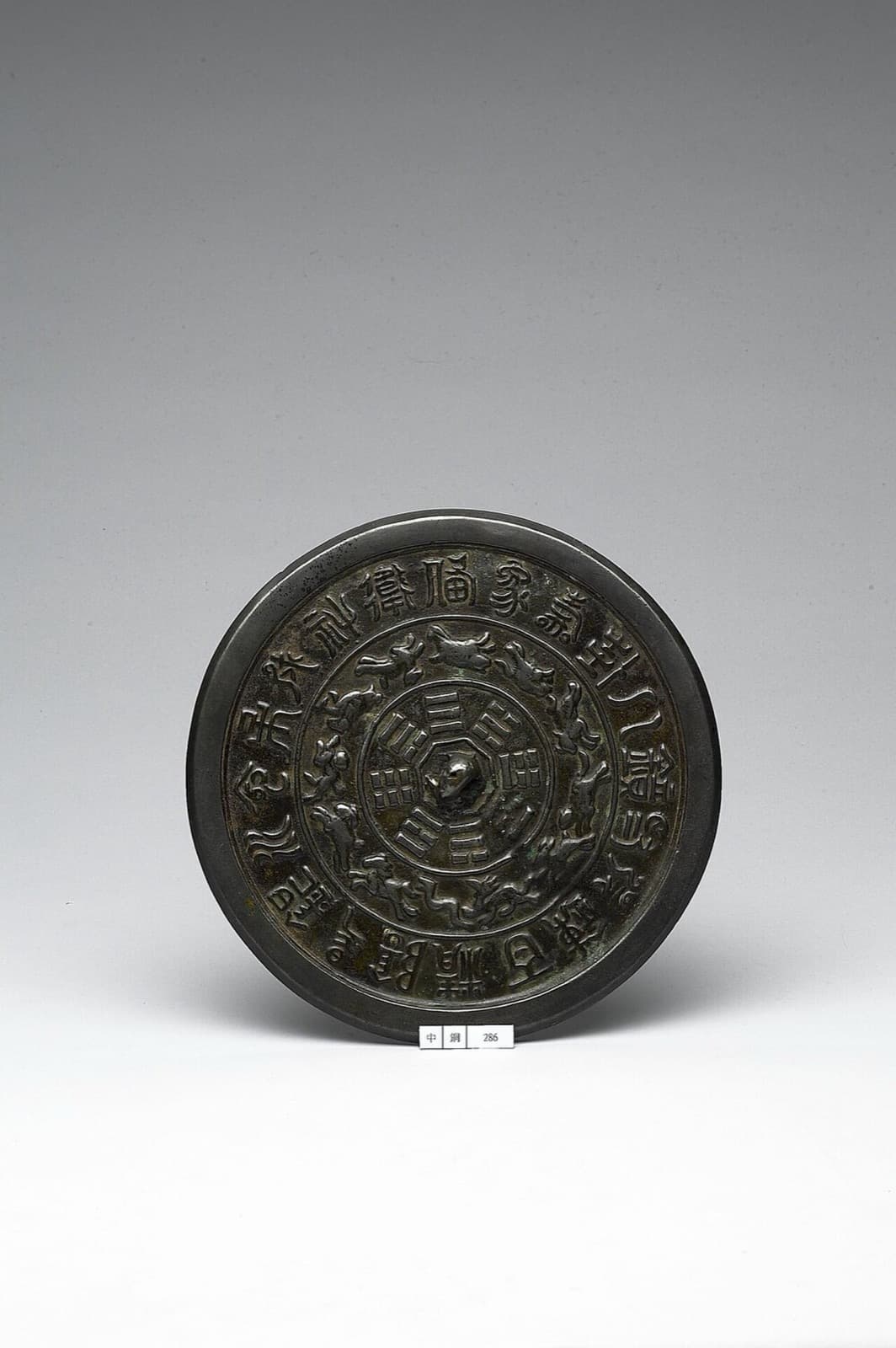
Overview of the 24 Mountain Directions System
The 24 mountain directions (Twenty-Four Mountains) is a core tool of Eastern feng shui, especially in the Compass and Xuan Kong schools. Instead of dividing space into only 8 main directions of the Eight Trigrams, the ancients refined it by dividing each of the 8 palaces (each 45 degrees) into 3 smaller mountains, each exactly 15 degrees wide. This creates 24 mountains in total, each with its own name, element, trigram, and distinct characteristics.
Among them, Gen Mountain (艮) is in the Northeast palace, one of the 4 mountains belonging to the Gen trigram. To understand Gen Mountain, one must first grasp the context: the 24 mountains are formed by combining 12 Earthly Branches (Zi, Chou, Yin, Mao, Chen, Si, Wu, Wei, Shen, You, Xu, Hai), 10 Heavenly Stems (Jia, Yi, Bing, Ding, Wu, Ji, Geng, Xin, Ren, Gui), and 4 trigrams from the Eight Trigrams (Qian, Kun, Gen, Xun). The remaining 4 trigrams (Li, Kan, Zhen, Dui) are replaced by corresponding Earthly Branches at the center of each palace.
Position and Basic Characteristics of Gen Mountain
Position on the Compass
Gen Mountain occupies the entire Northeast palace, i.e., the 45-degree angle between North (0 degrees) and East (90 degrees). Specifically, Gen Mountain spans from 30 to 45 degrees on the traditional feng shui compass. In the 24 mountains system, the Northeast palace is divided into 3 small mountains: Chou (22.5-37.5 degrees), Gen (37.5-52.5 degrees), and Yin (52.5-67.5 degrees). Thus, Gen Mountain lies at the center of the Northeast palace, serving as the core and carrying the most characteristic energy of this direction.
Five Elements and Trigram Energy
Gen Mountain belongs to the Earth element, but not pure Earth like Wei or Xu Mountain. It is Yang Earth, embodying the nature of mountains, hills, solidity, and stability. In the Later Heaven Eight Trigrams, the Gen trigram is placed in the Northeast, symbolizing the end of a cycle and simultaneously the beginning of a new one. The I Ching describes the Gen trigram as "Mountain," meaning stillness, stopping at the right time, and maintaining one's position.
The Gen trigram in the I Ching has both upper and lower trigrams as Gen (Mountain), forming a doubled trigram named "Gen Wei Shan." Its core meaning is purposeful stillness and rest. It is not negative stagnation, but a pause to observe and consolidate inner strength before moving forward. This explains why Gen Mountain is often associated with stability, durability, and thorough preparation.
Relationship with Other Elements
In Yin-Yang theory, Gen Mountain is Yang Earth. In the Five Elements generating and controlling cycles, Earth generates Metal, so Gen Mountain has a generating relationship with Metal mountains in the West (Geng, You, Xin). Earth controls Water, so Gen Mountain has a controlling relationship with Water mountains in the North (Ren, Zi, Gui). Additionally, Fire generates Earth, so Fire mountains in the South (Bing, Wu, Ding) are considered supportive, adding energy to Gen Mountain.
Symbolic and Philosophical Meaning of Gen Mountain
Symbol of Mountains and Stability
Gen Mountain carries the symbol of a mountain. Mountains represent solidity, resilience, and immovability. In feng shui, a house with its direction or sitting at Gen Mountain is likened to leaning against a mountain, creating a sense of safety and confidence. The ancients believed that a house sitting at Gen Mountain is like being supported by a large mountain mass, helping the owner achieve peace and resist external disturbances.
Stillness and New Beginnings
As mentioned, the Gen trigram symbolizes stillness. In the cycle of the Later Heaven Eight Trigrams, after passing through the development stages of Zhen (East), Xun (Southeast), Li (South), Kun (Southwest), Dui (West), Qian (Northwest), Kan (North), reaching Gen (Northeast) marks the end of a cycle. However, this ending is not a full stop but preparation for a new cycle, starting again from Zhen. Therefore, Gen Mountain carries the energy of transition, of closing one phase to open another.
Connection to Human Life
In traditional medicine and Eastern philosophy, the Gen trigram relates to the back, spine, and joints. Spiritually, Gen Mountain represents calmness, self-control, and knowing when to stop before temptations or conflicts. People living in a house with direction or sitting at Gen Mountain are believed to cultivate patience, composure, and good observational skills.
Practical Interpretation of Gen Mountain Direction
Determining House Direction and Sitting Mountain
In feng shui, each house has two important factors: "sitting" (the back, opposite the facing direction) and "direction" (the front, where qi is received). When saying "Gen mountain direction," one must clarify whether it refers to sitting at Gen or facing Gen. Usually, when a house faces Gen, its front faces Northeast (exactly 45 degrees). Conversely, if the house sits at Gen, its back faces Northeast, and the front faces Southwest (Kun Mountain).
To determine accurately, a specialized feng shui compass (luo pan) is used. Measurements must be taken carefully at multiple positions inside the house, avoiding interference from electronic devices or large metal objects. An error of even a few degrees can shift the house to another mountain within the same palace, leading to significant differences in interpretation.
Gen Mountain in Xuan Kong Flying Stars
In Xuan Kong Flying Stars, each mountain is associated with a star (period star and mountain star). Gen Mountain is in the Northeast palace, where the Eight White star (8) resides during Period 8 (2004-2023). The Eight White is a current-period star, of Earth element, governing wealth, luck, and prosperity. Therefore, in Period 8, houses sitting or facing Gen Mountain are considered quite favorable, potentially attracting financial and career opportunities.
However, entering Period 9 (2024-2043), the Nine Purple star (9) of Fire element becomes current and enters the central palace. At this time, the Northeast palace no longer holds a prosperous star. The Eight White becomes a retiring star, losing strength. Interpreting Gen Mountain in Period 9 depends on complex interactions among flying stars by year and month. The Fire element of Nine Purple can generate Earth of Gen Mountain, creating a potential generating relationship, but specific positions of stars within the house must be considered.
Gen Mountain in Ba Zhai Feng Shui
In the Ba Zhai school, houses are divided into East Group and West Group. Gen Mountain belongs to the Gen trigram, in the West Group (along with Qian, Kun, Dui). Therefore, people with West Group destiny (Qian, Kun, Gen, Dui palaces by birth year) are considered compatible with houses facing or sitting at Gen. Conversely, those with East Group destiny (Zhen, Xun, Li, Kan) are advised to be cautious, as they may face obstacles in relationships and health.
Specifically, according to Ba Zhai, a house sitting at Gen faces Kun (Southwest). Favorable directions for the West Group include:
- Kun direction (Southwest): belongs to Sheng Qi star, governing wealth and abundant health.
- Dui direction (West): belongs to Tian Yi star, governing health and helpful people.
- Qian direction (Northwest): belongs to Yan Nian star, governing relationships and harmony.
- Gen direction (Northeast): belongs to Fu Wei star, governing peace and strengthening inner power.
Unfavorable directions to avoid include North (Jue Ming), Southeast (Wu Gui), East (Liu Sha), and South (Huo Hai).
Application in Placing Ancestral Altar and Bedroom
Beyond determining the main house direction, Gen Mountain is also applied in interior arrangement. The ancestral altar should be placed in a position sitting at Gen or facing a favorable direction according to the owner's destiny. Placing the altar in a Gen-sitting area creates solemnity and stability, fitting the nature of deities and ancestors. However, avoid placing the altar in noisy places, lacking light, or facing toilets or kitchens.
If the main bedroom is in the Gen area, it can bring a sense of safety and deep sleep. But if the bedroom is in an unfavorable direction of the Gen palace (e.g., North or South per Ba Zhai), it may cause restless dreams and anxiety. In such cases, remedies include changing bed position, using feng shui items like gemstones or plants with suitable elements, or adjusting curtains and colors to balance energy.
In-Depth Analysis of Interactive Factors
Interaction with Surrounding Environment
The meaning of Gen Mountain is not only in the house's direction but also heavily depends on surrounding terrain and landscape. If behind the house (sitting at Gen) there are high mountains, hills, or sturdy tall buildings, it is considered very good, creating a solid "backing mountain" posture. Conversely, if behind the house there is a deep abyss, ponds, a straight road, or structures being demolished, even a good Gen sitting cannot fully manifest its benefits.
In front of the house (facing Gen), if there is water (river, lake, pond) at a reasonable distance, neither too close nor too far, it is called "water gathering qi," bringing wealth. But if there is rushing water, a straight road pointing at the house, or sharp objects aiming at it, it is taboo. The ancients said, "Mountains govern people, water governs wealth," meaning the mountain (sitting) affects health and offspring, while water (direction) affects finances. Therefore, interpreting Gen Mountain requires combining both factors.
Interaction with Annual and Monthly Periods
Feng shui is not a static system; it changes over time. Gen Mountain in each year and month will interact differently with flying stars entering the central palace. For example, in a year when the Five Yellow star (5) flies to the Northeast palace, this area is considered to encounter a malevolent star, potentially causing illness or disasters. At such times, even with a good Gen sitting, the owner should be cautious in important activities like groundbreaking, home repairs, or signing major contracts.
Conversely, in years when the One White (1) or Six White (6) star arrives, it is an opportunity for promotion and meeting helpful people. Grasping these time cycles requires deep knowledge of Xuan Kong and traditional calendrical systems.
Comparison with Other Mountains in the Same Palace
In the Northeast palace, Gen Mountain lies between Chou and Yin. Each has distinct characteristics:
- Chou Mountain (22.5-37.5 degrees): belongs to Earth element, but is Yin Earth. Chou is one of the 12 Earthly Branches, in the triad Shen-Zi-Chen. Chou is often associated with diligence and hard work, but can bring slowness or stagnation if not activated properly.
- Gen Mountain (37.5-52.5 degrees): belongs to Yang Earth, carrying mountain energy, stability, and firmness. It is the central mountain of the palace, with the strongest influence.
- Yin Mountain (52.5-67.5 degrees): belongs to Wood element, one of the 12 Earthly Branches, in the triad Yin-Wu-Xu. Yin symbolizes beginnings, growth, and vitality, with strong and enthusiastic energy.
Whether a house falls exactly on Gen or shifts to Chou or Yin creates significant differences in interpretation. For example, a house sitting at Yin tends toward development and dynamism but may lack stability; while a house sitting at Gen prioritizes safety and long-term sustainability.
Comparative Views and Notes on Interpretation
Differences Among Schools
Not all feng shui schools evaluate Gen Mountain in the same way. While Ba Zhai and Xuan Kong have relatively clear rules, other schools like Luan Tou (terrain) or Yang Zhai San Yao emphasize more practical factors. A house sitting at Gen but with a road pointing directly at the front, no matter how favorable Li Qi schools assess it, will face safety and psychological issues for residents.
Conversely, a house sitting at Gen with a park, clean pond, and open air in front will be highly rated by both Luan Tou and Li Qi schools. Therefore, modern feng shui researchers often recommend combining multiple methods, not absolutizing any single school.
Relativity and Humility in Interpretation
Feng shui is an ancient knowledge system, deeply philosophical and cultural, not empirical science in the modern sense. Interpreting Gen Mountain direction specifically and feng shui generally should be approached with an open mind, viewing it as an art of observing and adjusting living environments, not as absolute prophecy of destiny. A house, no matter how favorable its Gen sitting, cannot guarantee success if the owner lacks a healthy lifestyle and effort in work.
Practical Notes for Application
- Measure the house direction multiple times at different times of day to ensure accuracy.
- Consider the overall layout of the house, not just the direction, but also positions of functional rooms, main door, windows, and stairs.
- The combination of the owner's age, house direction, and construction time (period) is crucial.
- If the owner is not of the West Group destiny but the house sits at Gen, remedies can still be applied by using colors, feng shui items, or adjusting the main door, as long as adjustments do not affect the structure and aesthetics.
Conclusion
Gen Mountain in the 24 mountain directions is a rich topic requiring deep understanding of various knowledge systems: from the I Ching, Eight Trigrams, Five Elements, to practical schools like Ba Zhai and Xuan Kong. Mastering the meaning and interpretation of Gen Mountain not only helps choose suitable house directions, altar placement, and bedrooms, but also opens a profound view of Eastern life philosophy: knowing when to stop, maintaining inner stability, and preparing best for new beginnings.
However, it must be emphasized that feng shui is only one factor in life, not replacing human effort, wisdom, and compassion. True peace and prosperity come from living in harmony with nature, community, and oneself.