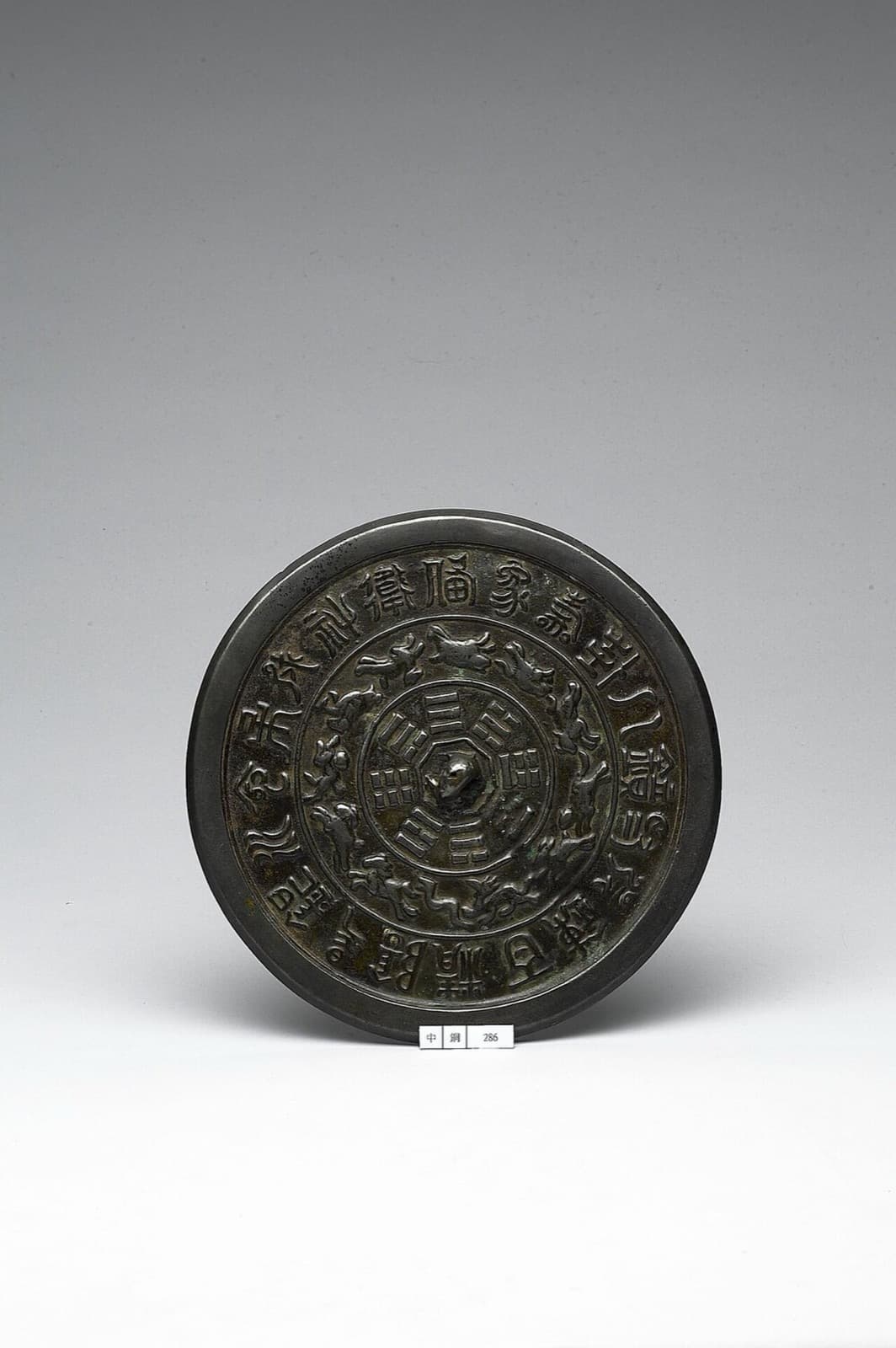
What is the Tan Mountain Direction?
In the feng shui system of 24 mountain directions (also called 24 mountains or 24 positions), each direction is divided into 3 mountains, each covering 15 degrees of the 360-degree circle. The entire compass circle is divided into 24 sectors, corresponding to 12 earthly branches, 10 heavenly stems (excluding Wu and Ji), and 4 trigrams of the Bagua (Qian, Kun, Gen, Xun).
Tan Mountain (辛) is one of the three mountains of the West (due West), alongside Geng Mountain (庚) and You Mountain (酉). Specifically, the western sector is divided as follows:
- Geng Mountain: from 247.5 to 262.5 degrees (west-southwest, slightly toward southwest)
- You Mountain: from 262.5 to 277.5 degrees (due west)
- Tan Mountain: from 277.5 to 292.5 degrees (west-northwest, slightly toward northwest)
Thus, Tan Mountain lies at the transition between West and Northwest, belongs to the You palace (as You is the earthly branch of West), and has a close relationship with the Dui trigram in the Later Heaven Bagua.
Five Element and Symbolic Characteristics
Five Element: Metal
Tan Mountain belongs to the Metal element. In the five elements, Metal represents metal, hardness, sharpness, decisiveness, and purity. In terms of weather, Metal corresponds to autumn, with cool air and the beginning of contraction. In colors, Metal is associated with white, silver-gray, and gold. In direction, Metal corresponds to the West.
In nature, Metal is the product of refining raw ore, so it symbolizes essence, filtering, and removing impurities to achieve purity. The ancients compared Metal-natured people to a sharp sword, capable of cutting through complexities, but also prone to causing harm if misused.
Position and Corresponding Trigram
Tan Mountain is in the You palace (one of the 12 earthly branches), which corresponds to the Dui trigram (兑) in the Later Heaven Bagua. The Dui trigram has the characteristic of "joy" (cheerfulness, harmony), symbolizing the mouth, communication, and also represents the young daughter, wisdom, and cleverness. Therefore, Tan Mountain is not purely hard Metal but also carries the energy of communication, persuasion, and expression.
In the I Ching, the Dui trigram is the only one with two yang lines below and one yin line above, symbolizing openness, joy, and attraction. Thus, when interpreting Tan Mountain, emphasis is often placed on social communication, business, public relations, and the ability to influence.
Meaning of Tan Mountain in Feng Shui
1. Wealth and Career
Due to its Metal nature, Tan Mountain is often associated with money, assets, and industries related to metal, machinery, jewelry, finance, and banking. In Form School feng shui (examining terrain and mountain-water features), if there is water (river, lake, pond) or winding roads in the Tan Mountain direction, it is considered to bring good wealth luck, as Metal generates Water, and Water symbolizes money.
However, not all water is beneficial. If the water is too strong, chaotic, or in a bad position (such as water rushing straight into the house, or stagnant dirty water), it can cause financial losses. Therefore, interpreting Tan Mountain must consider the entire layout of the house.
2. Fame and Status
Tan Mountain is in the Dui palace, and the Dui trigram also symbolizes reputation and fame (since Dui is the "mouth," representing publicity and promotion). Thus, a house with a good Tan Mountain (receiving favorable mountain and facing stars) is often considered beneficial for those in media, journalism, education, diplomacy, or those needing fame and social credibility.
3. Wisdom and Education
Metal also represents sharp intellect, analytical ability, and logic. In feng shui, a good Tan Mountain can support studies, exams, and research. Especially if there is a person born in the Year of the Rooster or with a Metal element, activating Tan Mountain can bring them luck.
How to Interpret Tan Mountain in Different Feng Shui Schools
1. Eight Mansions (Ba Zhai Ming Jing)
In Eight Mansions feng shui, the 24 mountains are divided into 8 palaces (each with 3 mountains), and each palace belongs to a trigram. Tan Mountain belongs to the Dui palace. Therefore, when determining house direction, if the house sits on Tan Mountain (backing onto Tan) or faces Tan (looking toward Tan), that palace is Dui.
The Dui palace in Eight Mansions has the following auspicious and inauspicious positions:
- Fu Wei: If the door or stove is in the Fu Wei position of the Dui palace (i.e., Qian palace), it is good for health and spirit.
- Tian Yi: If in the Kun palace, good for health.
- Yan Nian: If in the Gen palace, good for relationships and marriage.
- Sheng Qi: If in the Kan palace, good for wealth and career.
- Unfavorable positions like Huo Hai (Xun palace), Liu Sha (Zhen palace), Wu Gui (Li palace), and Jue Ming (Dui palace) should be avoided.
However, determining auspiciousness also depends on the owner's life trigram (East or West group). Those in the West group (Qian, Kun, Gen, Dui) are compatible with west-facing houses, including the Tan direction.
2. Xuan Kong (Flying Stars)
In Xuan Kong Flying Stars, the 24 mountains are used to determine the sitting and facing of a house, from which the star chart is created for each period (20 years). Tan Mountain is one of the 24 mountains, and when setting up the chart, it is used to locate the Mountain Star and Facing Star.
For example, in Period 8 (2004-2023), if a house sits on Tan and faces Yi (i.e., sitting Tan Mountain, facing Yi Mountain), it is considered favorable because both Tan and Yi belong to the West group, and it can receive the beneficial energy of Period 8. However, the degree of auspiciousness depends on the combination of flying stars in each palace.
3. Form School (Landscape)
Form School examines the terrain and surrounding environment. For Tan Mountain, one observes the west-northwest side of the house:
- If there are high mountains, elevated land, or solid structures (like buildings or large trees) in the Tan direction, it is considered to have "mountain" support, benefiting the residents, especially males or the family head.
- If there are rivers, lakes, roads, or open spaces in the Tan direction, it is considered to have "water," which can bring wealth but also cause losses if the water form is bad.
The ancients said: "Mountain governs people, water governs wealth." Thus, if there are majestic mountains in the Tan direction, the family may have many healthy descendants; if there is good water, they may become wealthy and prosperous.
Specific Cases in Interpreting Tan Mountain
1. House Sitting Tan, Facing Yi
This is a common house direction, of the type "Sitting West, Facing East." The house has Tan Mountain at the back (sitting) and Yi direction at the front. According to Eight Mansions, this house sits Dui and faces Zhen, belonging to the West group, suitable for West group individuals. In Xuan Kong, if the current period (Period 9, 2024-2043) has favorable flying stars to this sitting and facing, the house can maximize its benefits.
2. House Sitting Tan, Facing Tan (Double Stars to the Facing)
When both sitting and facing are Tan, meaning the house sits west-northwest and looks in the same direction, this is called "double stars to the facing" if the flying stars are favorable. However, careful analysis is needed because if both mountain and facing stars are unfavorable, it can be very dangerous.
3. Tan Mountain Combined with Hai and Ren Mountains
In feng shui, the relationship between mountains is often considered, especially for doors, stoves, and bedrooms. Tan Mountain (Metal) combined with Hai Mountain (Water) creates the pattern of Metal generating Water, beneficial for wealth. Tan with Ren Mountain (Water) is similar. Conversely, Tan with Mao Mountain (Wood) creates Metal controlling Wood, which may harm health or children if not mitigated.
Practical Considerations When Applying Tan Mountain
1. Do Not Overly Rely on a Single Mountain
Feng shui is a complex system; one cannot conclude the fortune of a house based solely on one mountain direction. It is necessary to combine many factors: house direction, owner's life trigram, construction year, surrounding environment, interior layout, and time (periodic influences).
2. Check the Accuracy of the Direction
When measuring a house direction, use a professional compass and take multiple measurements to ensure accuracy. Small errors (a few degrees) can change the mountain direction, leading to incorrect interpretations.
3. Tan Mountain and the Owner's Element
According to the five elements theory, people with a Metal element (birth years with Metal stems and branches, such as Ren Shen, Gui You, Geng Chen, Xin Si, Jia Wu, Yi Wei) can be strengthened when living in a house with Tan Mountain or facing Tan. Conversely, those with a Wood element (Wood controls Metal) may face disadvantages if the house direction is too strong in Metal.
4. Combine with Other Methods
Besides feng shui, one can also consult Zi Wei Dou Shu, BaZi, or divination for a more comprehensive view of the owner's fate. Do not absolutize any single school.
Conclusion
Tan Mountain is one of the important 24 mountain directions in feng shui, carrying deep significance in terms of the five elements (Metal), position (west-northwest), and symbolism (wisdom, communication, wealth). Interpreting Tan Mountain must be done in the specific context of each house, each owner, and each period. No mountain direction is absolutely good or bad; all depend on the harmony and balance of the entire layout.
When applying this knowledge in practice, users should seek experienced feng shui experts for accurate advice, avoiding self-interpretation that may lead to unfavorable decisions for themselves and their families. Feng shui is an ancient discipline but should be approached rationally and scientifically, not superstitiously.