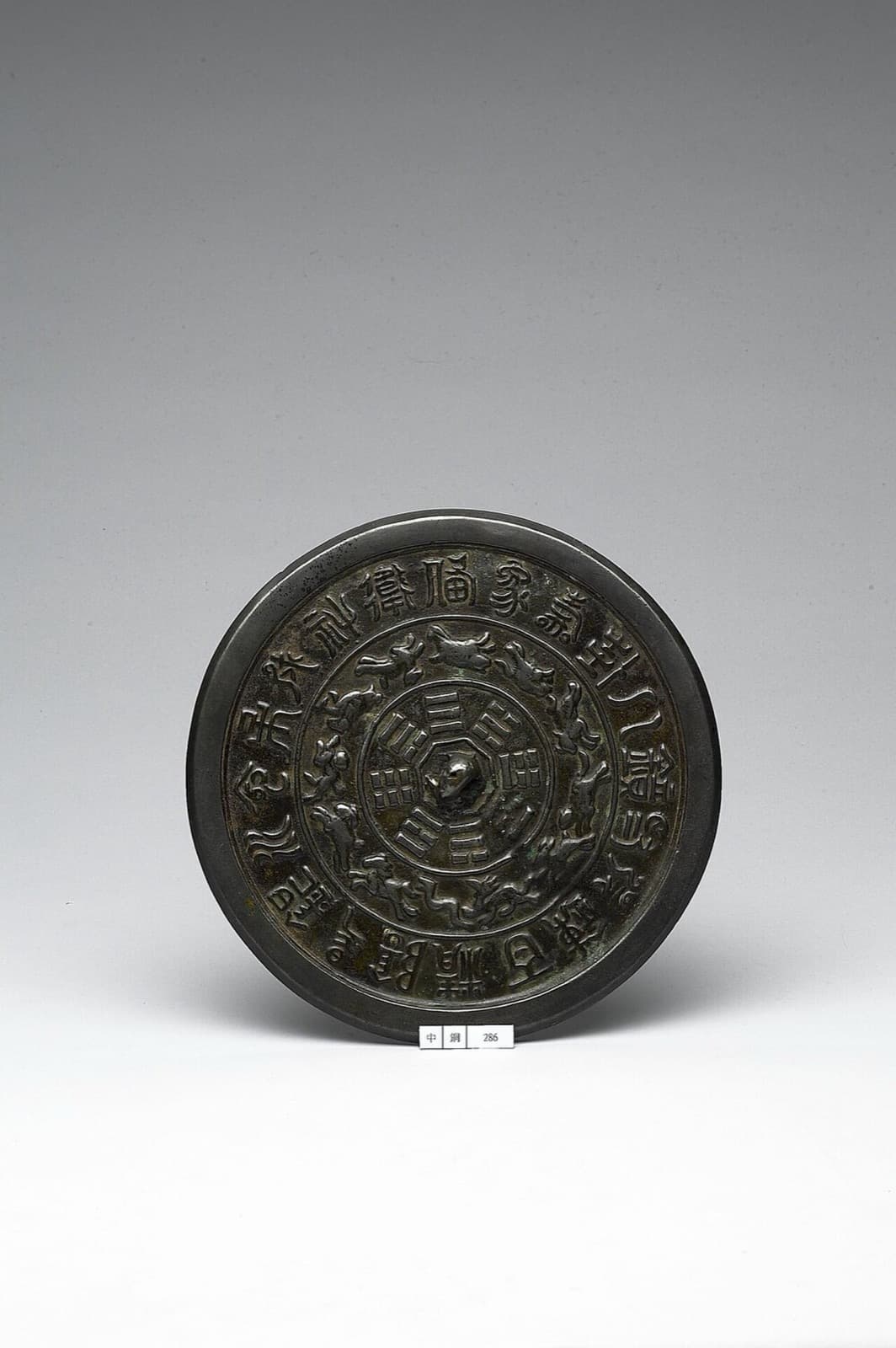
Introduction to the 24 Mountain Directions and the Position of Shen Mountain
In Eastern feng shui, the system of 24 mountain directions is a precise directional measurement tool, widely used in the Luo Jing (feng shui compass) to determine the orientation of houses, graves, desks, or significant architectural structures. This system divides the 360-degree compass into 24 equal parts, each covering 15 degrees, and each part is named after one of the Heavenly Stems, Earthly Branches, or Trigrams in Eastern culture.
Among the 24 mountain directions, 8 are named after the Heavenly Stems (Jia, Yi, Bing, Ding, Geng, Xin, Ren, Gui), 4 are named after Trigrams (Qian, Kun, Gen, Xun), and 12 are named after the Earthly Branches (Zi, Chou, Yin, Mao, Chen, Si, Wu, Wei, Shen, You, Xu, Hai). Shen Mountain is one of the 12 Earthly Branches, being the 9th branch in the 12-animal cycle, representing the Monkey in Eastern culture.
In terms of orientation, Shen Mountain is located in the southwest sector of the compass, belonging to the Kun palace. Specifically, Shen Mountain occupies approximately from 232.5 degrees to 247.5 degrees on the feng shui compass (measured clockwise from North). In terms of cardinal directions, Shen Mountain lies between southwest and west, leaning more toward southwest. This position places Shen Mountain right after Wei Mountain (in the Kun palace) and before Geng Mountain (in the Dui palace), forming a continuous sequence within the 24 mountains.
Five Elements and Trine of Shen Mountain
Shen Mountain belongs to the Water element in the five elements, an important factor determining its interaction with other mountains. In five-element theory, Water represents flexibility, intelligence, communication, and flow. Structures or houses with Shen Mountain or facing Shen are often believed to bring the energy of adaptability, resilience, and clear thinking.
A distinctive feature of Shen Mountain is that it is part of the Shen-Zi-Chen trine. The trine is a key concept in feng shui and Ba Zi, where three Earthly Branches spaced 120 degrees apart are considered to have a strong mutual relationship, forming a complete structure. The Shen-Zi-Chen trine includes:
- Shen (Monkey) at 240 degrees (southwest)
- Zi (Rat) at 0 degrees (due north)
- Chen (Dragon) at 120 degrees (southeast)
When combined, these three mountains form the Water trine, as all three belong to the Water element in the Na Yin system or have a strong connection to Water. In feng shui, the Shen-Zi-Chen trine is often used to identify supportive relationships between directions and to assess the flow of energy in living spaces.
Symbolic Meaning and Characteristics of Shen Mountain
According to folk beliefs and feng shui studies, the Monkey (Shen) carries multiple layers of symbolic meaning. In Eastern culture, the Monkey is regarded as an intelligent, agile, lively animal with high adaptability. These traits are translated into the feng shui meaning of Shen Mountain, creating a direction believed to have the energy of flexibility and wisdom.
Shen Mountain belongs to Water and is located in the Kun palace (southwest), which represents the mother earth, nurturing, and yin softness in the Later Heaven Bagua. The combination of Water (flexibility, intelligence) and the Kun palace (nurturing, tolerance) creates a direction with unique qualities: both the suppleness of water and the solidity of earth. This makes Shen Mountain suitable for spaces requiring a balance between stillness and movement, between thought and action.
In the yin-yang classification, Shen Mountain is a yang branch (branches with odd numbers in the 12-branch order). This yang characteristic combined with Water creates a form of energy described as "yang water," meaning a strong, clear, directional flow, unlike "yin water," which is still and deep. The yang water of Shen Mountain is often associated with career, reputation, and clear progress in life.
Shen Mountain vs. Shen Facing: Differences and Determination
In feng shui, the concepts of "mountain" and "facing" are often confused, but they have entirely different meanings. The mountain (or sitting mountain) is the direction behind a structure, where it leans on, while the facing is the direction in front, where it receives qi. For example, a house with Shen Mountain means the back of the house is at the Shen position (around 240 degrees), and the facing direction will be opposite, i.e., Yin position (around 60 degrees). Conversely, a house with Shen facing means the front of the house faces the Shen position, and the mountain is Yin at the back.
Determining Shen mountain or facing in practice requires high precision. When using a feng shui compass (Luo Jing) or a regular compass, measurements should be taken at the center of the structure, avoiding metal objects or electronic devices that may interfere with the magnetic field. The measured degrees are then compared with the 24-mountain chart. If the reading falls between 232.5 and 247.5 degrees, that direction is identified as Shen Mountain (or facing, depending on which side is measured).
It is important to note that within the 15 degrees of Shen Mountain, it is further divided into three parts, each 5 degrees, called the three divisions. The three divisions of Shen Mountain include: the beginning (near Wei Mountain), the middle (center of Shen), and the end (near Geng Mountain). Each division has different meanings and interpretations in schools such as Xuan Kong or Ba Zhai.
Application of Shen Mountain/Facing in Assessing House Direction
In feng shui practice, Shen mountain/facing is applied in various contexts, from house orientation, grave direction, to interior layout and desk placement. However, the interpretation of Shen mountain/facing cannot be separated from the overall context of the structure, including the period (era), the homeowner's destiny, and surrounding environmental factors.
In the Ba Zhai school (Eight Mansions), Shen Mountain belongs to the Kun palace, one of the eight palaces of the Later Heaven Bagua. The Kun palace is part of the West group, so houses with Shen Mountain (or any West-group mountain) are considered suitable for people of the West group destiny, i.e., those with a gua number in the West group (Qian, Kun, Gen, Dui). People of the West group destiny have specific solar birth years, and accurately determining the gua number is a crucial step before choosing a house with Shen Mountain.
In the Xuan Kong Flying Star school, Shen mountain/facing is interpreted based on the combination of the period's qi (currently period 9, from 2024 to 2043) and the structure's sitting and facing. Each mountain/facing has a unique star combination, resulting in different auspicious or inauspicious meanings. For instance, in period 9, a house sitting Shen and facing Yin, or sitting Yin and facing Shen, will have specific star combinations, and the interpreter must analyze the interactions between stars carefully to make accurate judgments.
Interpreting Shen Mountain/Facing in Specific Cases
A house sitting Shen and facing Yin is often considered to belong to the Water trine of Shen-Zi-Chen. For homeowners with Water or Wood destiny (since Water nourishes Wood), this direction is considered relatively suitable. Conversely, homeowners with Fire destiny may face more challenges, as Water controls Fire, requiring appropriate adjustments or remedies.
A house sitting Yin and facing Shen belongs to the Fire trine of Yin-Wu-Xu, as Yin is associated with Fire in this trine. Although Yin Mountain is Fire, the Shen facing directly faces the Water element of Shen, creating a controlling relationship between the facing (Water) and the mountain (Fire). In feng shui, the conflict between mountain and facing requires careful consideration, as it may create energy imbalance. However, if properly resolved through the placement of appropriate objects or colors, this conflict can be transformed into a driving force for development.
In cases where a house has Shen Mountain but the facing is not Yin (e.g., facing deviates to adjacent mountains), interpretation becomes more complex. Feng shui distinguishes between true sitting/facing (aligned with the center of the mountain) and combined sitting/facing (deviating to a neighboring mountain). Houses sitting Shen combined with Wei or Shen combined with Geng have specific interpretation rules, usually detailed in advanced Xuan Kong texts.
Shen Mountain/Facing in Yin House Feng Shui (Graves)
Shen mountain/facing is not only applied to yang houses (dwellings) but also used in yin house feng shui, i.e., determining grave orientation for the deceased. In yin house practice, choosing the mountain/facing is considered extremely important as it is believed to affect the deceased's rest and the fortune passed to descendants.
A grave sitting Shen and facing Yin is often chosen when the area behind (at Shen Mountain) has high, solid ground, such as hills or mounds providing back support. The front (at Yin facing) should have water (rivers, lakes, ponds) or open space to gather qi. Conversely, a grave sitting Yin and facing Shen requires back support at Yin and a spacious bright hall at the front at Shen.
Schools of yin house feng shui often emphasize the coordination of the dragon vein (flow of earth qi), sand and water (surrounding mountains and water features), and sitting/facing. Shen Mountain, with its Water element, is considered relatively compatible with areas near water or riverine terrain, but it is also necessary to avoid places with rapid currents or direct water facing causing adverse effects.
Combining Shen Mountain with Other Factors in Interpretation
When interpreting the meaning of Shen mountain/facing, feng shui practitioners cannot rely solely on this direction but must consider interactions with many other factors. One key factor is the homeowner's life destiny, determined by lunar birth year and gender. Each person has a unique gua number, which determines whether they belong to the East group or West group, thereby identifying auspicious and inauspicious directions.
Additionally, the combination of Shen Mountain with other mountains within the same structure should be considered. For example, if the main door is at Shen facing but the master bedroom is in another direction, the overall energy of the house is a complex blend of multiple factors, not reducible to a single mountain/facing.
Time also plays a crucial role in interpreting Shen mountain/facing. Xuan Kong feng shui divides time into periods (each 20 years) and years. Depending on the period and year, the auspiciousness of Shen mountain/facing may change. For instance, in years of Fire element (Wu, Si years), Shen Mountain (Water) may be weakened by Fire controlling Water, while in years of Metal element (Shen, You years), Water is benefited as Metal generates Water.
Comparative Views and Considerations for Application
In modern feng shui research, there are differing views on the degree of influence of mountain/facing generally and Shen mountain/facing specifically. Some traditional schools heavily emphasize the role of mountain/facing in determining the homeowner's fate, while more modern schools tend to see mountain/facing as only one of many factors to consider, alongside architectural design, natural light, ventilation, and overall living environment.
Notably, many modern researchers point out that over-relying on mountain/facing while ignoring other scientific factors like air quality, light, humidity, and functional use may lead to unreasonable decisions. Therefore, a balanced approach recommended by many experts is to combine traditional feng shui knowledge with modern design principles, ensuring living spaces are both energetically harmonious and practically functional.
Another important note is that determining Shen mountain/facing should be done by experienced and knowledgeable practitioners, as small measurement errors can lead to entirely different conclusions. The boundaries between Shen Mountain and adjacent mountains (Wei, Geng) are only 15 degrees apart, and an error of even 1-2 degrees can misdirect the interpretation.
Conclusion
Shen mountain/facing in the 24 mountain directions is a direction with multiple layers of meaning, from its specific geographic position (southwest, 232.5 to 247.5 degrees) to its five-element nature (Water), trine (Shen-Zi-Chen), and cultural symbolism (the intelligent, agile Monkey). Understanding Shen mountain/facing helps feng shui researchers and practitioners gain deeper insight into how energy operates in living spaces.
However, it must be emphasized that feng shui is a complex system of knowledge, and Shen mountain/facing is just one small piece of the overall picture. For accurate and useful interpretations, practitioners need to combine multiple methods, consider various factors, and always maintain an objective attitude, not absolutizing any single element. The harmonious combination of traditional wisdom and modern thinking will bring the most practical value to life.
