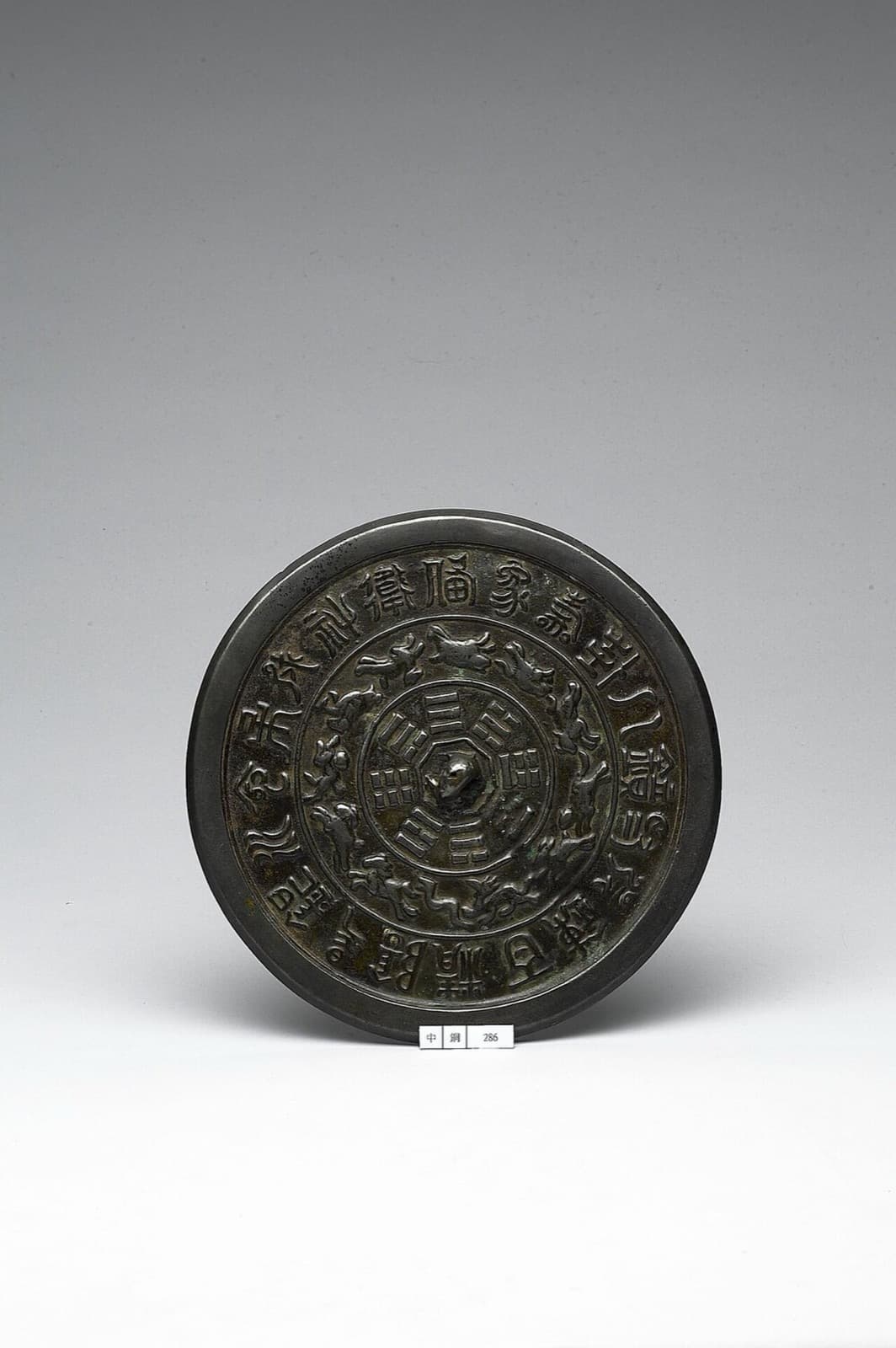
Introduction to the 24 Mountains System and the Position of Xun Mountain
The 24 Mountains system is a foundational tool in Luojing Feng Shui, used to determine directions more precisely than the 8 basic directions (Eight Palaces). The 24 Mountains circle is created by dividing the 360 degrees of the compass into 24 equal parts, each 15 degrees wide. Each mountain has a specific name, combining the Heavenly Stems (Jia, Yi, Bing, Ding, Geng, Xin, Ren, Gui), Earthly Branches (Zi, Chou, Yin, Mao, Chen, Si, Wu, Wei, Shen, You, Xu, Hai), and four Trigrams (Qian, Kun, Gen, Xun).
Xun mountain is located at the center of the Southeast palace, occupying approximately 135 to 150 degrees on the compass. It is bounded by Chen mountain (on the east side of Southeast) and Si mountain (on the south side of Southeast). Thus, when referring to Xun mountain, it usually means the precise direction of Southeast, slightly tilted toward South from the exact center of the Southeast palace. In Feng Shui, the Xun trigram is one of the Eight Trigrams, symbolizing wind, penetration, diffusion, and growth. Therefore, Xun mountain carries the energy of flourishing, wisdom, and communication.
Basic Characteristics of Xun Mountain: Five Elements, Direction, and Symbolic Meaning
Five Element Attribute and Season
Xun mountain belongs to the Wood element, specifically Yang Wood. In the Five Elements, Wood represents growth, upward reaching of trees, and the start of a new cycle. Wood is associated with Spring, when all things awaken from winter dormancy. However, Xun's position in the Southeast is a transitional phase from Spring (East, Wood) to Summer (South, Fire). Thus, Xun carries Wood energy but already contains the warmth of Fire, creating a warm, outgoing, and vibrant quality.
Symbolic Meaning and Associations
In Eastern culture, the Xun trigram is also associated with the eldest daughter, with softness yet firmness. Xun is wind, penetrating every corner; not as forceful as Thunder (Zhen) but with enduring diffusion. In the human body, Xun relates to tendons, bones, limbs, and especially the respiratory system. In color, Xun corresponds to green, the color of life and freshness. In the Hetu numerology, Xun belongs to numbers 3 and 8, with 3 as the birth number and 8 as the completion number of the Wood element.
The Difference Between Mountain and Facing, and the Role of Xun Mountain
Concepts of Mountain and Facing in Feng Shui
In Feng Shui, especially the Flying Star school (Yun Shan Yun Shui), the concepts of Mountain and Facing are opposite ends of an axis. To determine them, one places a compass at the center of the house or land. The direction behind (where there is mountain, support) is called Mountain. The direction in front (where there is water, open space, or where energy is received) is called Facing. For example, if a house faces West, its facing is West, and its mountain is East. Mountain and facing always lie on the same straight line but in opposite directions.
Xun Mountain and Xun Facing
When speaking of Xun mountain, two cases can occur. One is a house with Mountain at Xun, meaning the back of the house is in the Southeast. Two is a house with Facing at Xun, meaning the front (main door, where energy is received) faces Southeast. In practice, people often pay more attention to the facing because it is where vital energy is received. However, the role of the mountain is equally important as it determines the stability and support of the house. A house with good Xun mountain is when the back has high terrain, tall buildings, or lush green trees, symbolizing Wood element being supported by vibrant energy.
How to Interpret Fortune of Xun Mountain/Facing
General Principles of Interpretation
The interpretation of fortune for a mountain/facing cannot be separated from the spatial and temporal context. Feng Shui is a harmonious combination of Heaven (time, luck), Earth (space, terrain), and Human (people, the owner's destiny). Therefore, Xun mountain cannot be absolutely judged as good or bad. A Xun mountain may be very good for one person but unlucky for another, depending on each person's fate house.
Interaction with the Owner's Fate House
According to the Eight Mansions school, each person belongs to one of two groups: East group or West group. The Xun palace belongs to the East group. Thus, people with an East group fate (Zhen, Xun, Li, Kan palaces) will encounter more advantages when living in a house with facing or mountain in the Xun palace. Specifically, people of the Xun palace (typically men born in years ending with numbers 3 or 8 in the fate trigram calculation, or women with corresponding numbers) have their Sheng Qi direction in the North (Kan), Tian Yi in the East (Zhen), Yan Nian in the South (Li), and Fu Wei in the Southeast (Xun). Thus, Xun mountain/facing itself is the Fu Wei direction, meaning stability and strengthening of inner strength.
Interaction with Time Luck (Three Cycles Nine Periods)
In Xuan Kong Feng Shui, a house sitting on Xun mountain or facing Xun changes meaning across periods. Currently, we are in the Lower Yuan, Period 9 (2024-2043), with the Period 9 star (Jiu Zi) of Fire element being prosperous. Xun mountain belongs to Wood; Wood generates Fire. Therefore, in Period 9, when encountering star 9 or Fire element stars at the mountain or facing, Xun mountain can create a Wood-generates-Fire effect, intensifying Fire energy. However, if encountering Metal element stars (6, 7) at the Xun facing, Metal controls Wood, causing obstacles or harm to health or career. Conversely, if encountering Water element stars (1), Water generates Wood, helping Xun mountain to be more vigorous, bringing luck in wealth and reputation.
Specific Application Cases of Xun Mountain/Facing
House Facing Xun (front facing Southeast)
A house facing Xun receives gentle morning sunlight (since Southeast is tilted toward South, not as intense as East). In summer, cool breezes from the sea or Southeast blow in, good for health. This direction is considered to have a mild climate in Feng Shui. In terms of wealth, the Xun facing is believed to bring sustainable financial growth, especially in professions related to communication, media, education, or green product businesses. However, residents in a Xun-facing house should pay attention to respiratory and nervous system health because Xun belongs to Wood; when unbalanced, it can cause liver, gallbladder, or tendon and bone issues.
House Sitting on Xun Mountain (back of house in Southeast)
A house sitting on Xun mountain means the back is in the Southeast palace. This means hills, mountains, or tall buildings behind are in the Southeast. If the mountain behind is firm and lush with greenery, it is considered good support. Ancient wisdom suggests that a house sitting on Xun mountain is good for the eldest daughter or women holding important roles in the family. However, if the Xun mountain behind is deficient, low, or has a road pointing directly at it, it is a taboo, potentially causing loss of wealth and family discord.
Desk or Study Direction
In office Feng Shui, choosing sitting direction is important. Sitting with your back to Xun mountain or facing Xun has different effects. If sitting facing Xun (Southeast), you receive energy of intelligence and creativity. This direction suits writers, designers, researchers, or those needing logical thinking. If sitting with your back to Xun, it provides solid Feng Shui support, enhancing career stability and gaining superiors' trust.
Relationships of Xun Mountain with Other Mountains
Three Harmonies and Six Harmonies Relationships
In the Earthly Branches, Xun is not a branch but a trigram. However, in the 24 Mountains circle, Xun lies between Chen and Si. Chen belongs to the Three Harmonies group with Shen and Zi (Shen-Zi-Chen). Si belongs to the Three Harmonies group with You and Chou (Si-You-Chou). Thus, when combining mountains on the compass, Xun has indirect relationships with these mountains through its neighbors. Additionally, Xun has a symmetrical relationship with Qian (Northwest). In the Former Heaven Bagua, Xun and Qian are opposite across the center, forming a complementary yin-yang pair. When a house has Xun mountain, its facing is Qian and vice versa.
Five Element Generating and Controlling Relationships
Xun mountain belongs to Wood, so it is compatible with Water element mountains (Ren, Zi, Gui) because Water generates Wood. It is also compatible with Fire element mountains (Bing, Wu, Ding) because Wood generates Fire, a generating-out relationship that, though depleting, still brings benefits. Xun mountain conflicts with Metal element mountains (Geng, You, Xin) because Metal controls Wood, and is also incompatible with Earth element mountains (Chou, Gen, Wei, Kun) because Wood controls Earth, causing conflict and fatigue. Understanding these relationships helps Feng Shui practitioners gain a comprehensive view when analyzing a specific chart.
How to Accurately Determine Xun Mountain on Site
Using a Feng Shui Compass
To accurately determine Xun mountain, one uses a Luojing (Feng Shui compass). First, find the center of the house or land. Then, stand at the center, keep the compass level, and rotate so the needle pointing South aligns with the 180-degree mark. Read the degree on the compass at the position you want to determine. If the degree falls between 135 and 150 degrees (measured clockwise from North), that direction belongs to Xun mountain. Note that measurements should avoid interference from metal, electronic devices, or magnetic objects to ensure accuracy.
Distinguishing Xun Mountain from Chen and Si Mountains
Xun mountain lies at the center of the Southeast palace, while Chen is on the east side and Si on the south side of the Southeast palace. The 24 Mountains distribution is as follows: starting from North (0 degrees) is Zi (0-15), then Gui (15-30), Chou (30-45), Gen (45-60), Yin (60-75), Jia (75-90), Mao (90-105), Yi (105-120), Chen (120-135), Xun (135-150), Si (150-165), Bing (165-180), Wu (180-195), Ding (195-210), Wei (210-225), Kun (225-240), Shen (240-255), Geng (255-270), You (270-285), Xin (285-300), Xu (300-315), Qian (315-330), Hai (330-345), Ren (345-360). Therefore, Xun mountain is in the range of 135 to 150 degrees. This is a key point to remember to avoid confusion during measurement and lookup.
Conclusion
Xun mountain in the 24 Mountains system is a rich concept with multiple layers of meaning. Understanding the position, characteristics, and interpretation of Xun mountain not only helps Feng Shui professionals but also benefits homeowners seeking to understand their house. However, it must be emphasized that Feng Shui is a science of living environment, not a tool to absolutely decide destiny. Living in harmony with nature, maintaining health, and a positive spirit remain the most important factors determining one's quality of life.