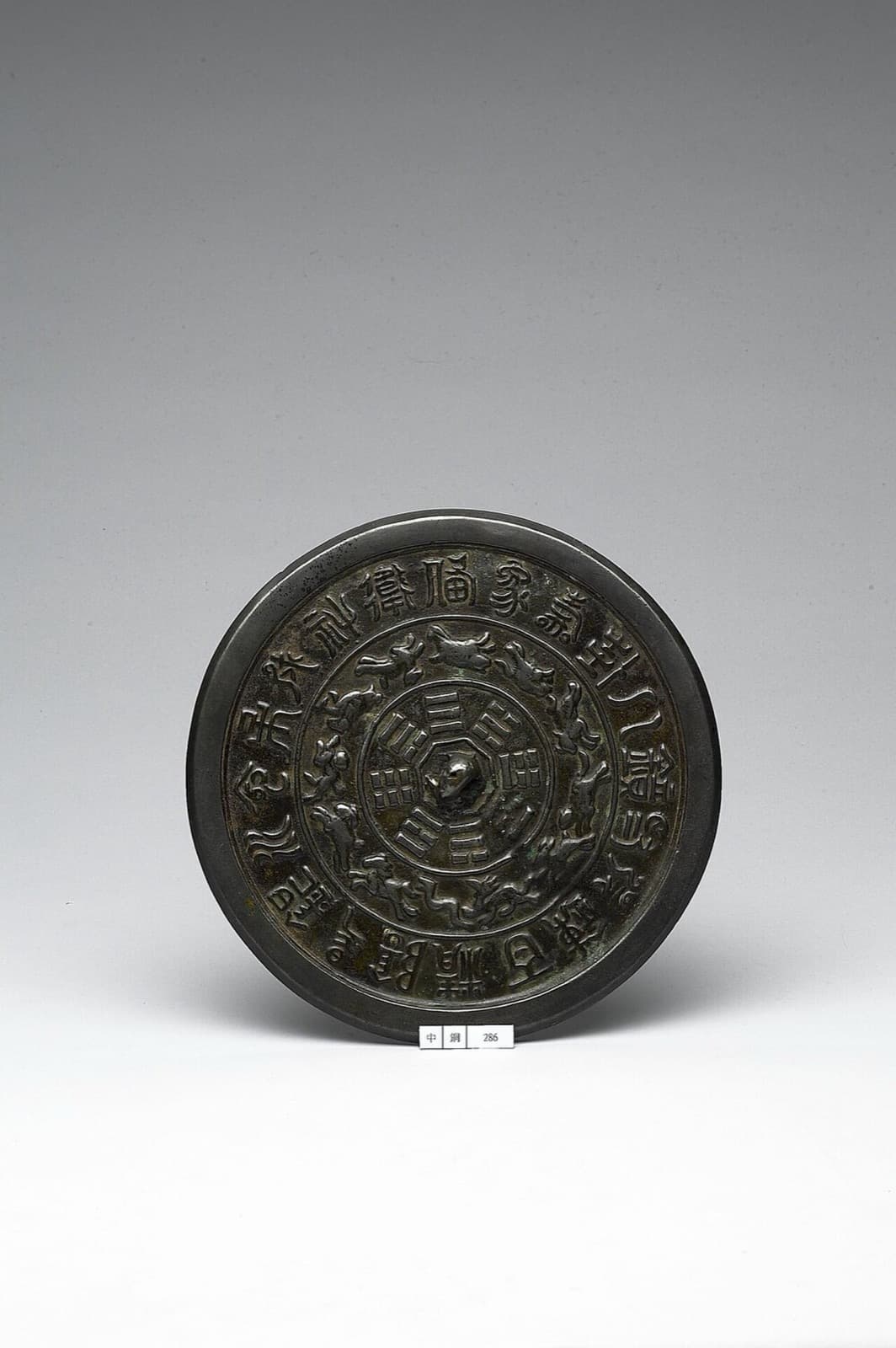
Introduction to the 24 Directions and the Position of the Gui Mountain
In feng shui, particularly in the Xuan Kong school and other compass-based traditions, the system of 24 directions (or mountains) serves as the foundation for determining the orientation of houses, graves, and important structures. This system divides the 360-degree compass into 24 equal segments, each spanning 15 degrees, known as a mountain. Each mountain is named after one of the 12 Earthly Branches, 10 Heavenly Stems (excluding Wu and Ji, which belong to the center), and 4 Trigrams (Qian, Kun, Gen, Xun).
The Gui mountain belongs to the Heavenly Stem group and is part of the Water trinity, together with Zi and Ren, forming a trinity configuration. On the compass, the Gui mountain occupies the range from 15 degrees to 30 degrees (measured clockwise from due North at 0 degrees, or from North to East). Thus, the Gui mountain leans toward the northeast, belongs to the Gen palace in the Bagua, and corresponds to the Gen trigram (Mountain) in the Later Heaven Bagua.
For clarity, the 24 mountains can be divided into three rings: the Earthly Branch ring (12 mountains), the Heavenly Stem ring (8 mountains), and the Four Cardinal ring (4 mountains). The Gui mountain is in the Heavenly Stem ring, but its specific position lies between the Zi mountain (an Earthly Branch) and the Chou mountain (another Earthly Branch). Specifically, the order of mountains from North to East is: Ren (337.5–352.5 degrees), Zi (352.5–7.5 degrees), Gui (7.5–22.5 degrees), Chou (22.5–37.5 degrees), Gen (37.5–52.5 degrees), Yin (52.5–67.5 degrees). Therefore, the Gui mountain is positioned between 7.5 and 22.5 degrees, slightly toward the northeast from due north.
Five Elements and Attributes of the Gui Mountain
Each of the 24 mountains carries a specific element, which influences the interpretation of auspiciousness when combined with other factors such as annual periods, monthly influences, or directions. The Gui mountain belongs to the Water element because it is part of the Water trinity (Shen, Zi, Chen). Specifically, the Zi mountain is Water, and the Gui mountain is also considered Water, though variations may exist in other systems like Na Yin, but in compass feng shui, Gui is typically assigned the Water element.
In terms of yin and yang, the Gui mountain is Yin. This is important when assessing the compatibility between mountain and facing directions, especially in the Xuan Kong school. Yang mountains usually include Earthly Branches with yang elements (like Zi, Yin, Chen, Wu, Shen, Xu) and some yang Heavenly Stems (Jia, Bing, Geng, Ren), while yin mountains are the rest. Gui is a yin Heavenly Stem (Gui is yin Water in the five elements), so it is classified as a yin mountain.
Additionally, the Gui mountain lies in the Gen palace, which in the Later Heaven Bagua has the Earth element. However, one must distinguish between the element of the palace and the element of the mountain. The Gen palace has Earth, but the Gui mountain within it has Water due to its geographical position and trinity assignment. This creates complexity in interpretation, as one must consider both the palace element and the mountain element.
Symbolic and Cultural Significance of the Character Gui
The character Gui in Chinese means "second" or "precious" among the four seasons, but in feng shui culture, it is often associated with nobility and respect. In the Heavenly Stem system, Gui is the 10th stem, belonging to yin Water, representing rainwater, underground water, and silent nourishment. Therefore, the Gui mountain is often seen as a symbol of intelligence, wisdom, and adaptability.
In feng shui, the Gui mountain is considered favorable when it meets auspicious stars or supportive elements. It symbolizes literary achievement, scholarship, and refined communication. Many schools believe that a house or grave sitting on the Gui mountain can bring wisdom, scholarly descendants, and success in fields related to knowledge and the arts.
Interpretation of the Gui Mountain in Various Feng Shui Schools
In the Xuan Kong School
The Xuan Kong school uses the 24-mountain compass to determine the fortunes and auspiciousness of a house through flying stars. When a house sits on the Gui mountain, one must identify the current period (e.g., Period 8 or 9) and cast a Xuan Kong chart. The Gui mountain is a yin mountain, so when flying stars arrive at the mountain, one uses forward or reverse flight depending on the yin/yang nature. Specifically, for yin mountains, the star to the mountain usually flies in reverse, while the star to the facing direction flies forward (or vice versa depending on convention).
The Gui mountain is in the Gen palace. In Period 8 (2004–2023), the Gen palace has the White Star (Eight White, Earth) in power, considered auspicious. Therefore, a house sitting on the Gui mountain in Period 8 may receive beneficial energy from the Eight White, bringing luck in wealth and reputation. However, one must also assess the facing direction for an overall evaluation, as mountain and facing must harmonize.
In the Eight Mansions School
The Eight Mansions school divides houses into East Group and West Group based on the house's facing direction. The Gui mountain is in the Gen palace, which belongs to the West Group (palaces: Qian, Kun, Gen, Dui). Therefore, individuals with a West Group destiny (Gen, Qian, Kun, Dui) are compatible with a house sitting on the Gui mountain. Specifically, if the house faces the Gui direction (i.e., looks toward Gui), then the house belongs to the West Group, and West Group individuals can enjoy auspicious stars such as Sheng Qi, Tian Yi, Yan Nian, and Fu Wei.
However, the Gui mountain is not typically considered a primary mountain for determining destiny palace, as it is a Heavenly Stem, not an Earthly Branch. In Eight Mansions, one usually uses one of the eight main directions (North, South, East, West, Northeast, Southwest, Southeast, Northwest), so the Gui mountain (offset 7.5 degrees from North) is considered close to North, thus may be grouped under the North direction, which belongs to the Kan palace and is East Group. This contradiction shows the need to clarify the school and compass usage.
In the San He School
The San He school emphasizes the combination of mountain and facing according to trinity groups. The Gui mountain belongs to the Water trinity (Shen, Zi, Chen). When setting the facing for a house or grave, one often chooses a facing within the same trinity group as the mountain to create mutual support and harmony. For example, if a house sits on the Gui mountain (Water), the facing should ideally be in one of the Water trinity directions, such as Bing (Fire? Actually Bing is Fire) or Ren (Water), to receive assistance.
Specifically, the Gui mountain and the Ding facing (opposite palace, since Gui is in Gen, opposite to Kun, and Ding is in Kun) form a common pair. In this pair, the Ding direction belongs to Fire (Ding is yin Fire), but because Gui is Water and Water controls Fire, there may be conflict. However, in feng shui, control is not always negative; it depends on the overall context.
Specific Cases and Interpretation Examples
House Sitting on Gui Mountain and Facing Ding
This is one of the common orientations using the Gui mountain. The house sits on Gui (i.e., behind the house is the Gui direction) and faces Ding (in front is the Ding direction). In Xuan Kong, this mountain-facing pair can be evaluated by the stars arriving at the mountain and facing. If the current period has auspicious stars at the Ding facing, the house may receive wealth and reputation. If inauspicious stars arrive, remedies may be needed.
House Sitting on Gui Mountain and Facing Zi
The Zi direction is adjacent to Gui, so the house nearly faces due north. This case is often considered a north-facing house, belonging to the East Group. If the occupants have an East Group destiny, it is favorable. But from the San He perspective, Gui mountain and Zi facing both belong to Water, creating harmony and bringing stability and wisdom.
Comparative Views and Usage Notes
There are various feng shui schools, each with slightly different views on the Gui mountain. While Xuan Kong emphasizes periods and flying stars, San He focuses on landforms and water flow. Therefore, when interpreting the Gui mountain, one must place it in the specific context of the house, land, and intended use.
Furthermore, feng shui is an experiential and cultural discipline, not an experimental science. These principles should be used as reference tools, not with excessive superstition, and should not replace important decisions regarding finances, health, or life.
Conclusion
The Gui mountain is one of the important mountains in the 24-direction system, carrying the Water element, being yin, and located in the Gen palace. Understanding its position, attributes, and meaning provides a basis for more accurate interpretation of house and grave orientations and other applications. Despite different schools, mastering the fundamental principles is key to using the Gui mountain effectively and appropriately.