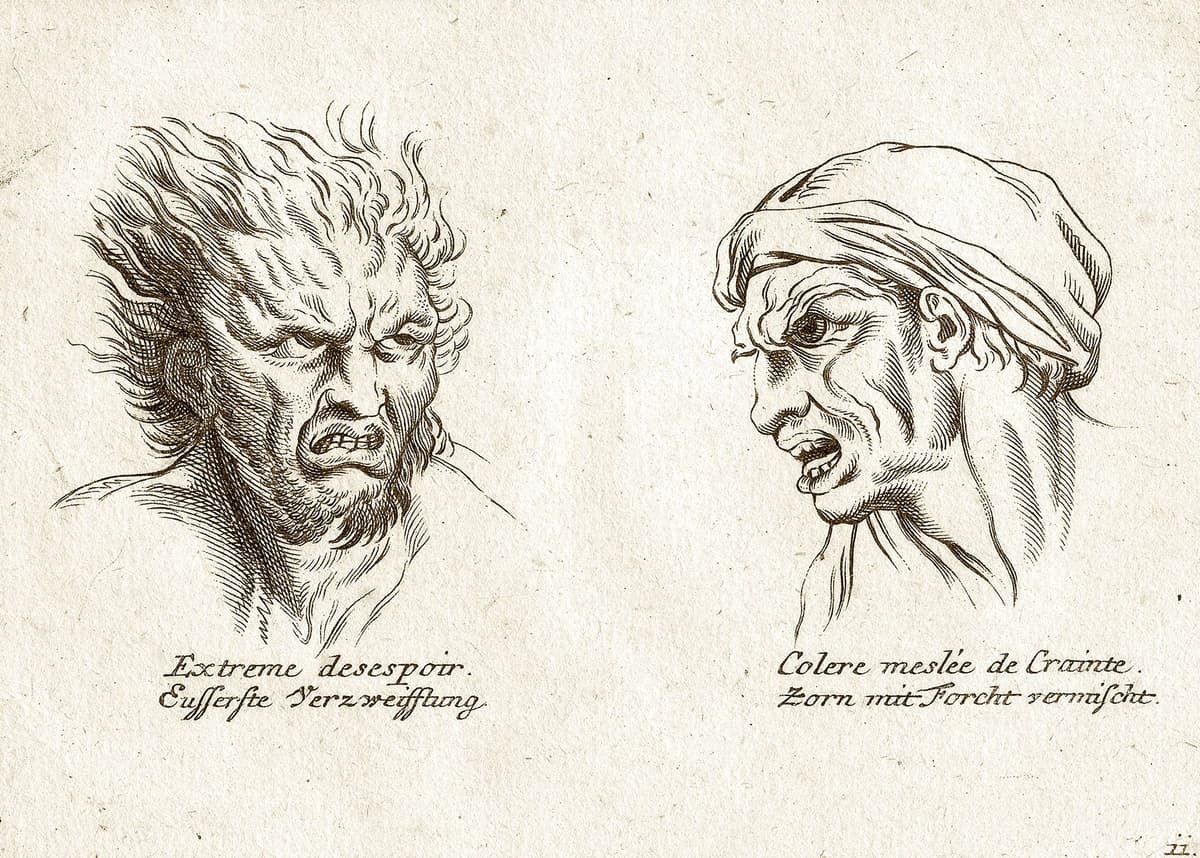
What is Physiognomy?
Physiognomy is an ancient practice found in many cultures, from East to West, based on the belief that facial features and body shape can reveal a person's personality, health, and even destiny. In China, the art of face reading (Mian Xiang) dates back to ancient times, closely tied to the philosophy of Yin-Yang and Five Elements, as well as traditional medicine. Ancient people used it to choose spouses, select officials, or diagnose illnesses. Today, many still turn to physiognomy as a reference tool to better understand themselves and others.
However, it must be emphasized that physiognomy is not an empirical science. Modern studies, such as attempts to use AI to predict criminals from facial photos, have been criticized as biased and racist (according to VnExpress). Therefore, this article only introduces traditional knowledge, offering a multi-dimensional view, and should not be applied absolutely.
Facial Structure in Physiognomy
The Three Sections (San Ting)
One of the most fundamental principles in physiognomy is dividing the face into three sections, called San Ting, each representing a life stage:
- Upper Section: From the top of the forehead to the eyebrows. This area reflects childhood and youth (about 15–30 years old). A high, broad, and full forehead is often seen as a sign of intelligence, wisdom, and good luck in early life.
- Middle Section: From the eyebrows to the tip of the nose. This area is associated with adulthood (30–50 years old). A high, straight nose bridge and full cheekbones are believed to indicate a stable career and good social status.
- Lower Section: From the nose tip to the chin. This area corresponds to old age (after 50). A round, full chin and a square jaw are considered signs of good fortune, longevity, and supportive descendants.
Observing the balance among these three sections helps physiognomists make an overall assessment. If the three sections are harmonious, the person is often judged to have a stable life with few major upheavals.
The Five Peaks and Four Borders
Besides the Three Sections, ancient practitioners used the concept of Five Peaks – five sacred mountains symbolizing five main facial parts:
- South Peak (Heng Mountain) – forehead: represents intelligence.
- North Peak (Heng Mountain) – chin: represents stability and later life.
- East Peak (Tai Mountain) – left cheekbone: represents career and power.
- West Peak (Hua Mountain) – right cheekbone: represents family and relationships.
- Central Peak (Song Mountain) – nose: represents the self and wealth.
The Four Borders are the four edges of the face: forehead, chin, and two cheeks. If these are full and not sunken, the person is considered to have a good foundation and strong support.
Meanings of Facial Features
Eyes – Windows to the Soul
In physiognomy, the eyes best reflect a person's inner self. Large, round, bright, and sparkling eyes are often considered signs of intelligence, kindness, and openness. Conversely, small, deep-set eyes that dart around are viewed as signs of a petty and suspicious nature.
- Slanted eyes (upward): People with slanted eyes are often described as decisive, strong-willed, and ambitious. However, if too slanted with a cold gaze, it may be considered a fierce look prone to aggression.
- Distance between eyes: According to VnExpress, people with wide-set eyes tend to be lazy and pleasure-seeking, while those with close-set eyes are considered more focused and meticulous.
- Excessive white of the eyes: People with a lot of visible white (called san-bai or si-bai eyes) are often judged as sinister and unpredictable.
Nose – Wealth Indicator
The nose is considered the center of the face, closely linked to finances and career. A high, straight nose bridge with a round, full tip is seen as a sign of good money management and business success. A hooked nose (like an eagle's beak) is often associated with a sharp, cunning personality. Excessively flared nostrils are believed to indicate poor money retention.
Lips and Mouth – Reflect Communication
According to physiognomy, lips reveal how a person communicates and their emotional nature.
- Thick lips: People with thick lips are usually sincere, generous, and affectionate.
- Thin lips: People with thin lips are considered clever and sharp-tongued, but sometimes cold and argumentative.
- Thin upper lip, full lower lip: This indicates a rich inner life but being easily swayed by emotions.
- Wide mouth: People with a wide mouth and a bright smile are often seen as generous and sociable.
Ears – Sign of Fortune
In physiognomy, ears are associated with good fortune and longevity. Large, thick ears with round, fleshy lobes and a rosy color are considered good signs, indicating a person blessed by their parents. Conversely, small, thin ears with prominent bones are seen as signs of hardship. Protruding ears (large but sticking out) were once thought by some Western classical criminologists to indicate criminal tendencies, but this view has been debunked.
Forehead – Expression of Intelligence
A high, broad, and full forehead is a sign of intelligence and vision. A sloping forehead (small, low, and receding) was once listed by criminologist Cesare Lombroso as a feature of “born criminals,” but modern science has completely rejected this.
Cheekbones and Jaw
High, full cheekbones are considered a sign of authority and prestige. A square, broad jaw is often seen in decisive, resolute people with strong opinions. However, an overly prominent jaw combined with sharp eyes may be interpreted as stubbornness.
Face Shapes and the Five Elements
Eastern physiognomy also links face shapes to the Five Elements, each with distinct characteristics:
- Round face (Water): Flexible, adaptable, generous, optimistic, and cheerful. People with round faces are often loved for their jovial nature.
- Long face (Wood): Intelligent, responsible, but sometimes perfectionist and strict.
- Square face (Metal): Decisive, strong, with leadership qualities. Likely to succeed in career but may lack flexibility.
- Triangular face (Fire): Energetic, creative, passionate. However, may be impulsive and impatient.
- Fleshy, thick face (Earth): Honest, reliable, practical. Often seen as a solid support for family and friends.
Physiognomy and Modern Scientific Perspective
Physiognomy was once used in criminal research in the West, especially through the work of Cesare Lombroso in the late 19th century. He believed that “born criminals” could be identified by features like sloping foreheads, high cheekbones, protruding ears, and large incisors. However, later studies completely rejected this hypothesis, viewing it as biased and discriminatory.
Today, some scientists attempt to use artificial intelligence (AI) to “predict criminals” from facial photos, but these studies also face criticism from the scientific community for lack of reliability and risk of racial bias. This shows that the link between appearance and personality is extremely complex and cannot be reduced to a few physical traits.
Therefore, when exploring physiognomy, consider it an interesting cultural lens that helps you reflect on yourself and understand others relatively, not as absolute truth. What matters most is behavior and how one treats people around them.
Conclusion
Physiognomy is a colorful treasure trove of Eastern wisdom, reflecting ancient beliefs about the connection between appearance and inner self. Observing facial areas like eyes, nose, lips, ears, and forehead can offer intriguing hints about personality and potential. However, always remember that this is only a reference method with no absolute scientific value. Use it as a tool for self-improvement, rather than imposing stereotypes on anyone.